

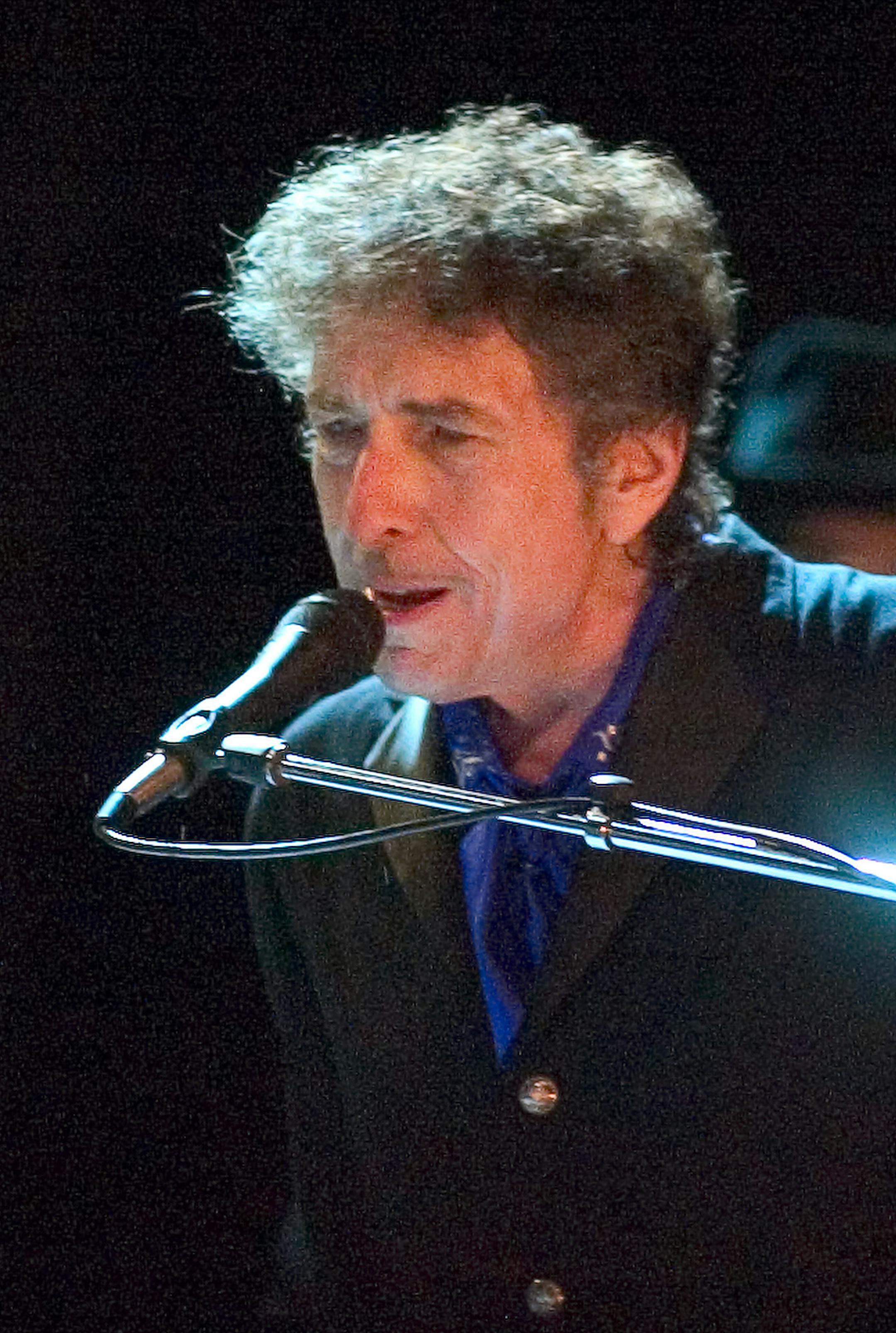
The Pulitzer Prize committee wasn't sure how to reach the ever-elusive Bob Dylan on Monday after it awarded him a rare "special citation" that has gone to the likes of George Gershwin, Duke Ellington and Dr. Seuss.
"I might ask you for suggestions of who to contact," Pulitzer administrator Sig Gissler told a reporter from Dylan's home state. "We're starting from scratch."
The Pulitzer is regarded as the highest U.S. award in music, literature and print journalism. Dylan did not win in the music category, which honors a specific composition, but rather "for his profound impact on popular music and American culture, marked by lyrical compositions of extraordinary poetic power."
The Minnesota native, 66, will be the first living musician to receive this citation since composer William Schuman in 1985.
"Dylan has been due for something like this for a long, long time," said Minneapolis composer Dominick Argento, who won a music Pulitzer in 1975. "It would be hard to name anyone else to surpass him in his field. He's even had an influence in my field; a lot of classical composers are aware of Bob Dylan."
Like Dylan, two of the 17 voting members of the Pulitzer Prize board of directors have Minnesota connections. New York Times columnist Thomas Friedman grew up in St. Louis Park, and Miami Herald editor Anders Gyllenhaal was the editor of the Star Tribune from 2002 to 2007.
"I'm really delighted," said Gyllenhaal, who championed Dylan to the Pulitzer committee. "I've always been a fan."
Although the Duluth-born, Hibbing-raised Dylan is one of the most celebrated figures in contemporary music, his most recent work is a book of visual art. "Bob Dylan: The Drawn Blank Series," published in March, is a collection of 170 paintings he did in 2007. He is believed to be working on the second installment of his memoirs; the widely lauded "Chronicles -- Volume One" was a best-seller in 2004. His most recent album, "Modern Times," was released in 2006.


