Dyani White Hawk is Minnesota Star Tribune’s Artist of the Year

December 19, 2025
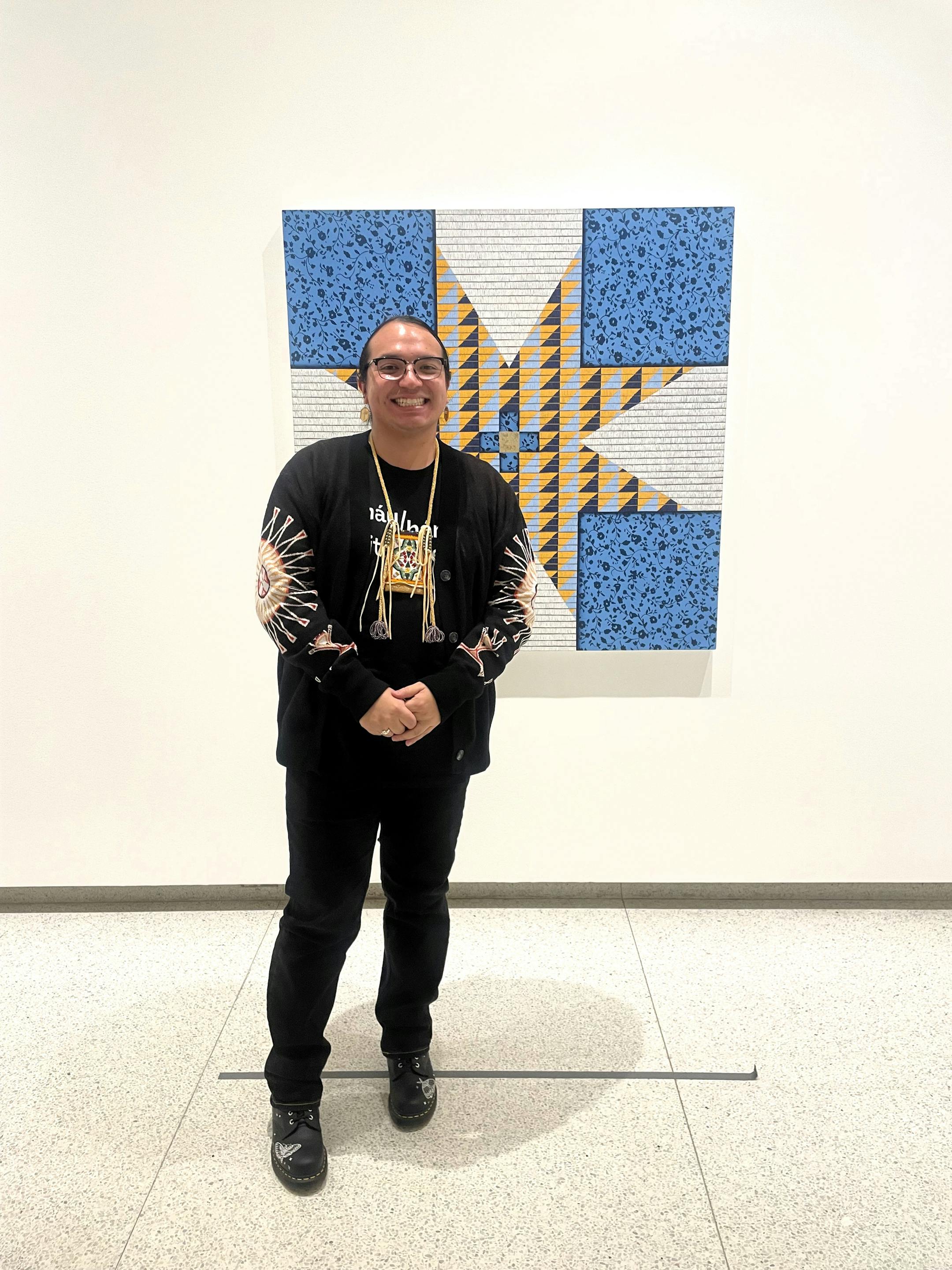
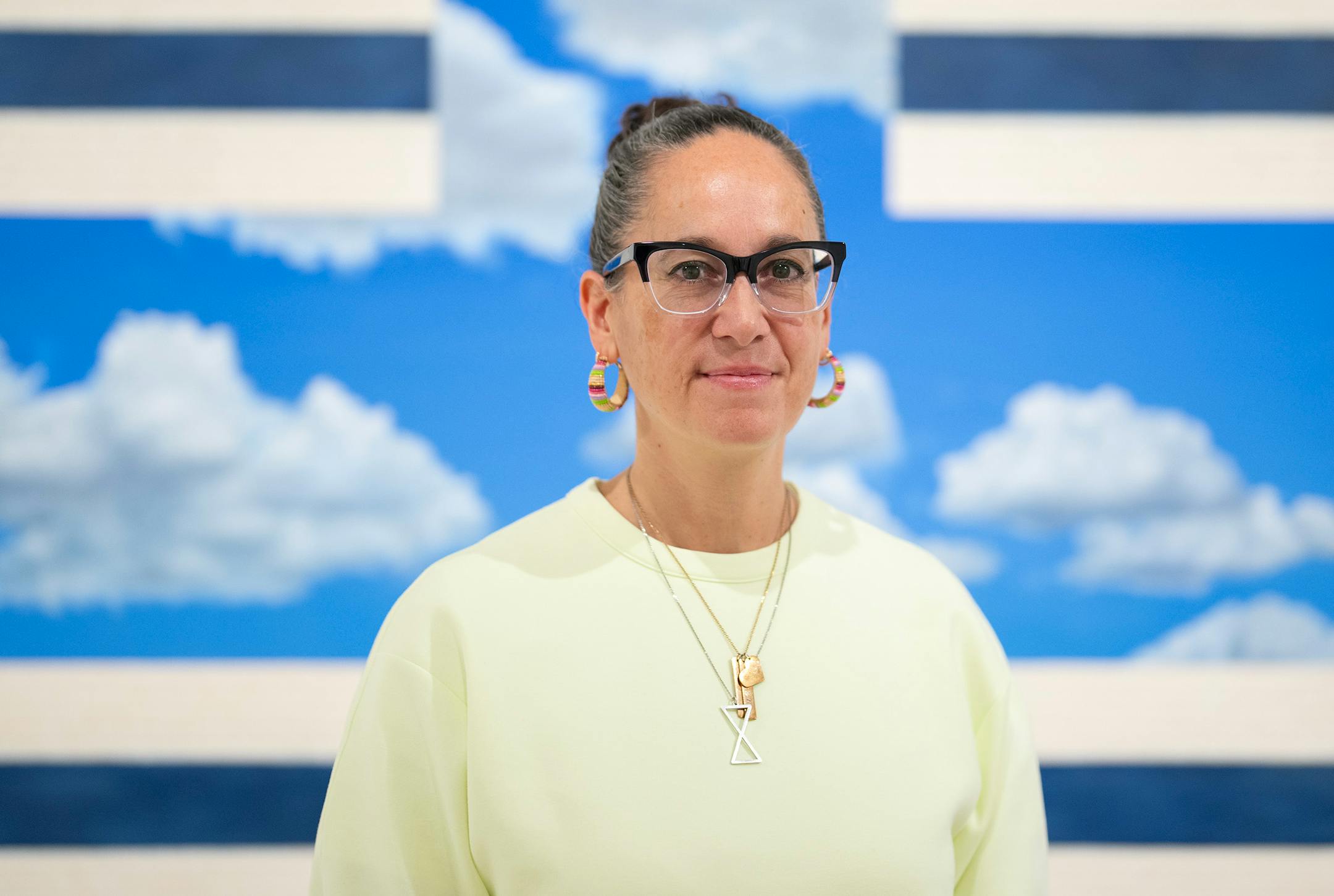
Dyani White Hawk, the Star Tribune's Artist of the Year, in front of her art work that is part of her exhibit “Love Language” at the Walker Art Center. (Alex Kormann/The Minnesota Star Tribune)

In 2025, the MacArthur “genius” grant winner opened a 15-year retrospective at the Walker Art Center.

The Minnesota Star Tribune

Sičáŋǧu Lakota artist Dyani White Hawk is known for her intricate, abstract large-scale beadworks.

White Hawk ― arguably the busiest and most generous artist in town and a role model for many in Indigenous communities and beyond ― is the Minnesota Star Tribune’s 2025 Artist of the Year.

The internationally recognized artist and MacArthur “genius” grant winner has a 15-year retrospective of her work on exhibition at the Walker Art Center, recently installed an eight-panel stained glass work at the University of Minnesota’s Chemistry Undergraduate Teaching Lab and received a 2025 Vision Award from the Northeast Minneapolis Arts District.

Over lunch at the Walker’s Cardamom restaurant in late November, her friend Kip Spotted Eagle from their alma mater, Haskell Indian Nations University, swung by the table and, teary-eyed, congratulated her on her 15-year retrospective Walker exhibition “Love Language.” He asked her to sign the catalog. She happily obliged.

“That’s what she did when she was a young kid ― everything was very intricate,” Sandy said. “When I saw it here in her artwork, as that developed, I was like, ‘Check that out!’”

Earlier that morning, White Hawk, 49, gave a tour of her show to Indigenous students and faculty from Sinte Gleška University. They had traveled to Minneapolis from the Rosebud Indian Reservation in South Dakota.

Minnesota has been White Hawk’s full-time home since 2011. She lives in the suburbs of Minneapolis with her husband Danny Polk (San Carlos Apache, Quechan and Diné), 46, their daughters Nina, 23, and Tusweca, 12, her mom and other family.

When asked how it feels to be named Star Tribune Artist of the Year, she said, “Thank you, I don’t know, yet. I’m honored.”


Minnesota supports artists, and it’s possible to live here as an artist and have a good life, White Hawk said.

“I really appreciate living here,” she said. “I appreciate being able to tell people when I travel, because people in the art world very much consider us flyover country ― they’re so coastal-centric.”

Artist Dyani White Hawk stands in front of her suite of screen prints titled "Takes Care of Them." (Alex Kormann/The Minnesota Star Tribune)

She grew up in Madison, Wis., in an urban intertribal community, and it was there she first learned beadwork. She is of Sičáŋǧu Lakota, German and Welsh ancestry.

White Hawk was raised by her mother, a Sičáŋǧu Lakota adoptee from the Rosebud Reservation. Growing up, Dyani, her brother John and her mom regularly traveled to Rosebud to spend time with relatives.

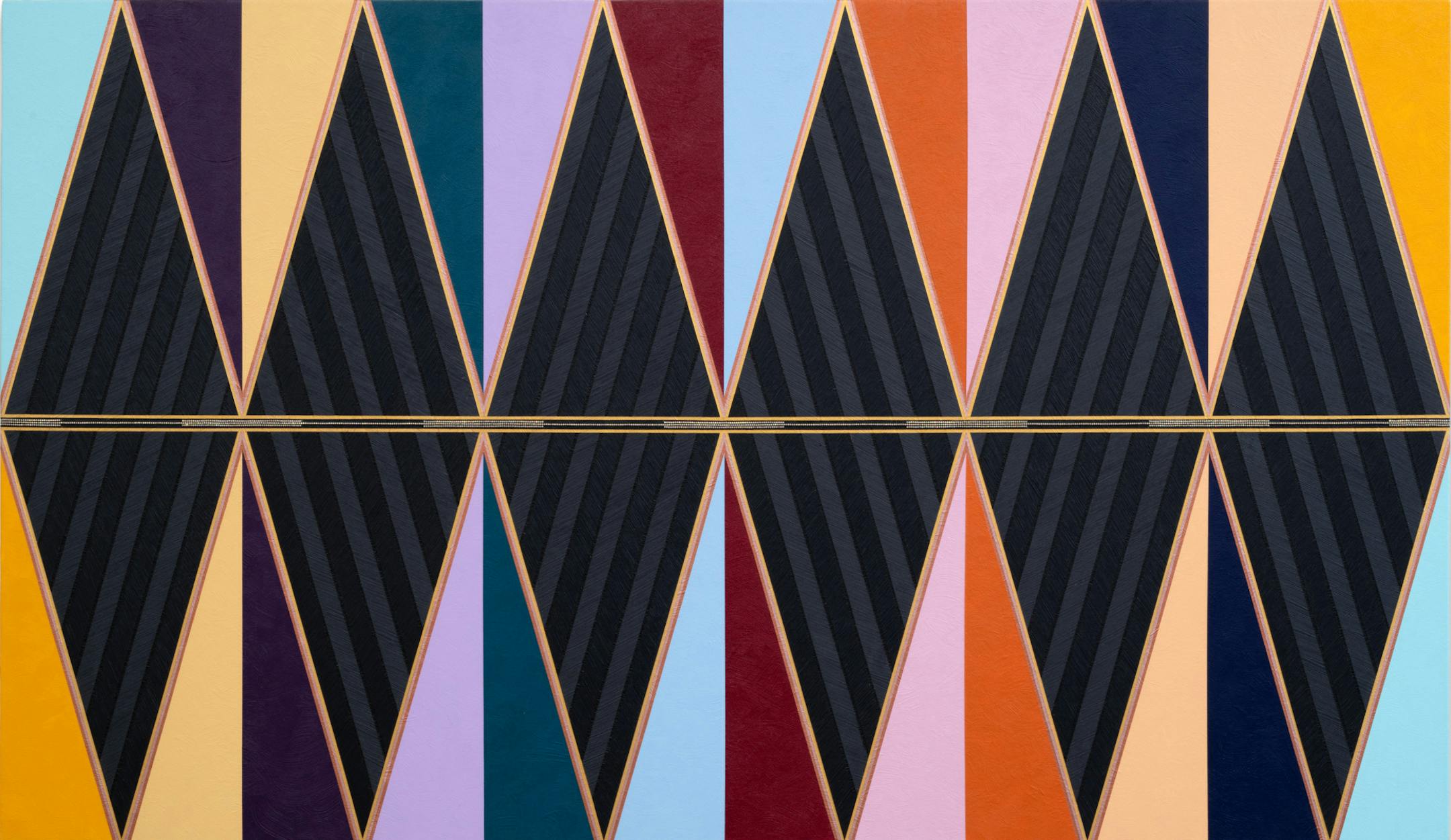
Dyani White Hawk’s geometric abstract painting “Walk With Me” will be in her exhibition at the Walker Art Center. (Rik Sferra)

White Hawk works with 10 Native and two non-Native community members in her northeast Minneapolis studio.

“I love the idea that the studio can be a place where people can come in and work for as long as they need it, and that through working at the studio, they’ll have their own opportunities for personal and professional development,” she said, “and then launch out of the need for that work and into their own adventures and careers.”

In her art, White Hawk foregrounds, uplifts and celebrates Lakota aesthetics. Viewers will notice the reflective, diamond-like shape of the triangular kapemni, which means “to twist” or “to spin.” It is a symbol of mirroring the earth and the sky, representing balance and harmony.

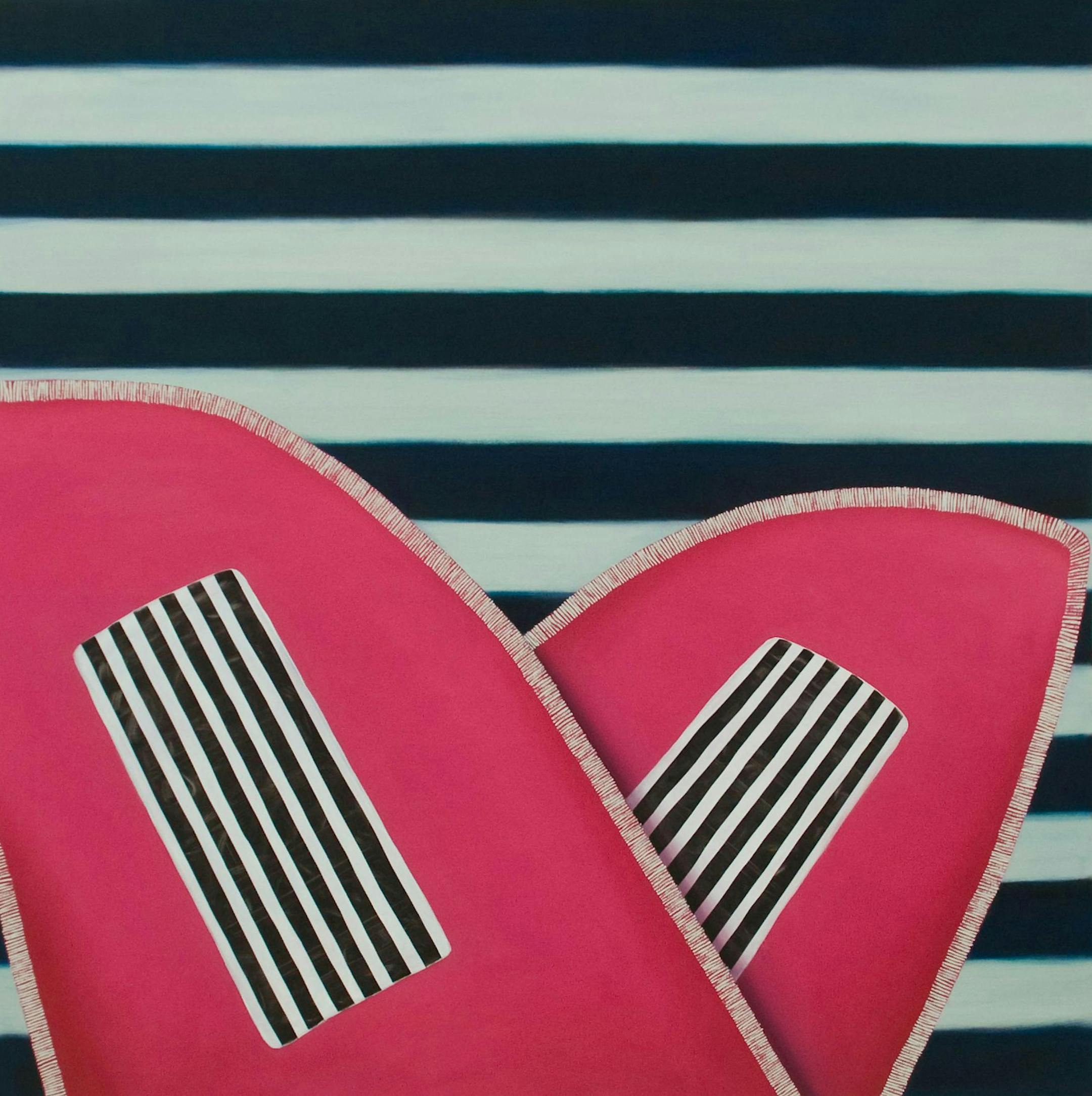
In Dyani White Hawk’s 2011 painting “Been Seeing You for a While Now,” she uses the moccasin top as source material. (Dyani White Hawk)

The moccasin top or “vamp” is another symbol that recurs throughout her work.

“Her work is so beautiful, and it draws people to have important conversations, but through that offering of beauty,” said Remai Modern Curator Tarah Hogue (Métis Nation citizen), 39.

White Hawk cites the Lakota philosophy of Mitákuye Oyás’iŋ, which means “we’re all related.”

Her art is in collections at the Guggenheim, MoMA, Whitney Museum of American Art, the Minneapolis Institute of Art and more. She was in New York’s prestigious 2022 Whitney Biennial, a barometer of “who’s hot” in American art.

She also has won countless grants and awards, among them a 2023 MacArthur “genius” grant, a 2024 Guggenheim Fellowship, and a 2017 Native Arts and Culture Foundation Mentor Artist Fellow.

Moving forward, she hopes there will be more healing between Indigenous people and art institutions and changes in how cultural institutions and educational systems tell American history.

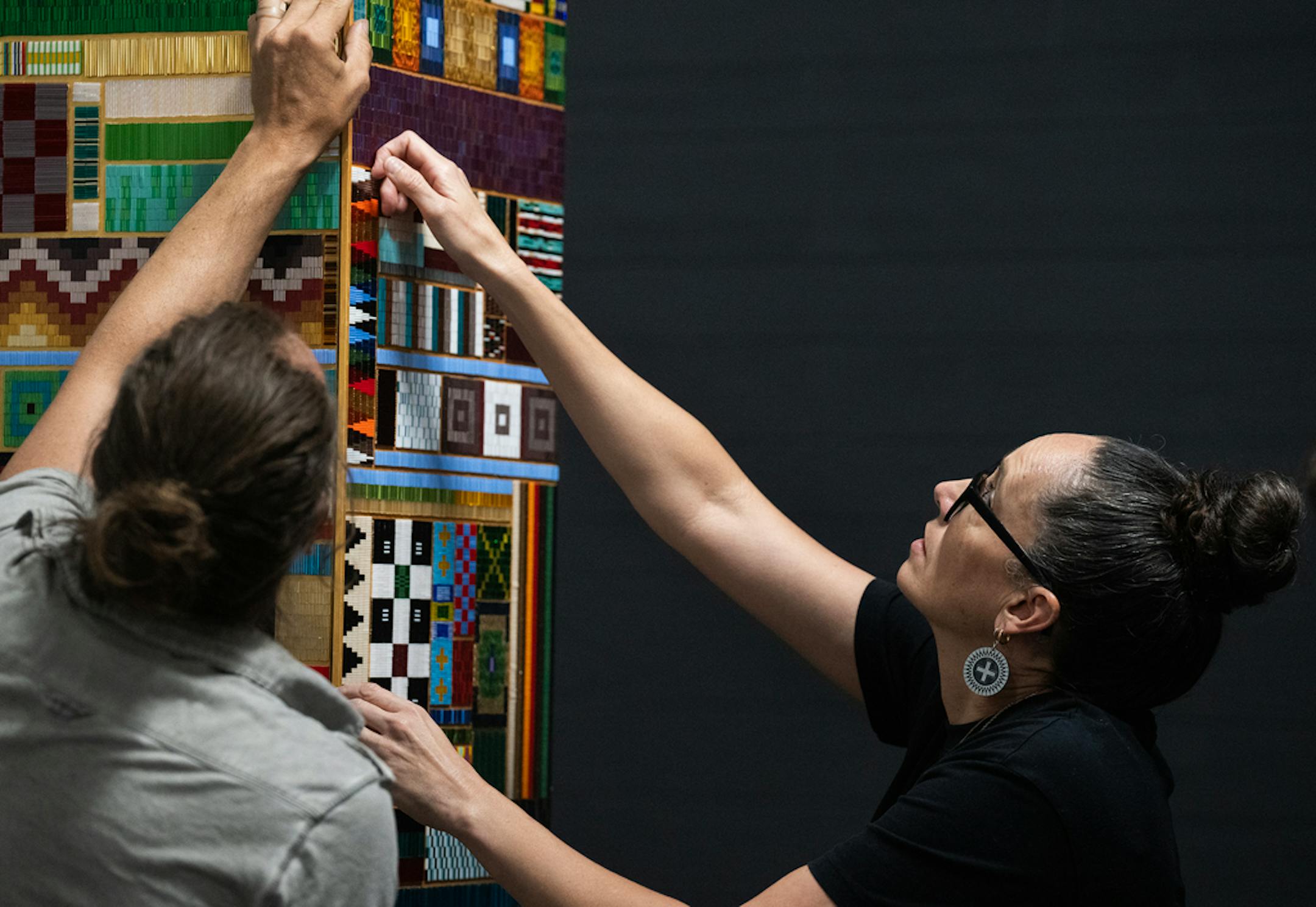
Dyani White Hawk tests the installation of two panels of “the Visit” in Minneapolis on Aug. 1, 2024. (Richard Tsong-Taatarii/The Minnesota Star Tribune)

Centering Indigenous voices

In the darkened Bentson Mediatheque at the Walker Art Center in November, visitors eagerly absorbed an artist talk about White Hawk’s exhibition.

White Hawk was among them.

Instead of delivering a typical one-time artist talk, she invited artists, friends and relatives to speak. That evening, graphic designer Sadie Red Wing (Spirit Lake Dakota and Cheyenne River Lakota nations), and artists Jennie Kappenman (Red Lake Ojibwe) and Cole Redhorse Taylor (Mdewakanton Dakota) took the stage.

Red Wing, 35, a doctoral candidate in graphic design at the U, first encountered White Hawk’s work at their alma mater, the Institute of American Indian Arts in Santa Fe, N.M. She studies Native histories of adornment, beading and quilling.

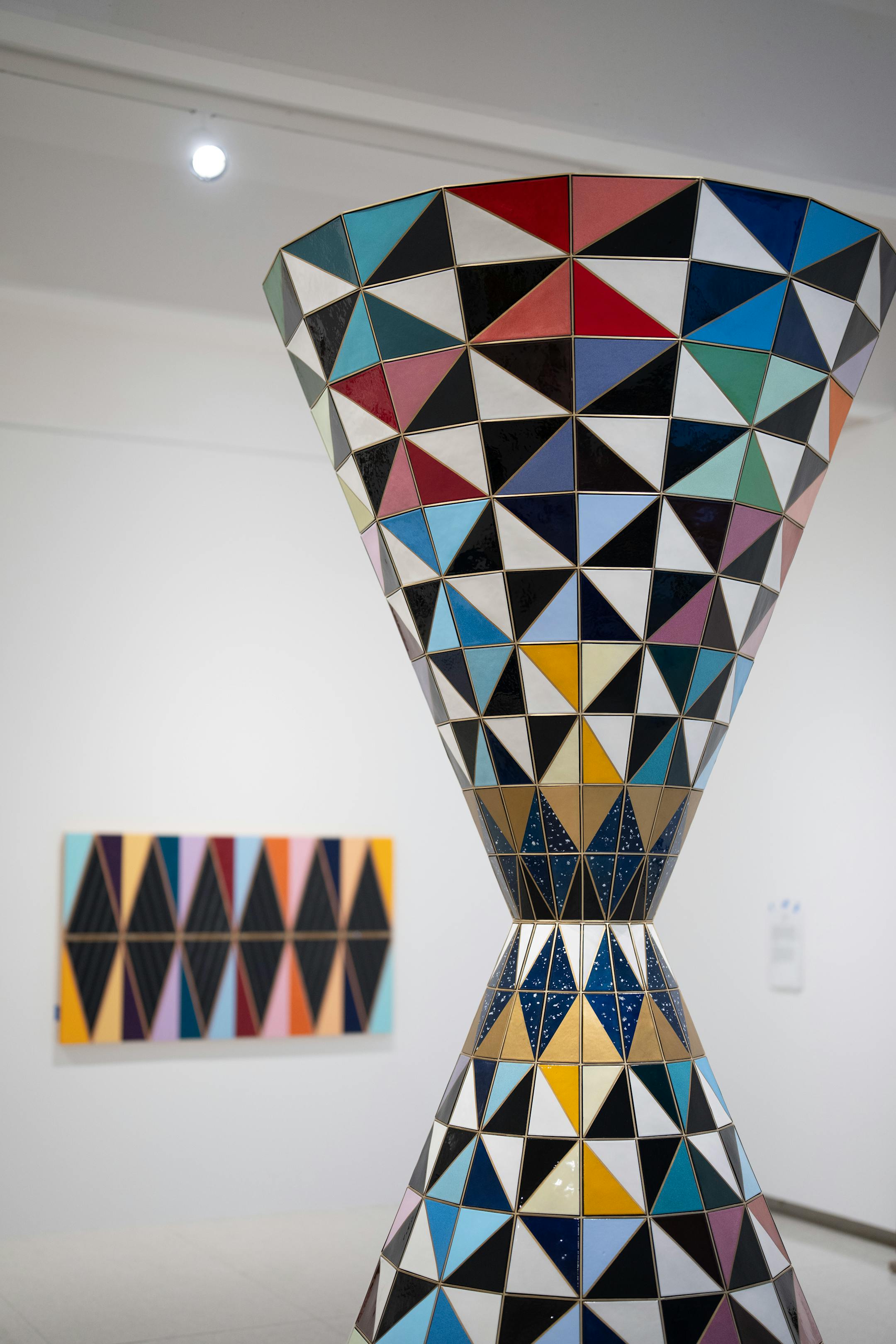
"Infinite We," an enamel and copper sculpture, is White Hawk's collaboration with German stained glass design and manufacturing company Franz Mayer of Munich. (Alex Kormann/The Minnesota Star Tribune)

“Growing up, I never got to go to an exhibition like this, so it’s in my face,” she said, standing in a gallery near “Infinite We,” the 10-foot-tall, hourglass-shaped mosaic sculpture of colored enamel, copper and brass. Fabricated by Franz Mayer of Munich, it’s covered in kapemni ― and it’s White Hawk’s first time transitioning into three-dimensional forms.

“Reflection in our visual language is extremely important because it could speak to many things ― balance, equality, the spiritual world is the world we walk in,” Red Wing said.

Redhorse Taylor, 31, met White Hawk at the Minneapolis College of Art and Design in 2013 when he was an undergrad. He was one of two Native students.

“The Native community is super small and we all know each other and we see each other as relatives,” said Redhorse Taylor, who lives in the Prairie Island Indian Community in Welch, Minn. “I don’t get that with non-Native artists, there’s not that communal connection. As Native artists, we just get each other.”

Artist Cole Redhorse Taylor stands in front of White Hawk's 2015 painting "Wičháhpi Wakíŋyaŋ Wíŋyaŋ" (Thunder Star Woman) at the Walker Art Center on Nov. 20. (Alicia Eler/The Minnesota Star Tribune)

He’d never seen anyone take beadwork designs and put them into a fine-art context. Beadwork in clothing and regalia, he said, is an artwork in itself.

Regalia is culturally, spiritually and personally significant clothing worn during ceremonies, dances and other important events.

“Her work gave me the permission to do the work I wanted to do and start my journey that way,” he said.

Brooklyn Park-based artist Kappenman, 35, stood near White Hawk’s large-scale 2020 photography installation “I Am Your Relative,” a collaboration with Ho-Chunk artist Tom Jones that seeks to dispel harmful stereotypes about Indigenous women and humanize their stories.

Kappenman calls her chance meeting with White Hawk more than 10 years ago their “pow wow love story.”

She zoomed in on White Hawk, who was wearing the finest, most “beautiful quillwork I’ve ever seen ― like quilled regalia,” she said.

When she and White Hawk connected, Kappenman asked White Hawk if she could teach her and her sister how to do porcupine quillwork.

At the time, Kappenman was going through a tough time in her culinary career and her relationship.

“Her friendship and mentorship helped me calm down and just be like, out of fight or flight,” she said.

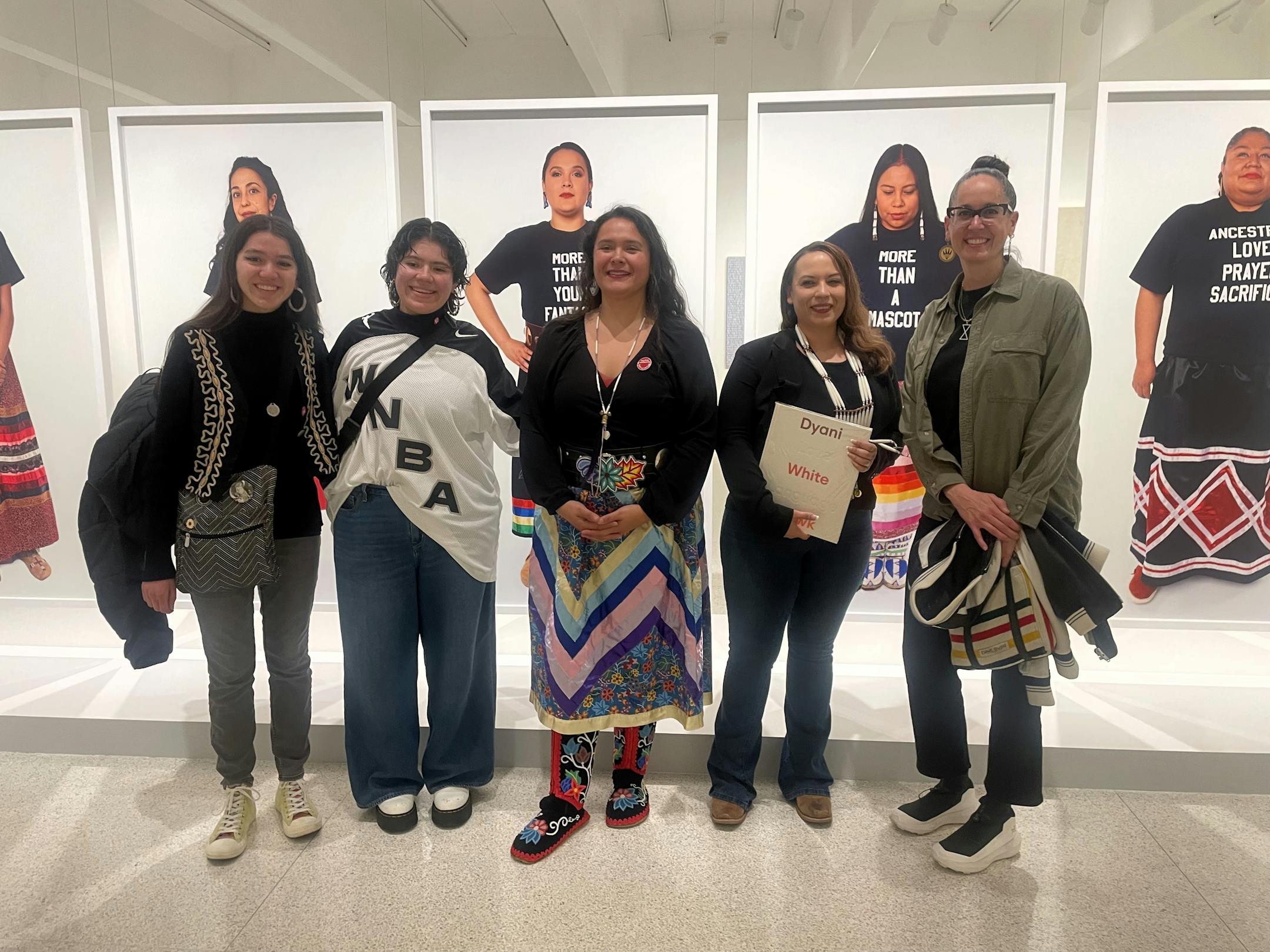
Artists and friends gather in front of Dyani White Hawk's 2020 photography project "I Am Your Relative," a collaboration with photographer Tom Jones (Ho-Chunk), on Nov. 20. From left to right: Anishinaabe artist Aiyana Beaulieu, Walker Art Center community engagement coordinator Sierra Ikwe Edwards, artist Jennie Kappenman, designer Sadie Red Wing and artist Dyani White Hawk. (Alicia Eler/The Minnesota Star Tribune)

In 2017, White Hawk and Kappenman received a Native Arts and Cultures Foundation Mentor Artist Fellowship. White Hawk taught Kappenman how to do tack-down stitching, and together they learned from Ojibwe quillwork artists. Acclaimed Ojibwe artist Melvin Losh taught them quill box style.

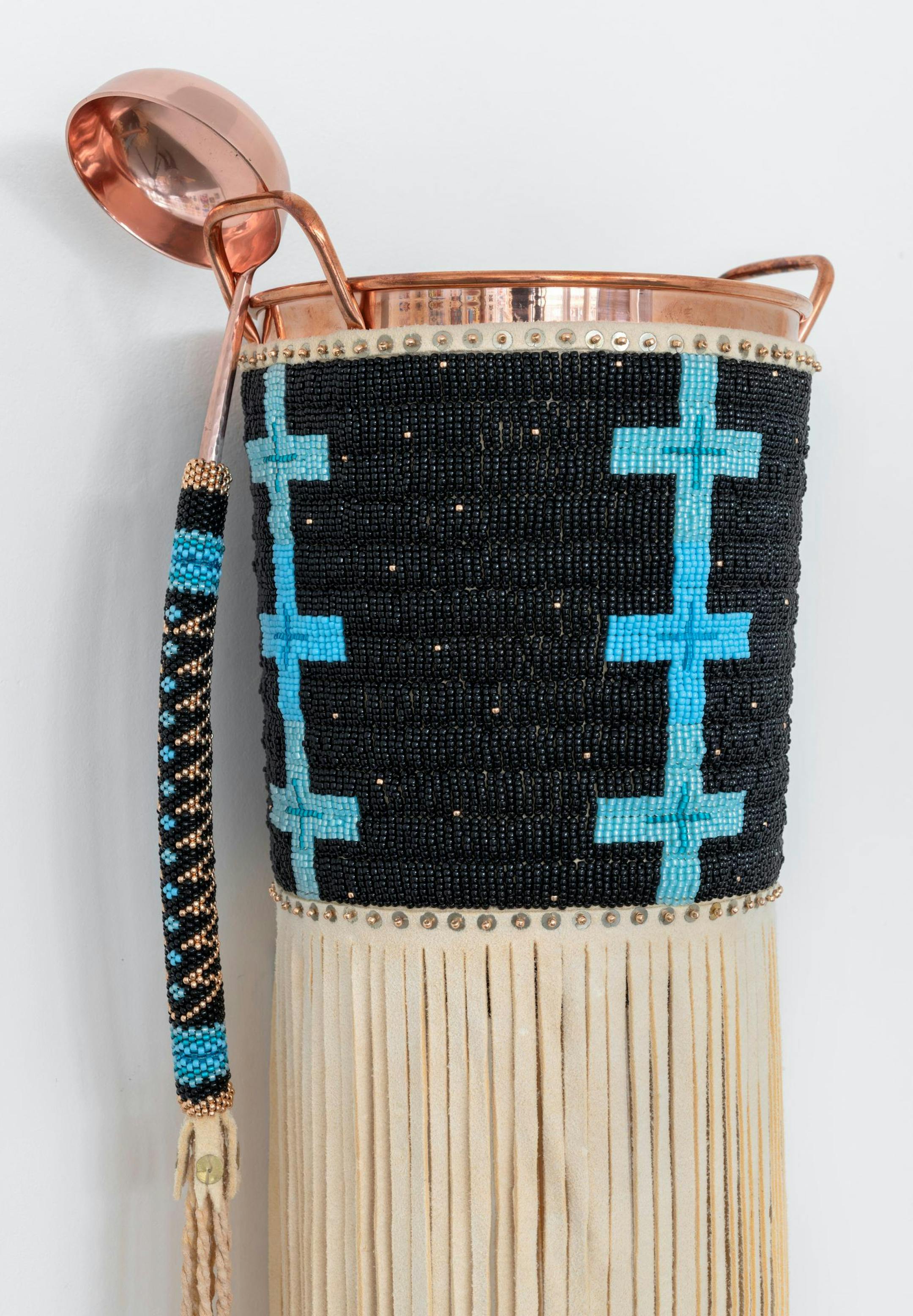
Kappenman has worked with White Hawk on many projects since, including the “Carry” sculptures, copper buckets and ladles wrapped in buckskin, with painted and beaded designs and long fringes of buckskin flowing onto the floor.

“I’ve never not seen her authentic,” said Kappenman about White Hawk. “Usually people reveal inauthentic behaviors. I’ve never seen her be a weirdo.”

A close-up view of Dyani White Hawk's 2019 sculpture "Carry II," which is in her exhibition "Love Language" at the Walker Art Center. (Rik Sferra)

Into the future

This year was big for White Hawk, and 2026 promises to be even bigger.

Bringing White Hawk’s work to the Remai Modern in Saskatoon, Saskatchewan, connects the Oceti Ŝakowiŋ homelands — an alliance of seven Dakota, Lakota and Nakota groups.

The traditional territory includes southern Ontario, Manitoba, and Saskatchewan, extending into Wisconsin, Minnesota, North and South Dakota, and northern Montana.

“There is a lot of conversation and work to be done in that cross-border space, which is part of the reason why we wanted to bring Dyani’s exhibition to Remai Modern,” Hogue, the curator, said.

White Hawk “definitely has a lot of fans here in Canada,” she added.

In 2026, White Hawk also will debut commissions at New York’s JFK International Airport’s new Terminal 6 and at the Portland International Airport in Portland, Ore.

At JFK, she will have a medallion mosaic 16 feet in diameter, drawing from Lakota art and teachings, with messages reminding travelers of the interconnectedness of the cosmos, bodies, land, water and life. Through honoring our relatedness, she believes, we can build healthier futures.

In Portland, she’ll install a 55-by-9-foot glass tile piece inspired by Mount Hood, water, morning and night skies, the landscape, and Lakota and Pacific Northwest tribal nations art forms.

“I like the idea that many, many, many people from all over the place will encounter these works over many years,” White Hawk said. “There’s no way for me to understand or comprehend how that will impact people, but it will inevitably.”

about the writer

about the writer

Alicia Eler

Critic / Reporter

Alicia Eler is the Minnesota Star Tribune's visual art reporter and critic, and author of the book “The Selfie Generation. | Pronouns: she/they ”

See Moreicon

More from Stage & Arts

See More
card image
Juliet Farmer

Gully Boys, Cornbread Harris and Joseph Haj continue to leave indelible marks in the fields of music and theater.

card image