

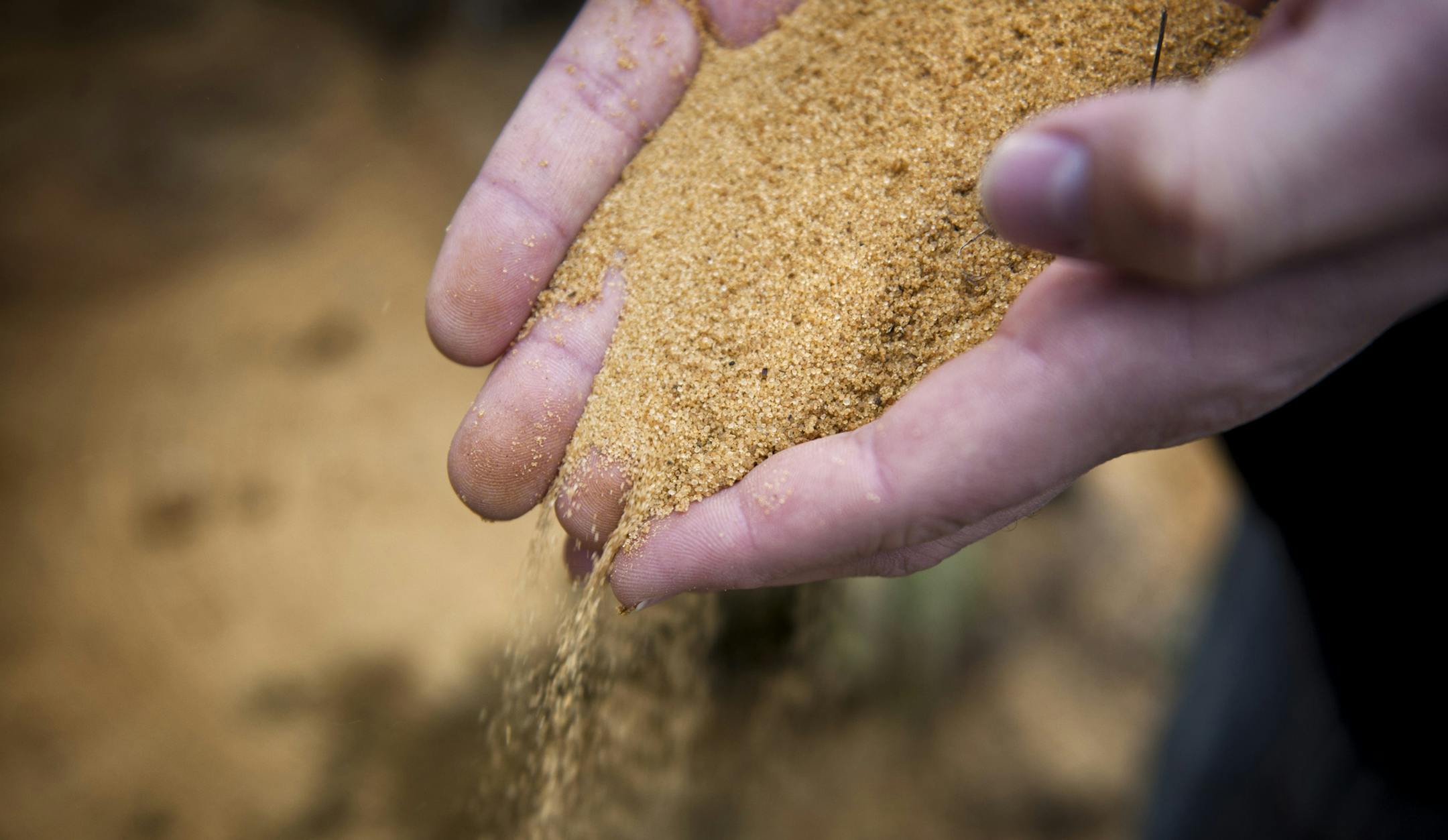
Environmental activists who pushed ambitious legislation to slow the advance of frac sand mining in Minnesota have been soundly defeated on their central proposals and, with less than two weeks left in the 2013 legislative session, are clinging to a fragile game and fish amendment as their last hope for a substantial breakthrough.
The amendment, which would block excavation within a mile of any trout stream in southeastern Minnesota, is strongly backed by Gov. Mark Dayton as a way to prevent an explosion of sand mining in a region where the state has invested millions of dollars over decades to nurture a blue-ribbon fishery.
But as the session winds down, even that idea is meeting resistance in a Legislature that has been largely receptive to the industry's message that more regulation is unnecessary and will only kill jobs and economic growth.
"It's the only substantial [frac sand] standard left this session,'' said John Lenczewski, executive director of Minnesota Trout Unlimited.
"Everything else is just fluff,'' said Amy Nelson, a frac sand opponent from the Red Wing area. The trout stream language, which could face a critical vote on the Senate floor as early as Thursday, has been painted by opponents as a de-facto mining ban in southeastern Minnesota. Industry supporters also say the measure is a "slippery slope'' that could potentially hurt taconite mining on the Iron Range and even the construction aggregate business.
"We don't think they will get anywhere with this,'' said Fred Corrigan, who leads the Minnesota Industrial Sand Council in a lobbying effort that is also supported by the labor union representing heavy equipment operators.
But Dayton told reporters Wednesday that he is cautiously optimistic the legislation will move forward.
"I strongly support that position and will do everything I can in conference committee to get it enacted,'' he said.


