
Dutch experience shows America's cities a way to hold off the oceans

The Dutch success is an important lesson for U.S. cities facing threats from rising seawaters, European climatologists say.

October 7, 2016 at 8:38PM
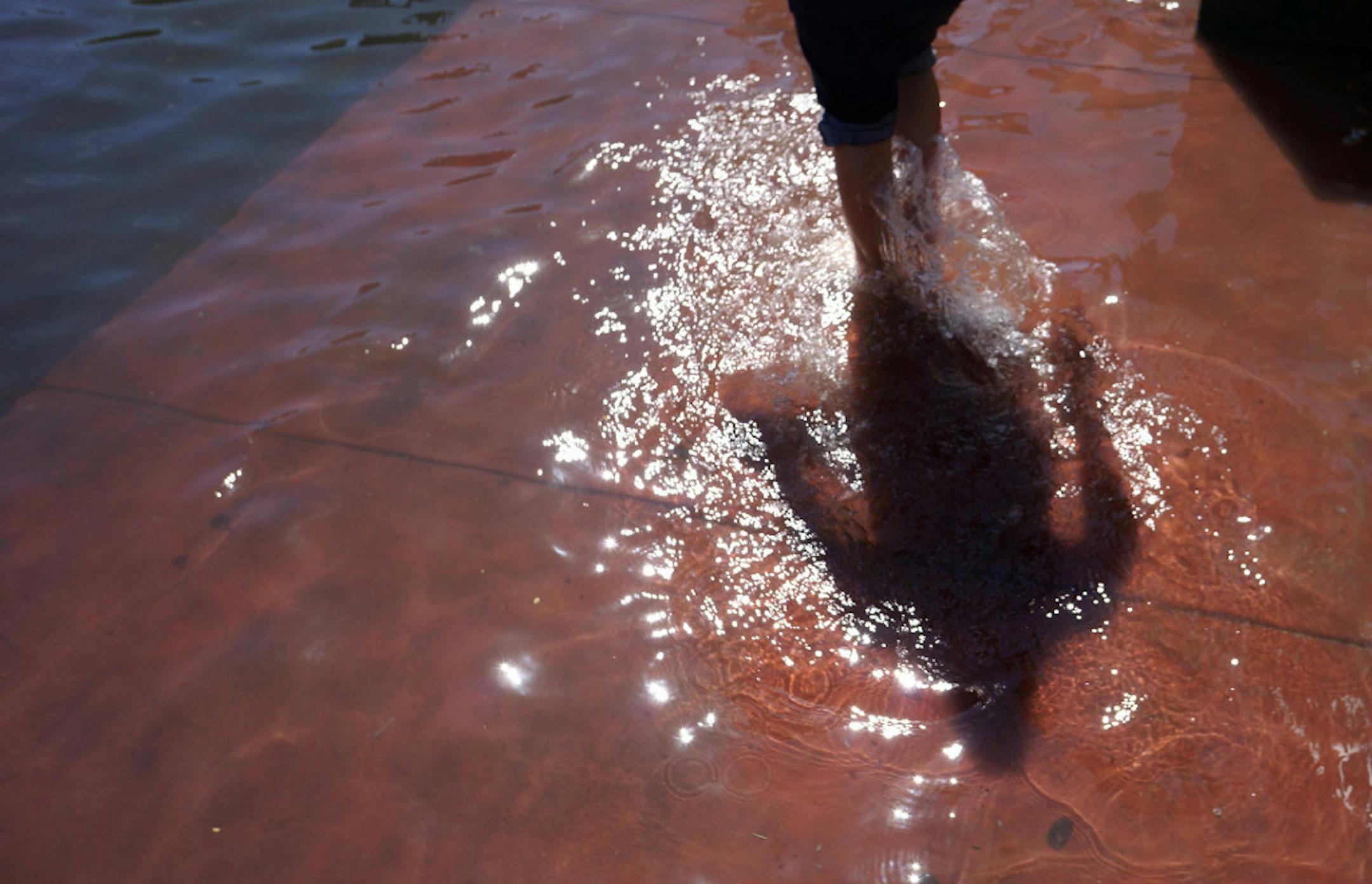
The sidewalk in Miami along Alton Road was under water at 10th Street, October 18, 2012. Scientists and activists held a news conference at the corner that day to draw attention to sea level rise.
Like this sidewalk, much of Miami Beach could be under water in 100 years. Climate scientists have nicknamed Miami “New Atlantis” for its potential to disappear under the sea. But Holland’s long experience has much to teach the U.S. (Vince Tuss — Miami Herald/The Minnesota Star Tribune)

ALMERE, Netherlands – A 68-year-old Dutch man with an impossibly long name and a small dog is walking along the edge of a new lake when he stops and points upward.

"Naturally, the water would be up there, you know," says Erik van Tienhoven van Weezel, pointing at an invisible spot about 10 feet above his head. "We live under the sea level, by quite a bit. And we know the water is a little higher each year. Do we lose sleep over what could happen if the dikes break? Do we worry about how we will survive as the climate gets warmer and the sea gets even higher? No. We have adapted for centuries. We will continue to adapt."

As far as Dutch adaptation to rising water goes, Van Tienhoven van Weezel is at ground zero. Almere, a city of 190,000, used to be covered by the Zuiderzee, a well-known bay of the North Sea that once cut a 60-mile hole out of the northern part of the Netherlands. But the Netherlands has been using windmills and dikes and a network of canals for centuries to expand the tiny nation into the often violent sea, and the Zuiderzee is now dry land. Almere is an example of Dutch success; about 15 percent of the Netherlands used to be covered by ocean waters.

And that lesson, say European climatologists, is an important one for the United States, where studies indicate that large areas of coastal cities such as Miami are likely to disappear under rising seawaters, not in centuries, but in decades. The key, they say, is for U.S. politicians to stop debating the cause of sea level rise and start planning and funding the works that can stave it off.

In Potsdam, Germany, climate scientist Anders Levermann is chatting about how the world will change in a future of rising seas when he is asked about Miami. "Miami? Miami is already doomed," he says.

Among climate scientists, Miami has earned the nickname "New Atlantis," a reference to the legendary lost continent that slipped below the sea. But Miami is hardly alone among at-risk cities. A World Bank study listed it second among cities facing a risk of "overall cost of damage." It trailed only Guangzhou in southern China, and it's expected to fare only a bit better than New York and New Orleans.

In Miami, the sea is expected to rise a foot perhaps as soon as 2040, and reach 5 feet as early as 2080. At that point, the water starts taking over low-lying areas along the Miami River. Within 100 years, it could wash over most of Miami Beach and start swamping neighborhoods along the river.

Such increases are further off on the West Coast, though not by much.
Too far in the future to take seriously? The Dutch have already approved spending a billion dollars a year for the next 100 years to deal with the threat of the sea.

Paul Olsen, a sea level expert at Old Dominion University in Norfolk, Va., is running a program that's looking at how the United States can adapt. He emphasizes that while the water is rising, there are options. Current U.S. strategies, he says, are "fledgling." The solution will rely on an overarching federal plan — one that does not yet exist — but also on local and state planning. Coastal cities, he believes, have four options: Defend, adapt, retreat and avoid.

"They don't have the funding or the national attention that's needed," he says. "I don't think we're ignoring it. We've had other priorities. We've focused on terrorism, and Al-Qaida and ISIL. These are the wolves that are closest to the sled. Sea level rise? That wolf is a long ways away. But he is coming."

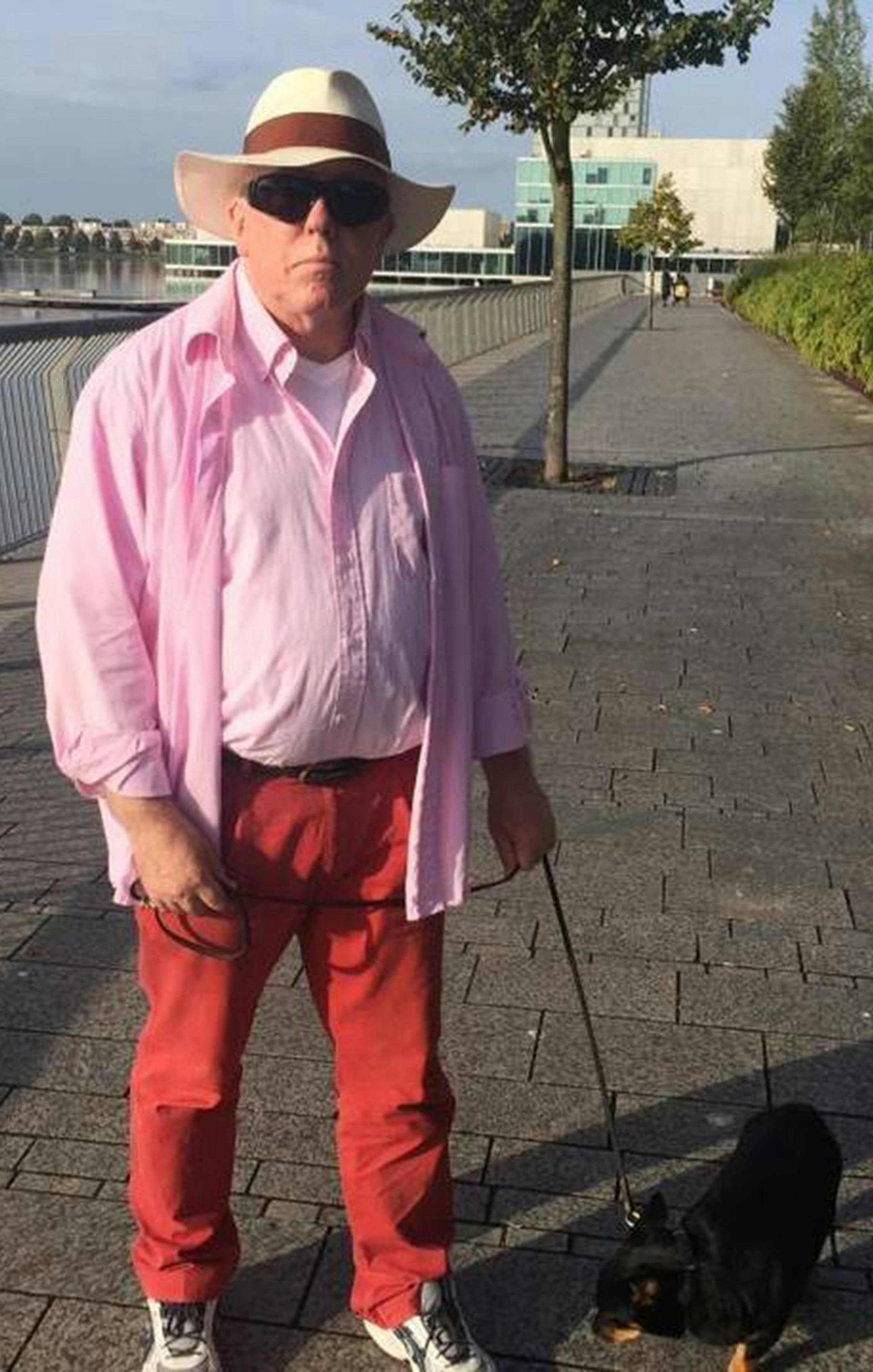
Erik van Tienhoven van Weezel walks his dog in Almere, Netherlands, near water that today is fresh. Formerly, as was the land he is standing on, this used to be the famous Zuiderzee. "We live under the sea level, by quite a bit. And we know the water is a little higher each year. Do we lose sleep over what could happen if the dikes break? Do we worry about how we will survive as the climate gets warmer and sea gets even higher? No. We have adapted for centuries. We ill continue to adapt." (Matth
Erik van Tienhoven van Weezel walked his dog in Almere, Netherlands, on land that used to be the famous Zuiderzee. “We have adapted for centuries,” he says. (The Minnesota Star Tribune)
about the writer

about the writer

Matthew Schofield, McClatchy Washington Bureau

More from No Section

See More
FILE -- A rent deposit slot at an apartment complex in Tucker, Ga., on July 21, 2020. As an eviction crisis has seemed increasingly likely this summer, everyone in the housing market has made the same plea to Washington: Send money — lots of it — that would keep renters in their homes and landlords afloat. (Melissa Golden/The New York Times) ORG XMIT: XNYT58
Melissa Golden/The New York Times

It’s too soon to tell how much the immigration crackdown is to blame.