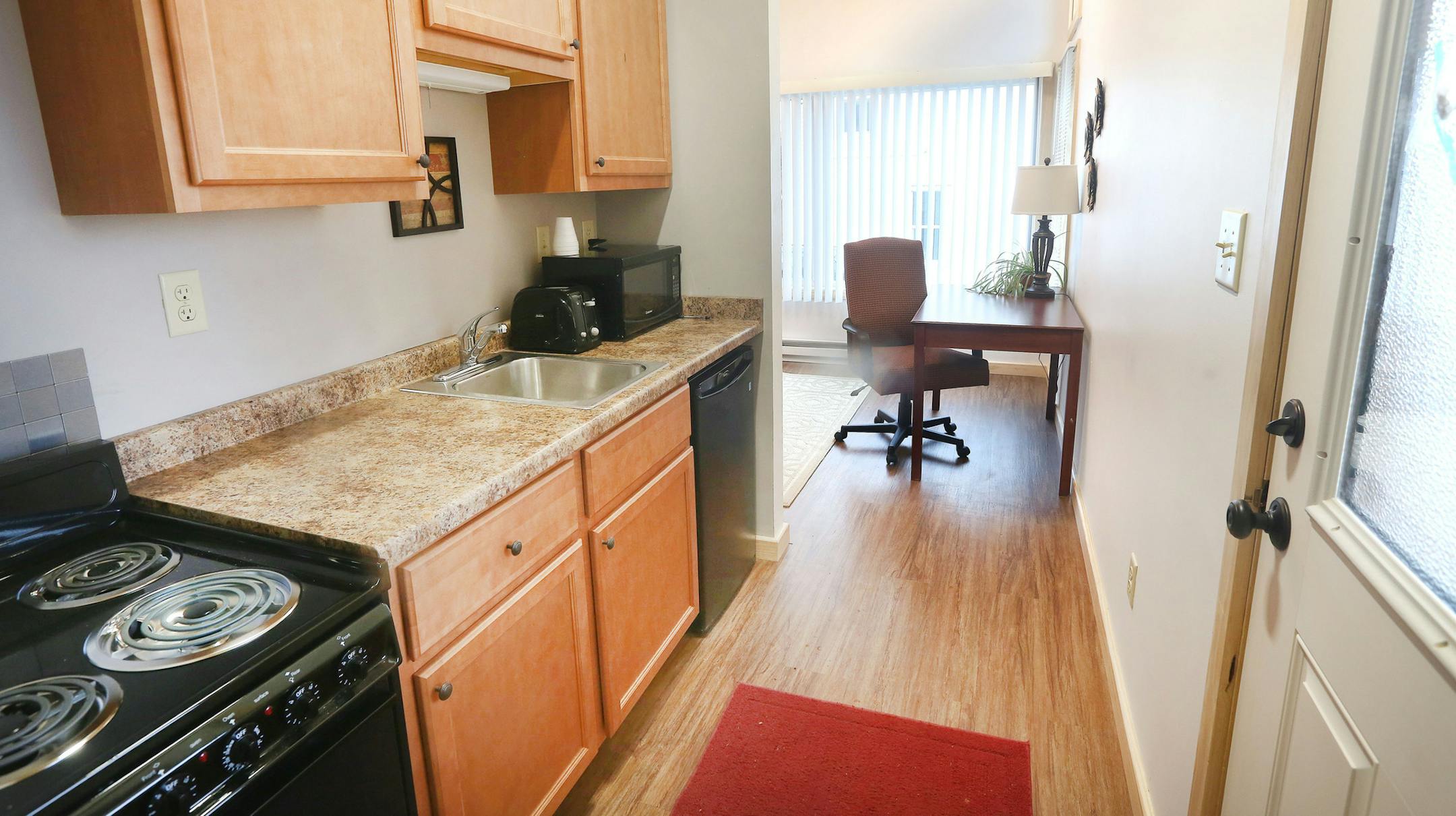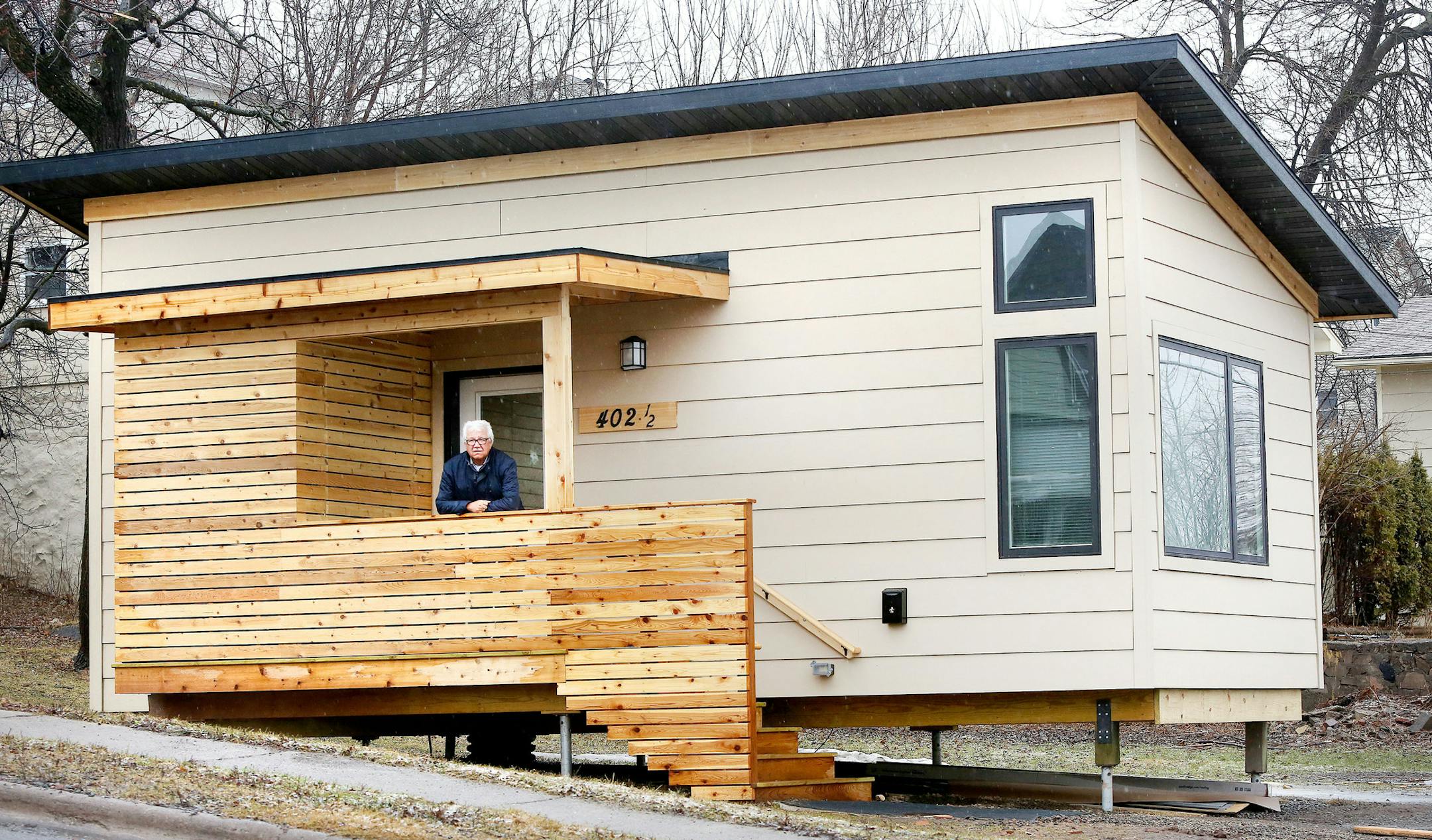
Sitting along an alley in Duluth, the tiny house has a small porch, a narrow kitchen, petite heaters. It boasts big windows, though, as well as a grand goal: housing the homeless.
A nonprofit developer, Center City Housing Corp., built the 28-by-12-foot house as a prototype. It was designed for free by an architectural firm and constructed by volunteers. In March, its first tenant — an elderly, homeless woman who had been living in a shelter — moved in.
"We want to see if it makes sense to use a tiny house as a positive alternative for people who are struggling with homelessness," said Rick Klun, Center City Housing's executive director.
Over the next 18 months, three consecutive tenants will provide feedback on what it's like to live in the 336-square-foot house. Center City will weigh its $60,000 cost. Community leaders will consider where similar houses might be located.
Tiny houses for the homeless are popping up in cities across the country — including Madison, Wis., Austin, Texas, and Eugene, Ore. — in village-like clusters. Duluth's first is perched on a private lot in the Central Hillside neighborhood. The property owner, like the tenant, has asked to remain anonymous, Klun said. The house is allowed to share the lot under the city's zoning rules as an "accessory dwelling unit."
"If you think about Duluth, there are a lot of old, large mansions, built in the early 1900s, and they had carriage houses," Klun said.
While other tiny houses are built on wheels, this one is meant to stay put, and is hooked up to sewer and water. Those hookups accounted for $13,000 of the house's $60,000 price tag. That total is far less than the average cost to build a unit in an apartment complex, Klun said.
But it doesn't include design services, done for free by Wagner Zaun Architecture, or labor, donated by a crew of volunteers.