

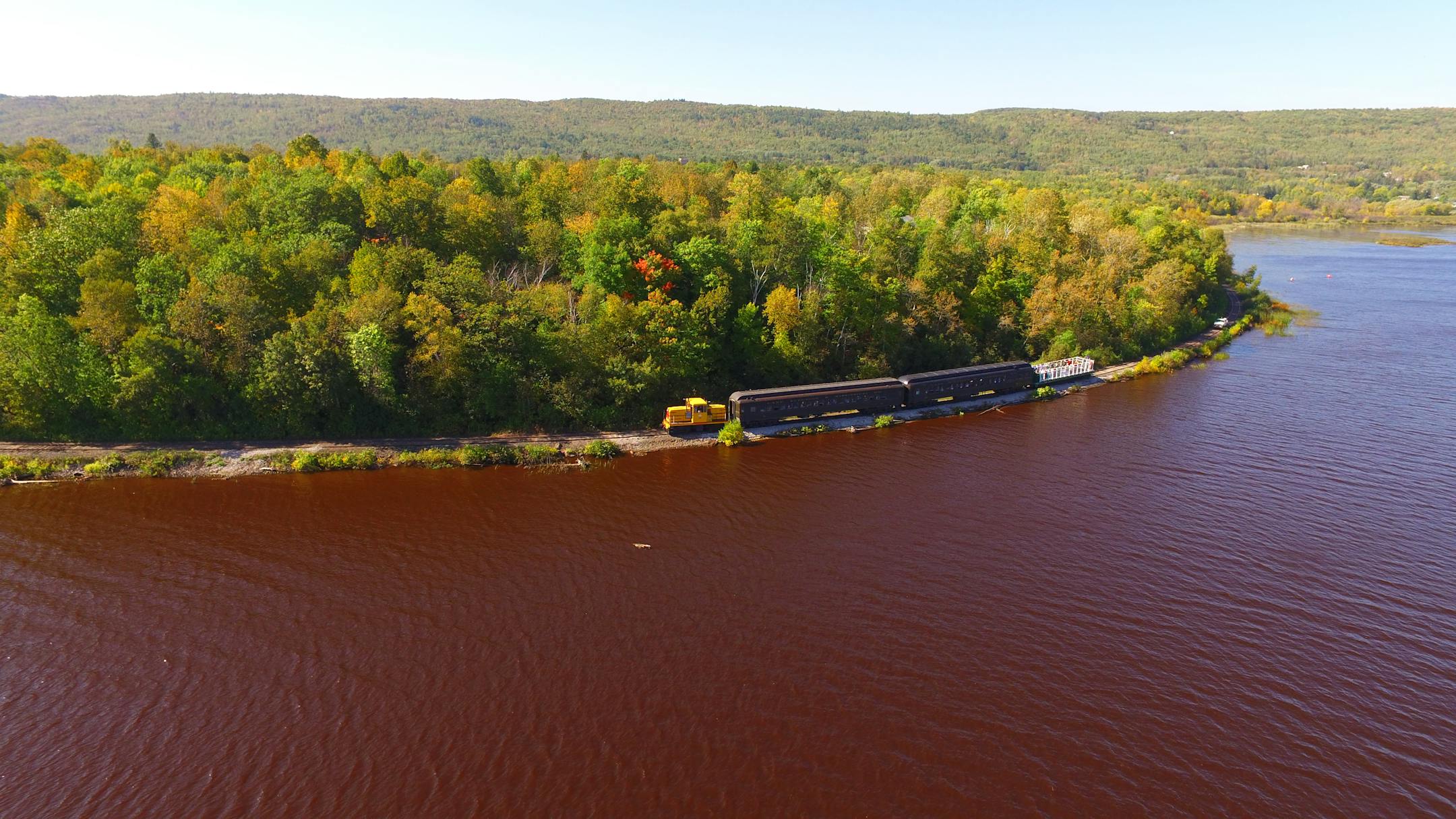
DULUTH — A segment of the first rail line that connected Duluth to the world is back in action, offering fresh views of a river landscape transformed by environmental cleanup.
The volunteer-led Lake Superior & Mississippi Railroad, which for decades offered seasonal rides along the St. Louis River, has been out of commission for several years, first for the pandemic and then for major remediation and restoration work in the Spirit Lake portion of the river and at the former site of U.S. Steel in Morgan Park. The heritage railroad began offering rides again last week, taking passengers on a 6-mile, 90-minute journey through western Duluth's Indigenous roots, industrial past and recreational future.
"Riding the train will give you a firsthand view of all the work they've done," said longtime conductor and board member Harold Dols. "It's unrecognizable."
A new waterfront trail section is under construction along the Superfund site, which will coexist with the rail line that now ends at Boy Scout Landing. But the city trail isn't yet open, so that part of the river can only be seen by boat or rail.
Railroad volunteers used the long break to improve tracks, refine their historical and river cleanup stories for passengers and restore the coach and open-air "safari" cars. The engine is on loan from Wisconsin Great Northern Railroad in Trego, Wis., while the wheels of their locomotive are being refurbished.
The original Lake Superior & Mississippi Railroad first reached Duluth from St. Paul in 1870, connecting goods shipped on the Mississippi River to Lake Superior, and thus, East Coast markets. Before that, Dols said, a rudimentary road was the only way.
The line was used until the 1970s and by then, the railroad had been absorbed by another. In 1980, the Lake Superior & Mississippi Railroad tourist train nonprofit formed, the city's first.
The train route hugs the river and travels over it, showcasing islands sacred to the Fond du Lac Band of Lake Superior Chippewa — whose ancestors migrated to the region hundreds of years ago in search of manoomin, or wild rice — and sites that have undergone extensive cleanup, both to land and water.


