DULUTH
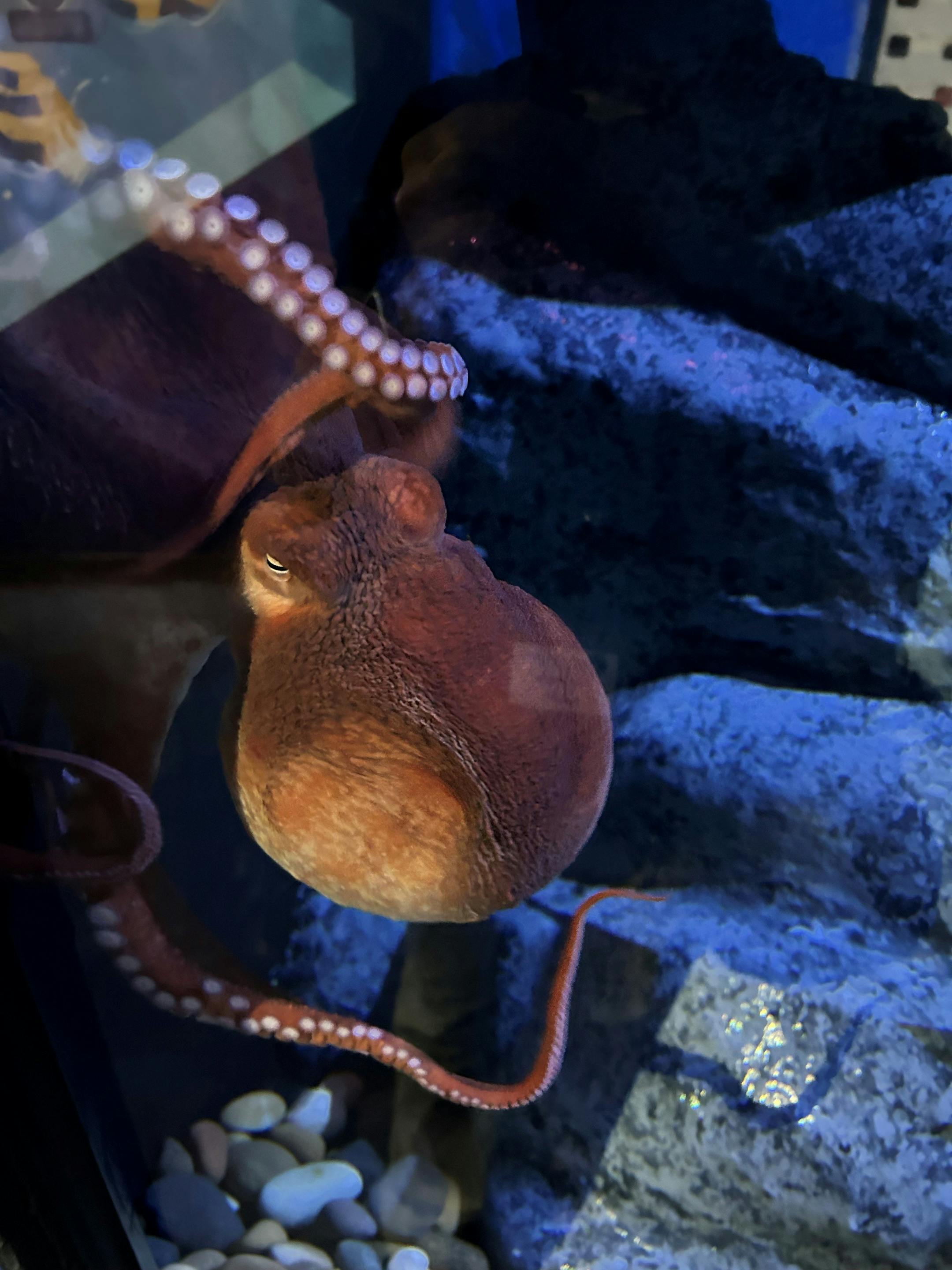
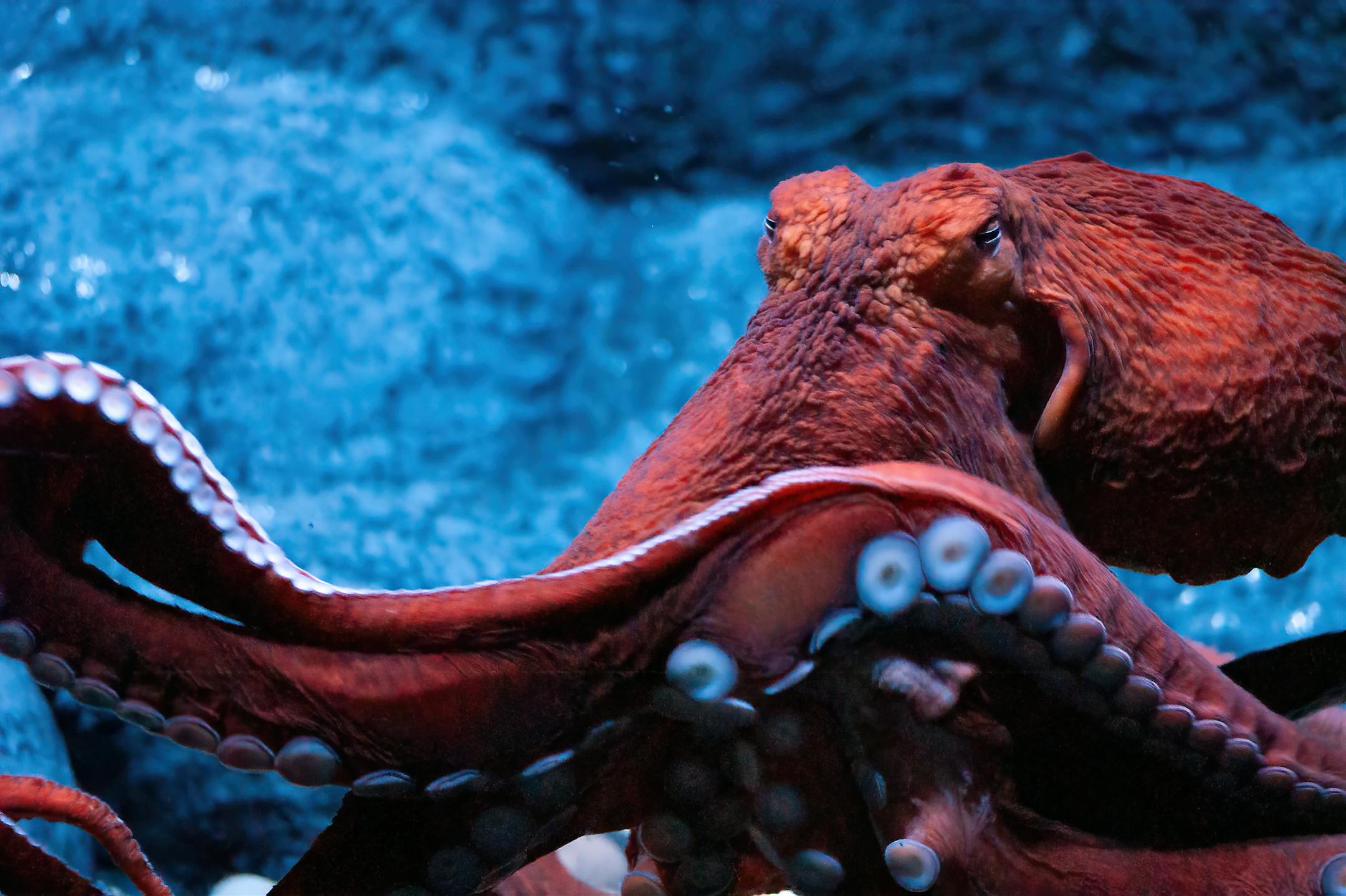
Fitzgerald, the Giant Pacific octopus at the Great Lakes Aquarium, has tucked herself into a cave in her saltwater tank, a single reddish arm covered in suckers barely visible from the dark corner.
She is protecting the thousands upon thousands of eggs she has begun laying, small white dots that line the floor and walls of her nest. It’s a futile cause. The eggs aren’t fertilized. But nature insists she hunker down and protect them, regardless, occasionally snatching a rock or plant from the enclosure and pulling it closer to her cave for protection from predators that don’t exist here.
This period is called senescence — and it means the end of her life is near.
“Now that she’s in her egg-laying stage, she’s been mostly just in her den,” said Adam Lein, the main aquarist who works with Fitzgerald.
Whether in an aquarium or the wild, the Giant Pacific octopus is a solitary creature with a short lifespan of three to five years. It lives until it lays eggs, fertilized or not, then settles quietly into its final months.
The Great Lakes Aquarium staff posted an update about Fitzgerald recently on social media, a post that drew thousands of responses, shares and comments from people interested in the creature’s life and end of life. Extra visitors have come to the exhibit, too.
For Lein, it was a relief to know that the octopus’ recent slowed interactions with keepers were a natural part of her lifecycle and didn’t have a mysterious cause.