

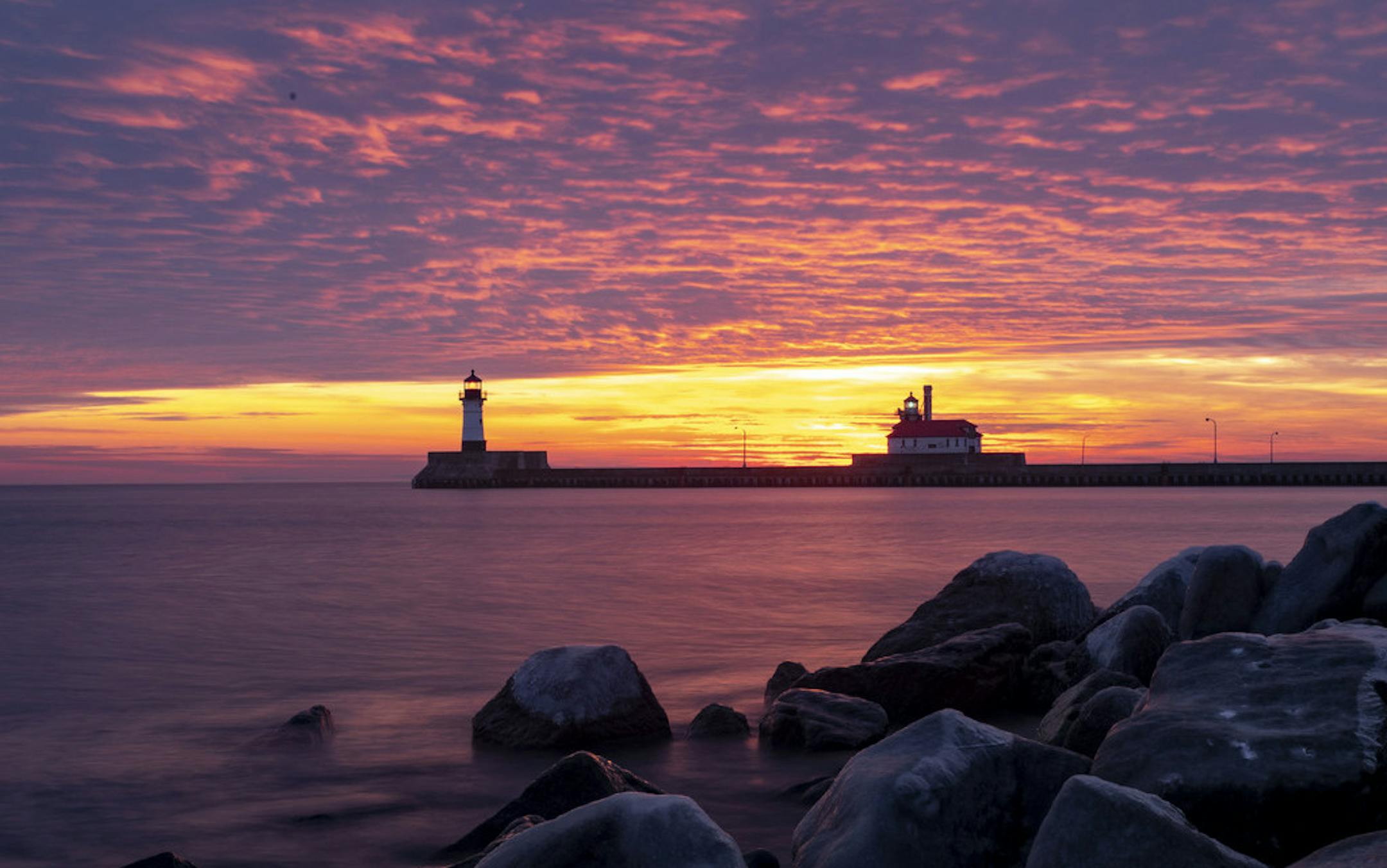
DULUTH – Having for a long afternoon maneuvered more or less safely a pair of cross-country skis on the edge of this Lake Superior port, I angled my truck toward Canal Park as the sun disappeared behind the city's marque hill, whose steep slope was first platted for settlement in 1856.
Duluth has some 86,000 residents now, but in 1860, four years after the Treaty of La Pointe opened the Minnesota side of Lake Superior to a trickle of European immigrants, its population was a meager 80.
The attraction for most of these early interlopers was a mineral that is still valued today. Native peoples dating to 5,000 B.C. had extracted copper from the rivers and rock of what is now the Upper Peninsula of Michigan, fashioning from it axes, spearheads, hooks and chisels.
The La Pointe Treaty cleared the way for prospectors to grubstake their way up the North Shore, from Duluth to Grand Marais, hoping to find new and still-richer copper deposits.
But the boom never materialized, and the North Shore "copper towns" of Flood Bay, Stewart River, Portland and Bellville were quickly abandoned.
Had those first fortune-seeking explorers of what is arguably Minnesota's most beautiful region been availed of the comforts that awaited me the other evening in a Canal Park hotel and nearby fine restaurant, they doubtless wouldn't have left.
With good reason.
Over the past four decades, Duluth has in many ways transitioned from an industrial town whose lakeshore was littered with junk cars and scrap metal to a recreation and vacation destination that Outside magazine once dubbed "America's best outdoors town."


