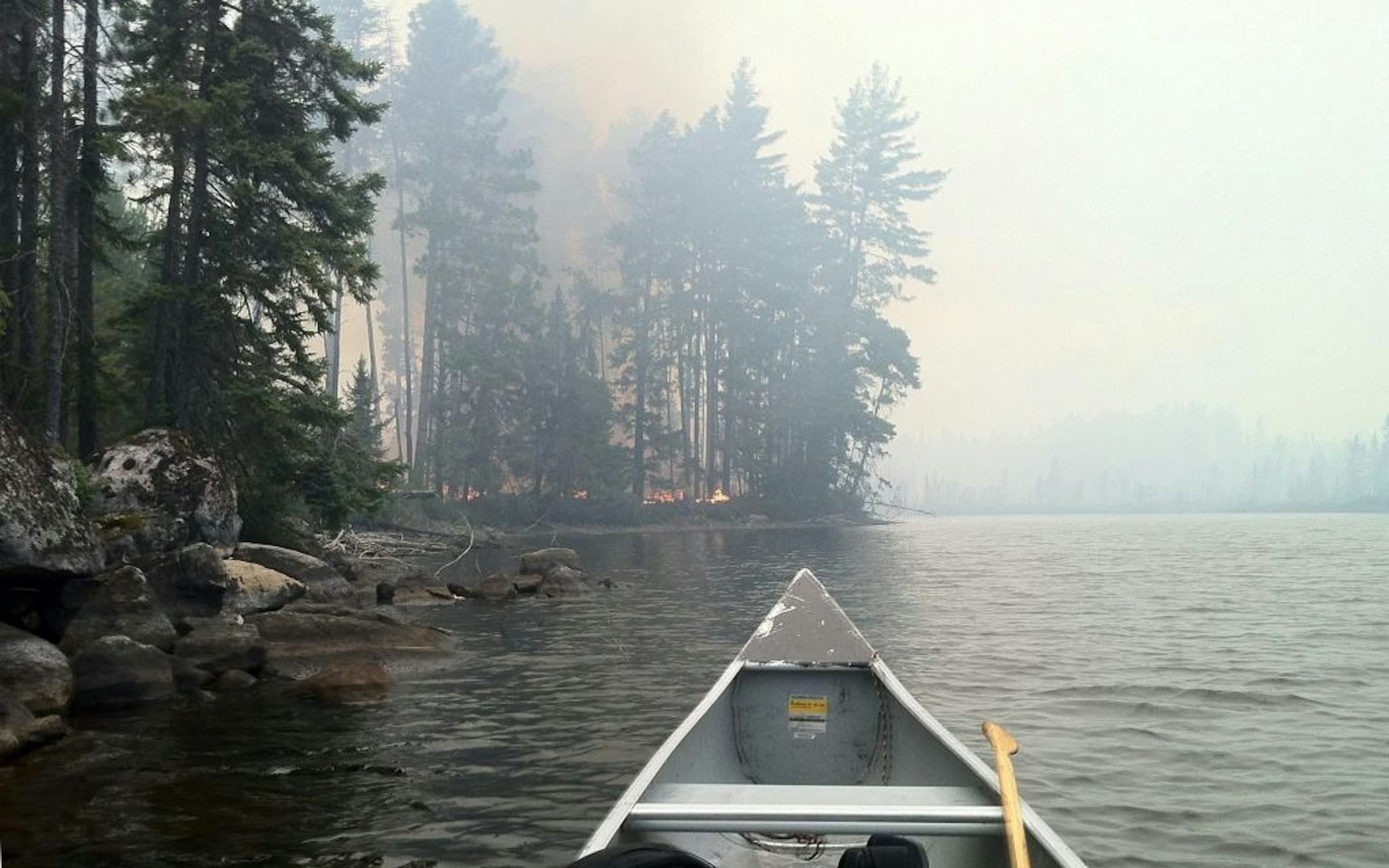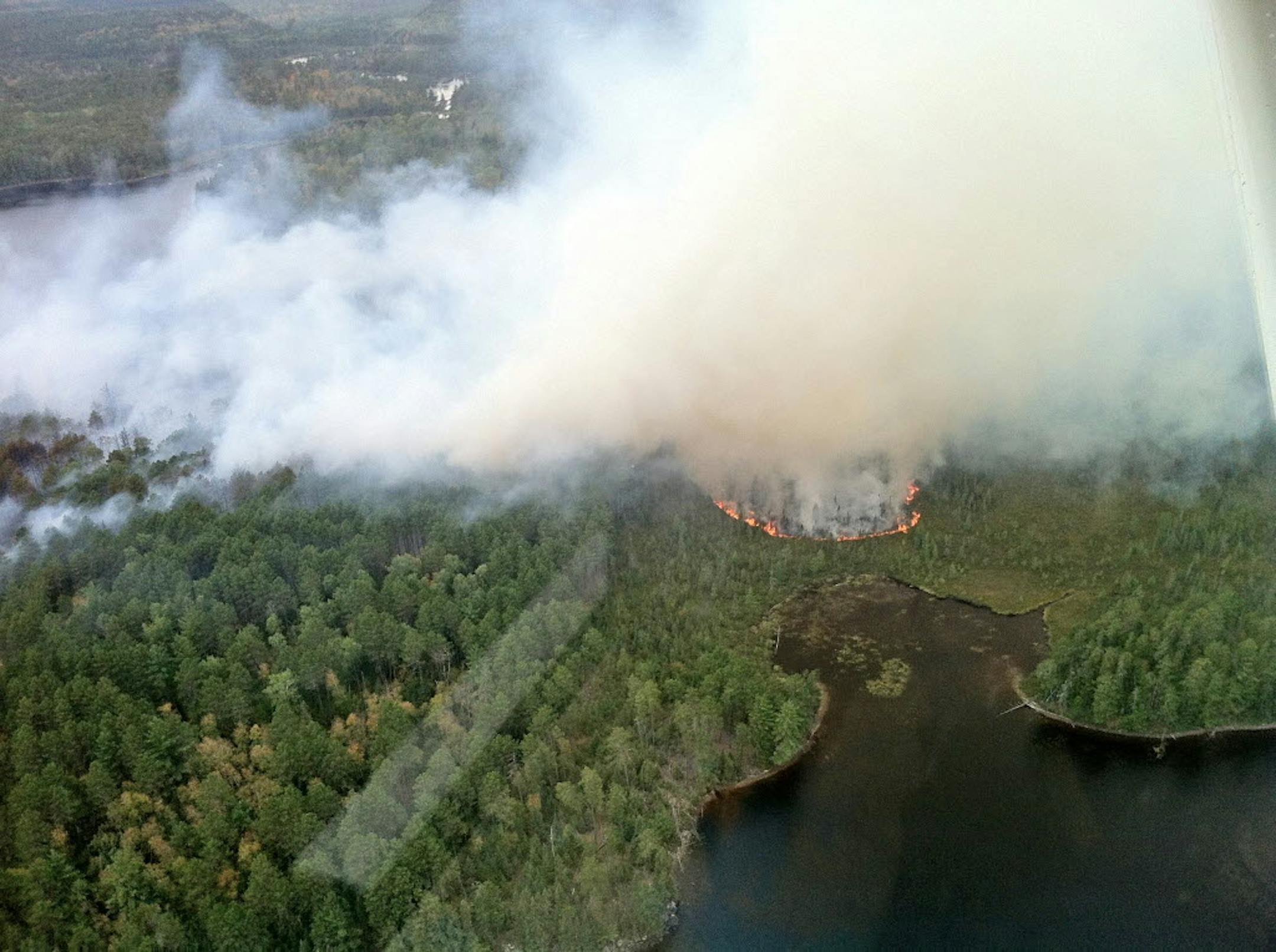
Firefighters Monday battled a blaze fueled by "crispy," dry conditions in the Boundary Waters Canoe Area Wilderness northwest of Ely.
The fire erupted about mid-afternoon Sunday near Cummings Lake, blackening more than 30 acres of pine and spruce wilderness by Monday afternoon. About 14 firefighters and a helicopter worked throughout Monday to douse the fire. A CL-215 water bomber, a large fixed-wing aircraft that gathers water up from lakes, remained on standby in Hibbing, said Superior National Forest spokeswoman Becca Manlove.
The fire began near a campsite on the northeast shore of Otter Lake and spread to the western shore of Cummings Lake by Monday, she said. The cause of the fire is being investigated.
Manlove said she didn't know if any campers were in the area but pointed out that that particular canoe route doesn't attract a lot of paddlers. "If there are campers there, the firefighters will move them out," she said.
Although the U.S. Forest Service sometimes allows wilderness fires to burn under certain conditions, firefighters responded immediately to the Cummings fire, in part because of the extremely dry conditions in the northland, Manlove said. An outbreak of forest fires out West also is stressing Forest Service resources, forcing it to fight all fires immediately so they don't get out of control, she said.
Last year, the Pagami Creek fire that began Sept. 12 consumed 145 square miles in and around the BWCA. Because of wetter conditions at the time, the Forest Service monitored the Pagami fire according to policies intended to allow natural forces, including fires, to influence the wilderness mix of vegetation. In the long run, burned areas can stop the spread of new wildfires.
But changing conditions quickly outran expectations and the Pagami Creek fire rapidly spread, becoming the largest fire Minnesota had seen in 93 years.
Other fires