

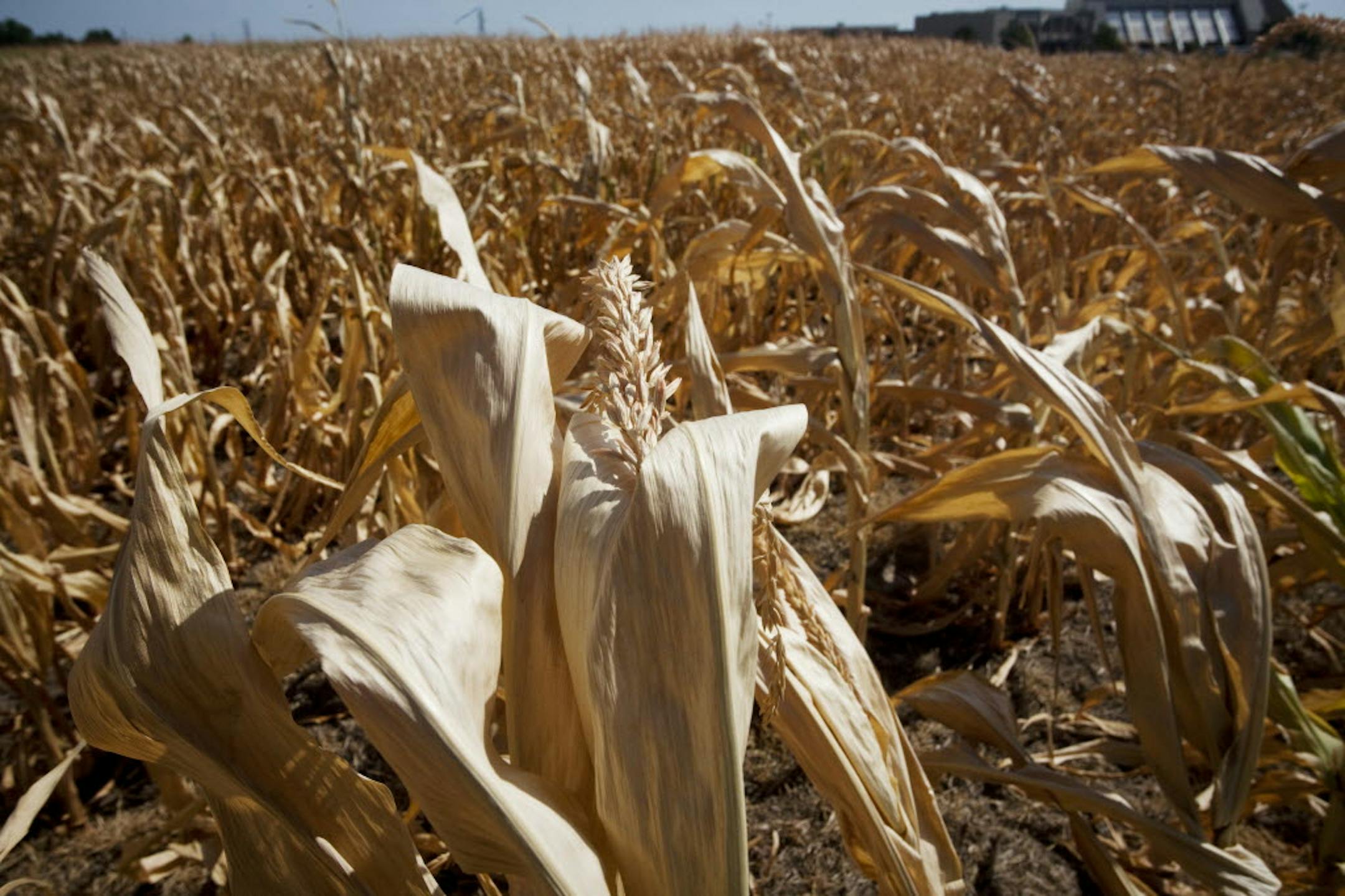
The severe drought that is starving crops throughout the nation's farm belt is also likely to drive up prices in the grocery aisle.
Beef will go up 4 to 5 percent as a result of this summer's dry weather, the government forecast on Wednesday, while dairy products are likely to increase 3.5 to 4 percent and eggs by a similar amount.
The main reason is the prospect of a weak corn harvest that is already driving up the cost of that key agricultural commodity. Corn can be found in everything from soft drinks to baby food, but nearly half of the crop is used to feed livestock.
"It's having a huge impact on us," said Steve Olson, head of both the Minnesota Turkey Growers Association and the Chicken and Egg Association of Minnesota. "The fear is that there's not going to be enough feed to go around."
The data from the U.S. Department of Agriculture is the first government estimate of how much prices could rise next year because of the drought that has gripped most of the country this summer, producing a lower-than-expected yield in not only corn but also soybeans and several other commodity crops.
Corn is now selling at about $8 a bushel -- up 50 percent from where it was priced at just a month ago. Soybeans are at a record price of almost $17 a bushel, up from $13 just two months ago. Food prices overall rise about 1 percent for every 50 percent increase in corn prices, because corn is used in dozens of products, the Agriculture Department said. "These are very corn-intensive operations," said Bruce A. Babcock, an agriculture economist at Iowa State University, referring to raising livestock.
According to the government, 88 percent of the this year's corn crop is now affected by the drought. Seventy-seven percent of the crop for soybeans, which is also used in animal feed, is affected.
Minnesota is among the nation's top five producers of corn and soybeans, but its crops are among the nation's healthiest, as far as moisture goes. Around 60 percent of Minnesota's corn and soybeans are still in good or excellent condition. But corn and soybean prices are set by broader U.S. drought conditions, and Minnesota's $8 billion livestock industry is feeling the pain. The state is the nation's third-largest hog producer, and about two-thirds of the cost to raise a pig is feed, particularly corn.


