

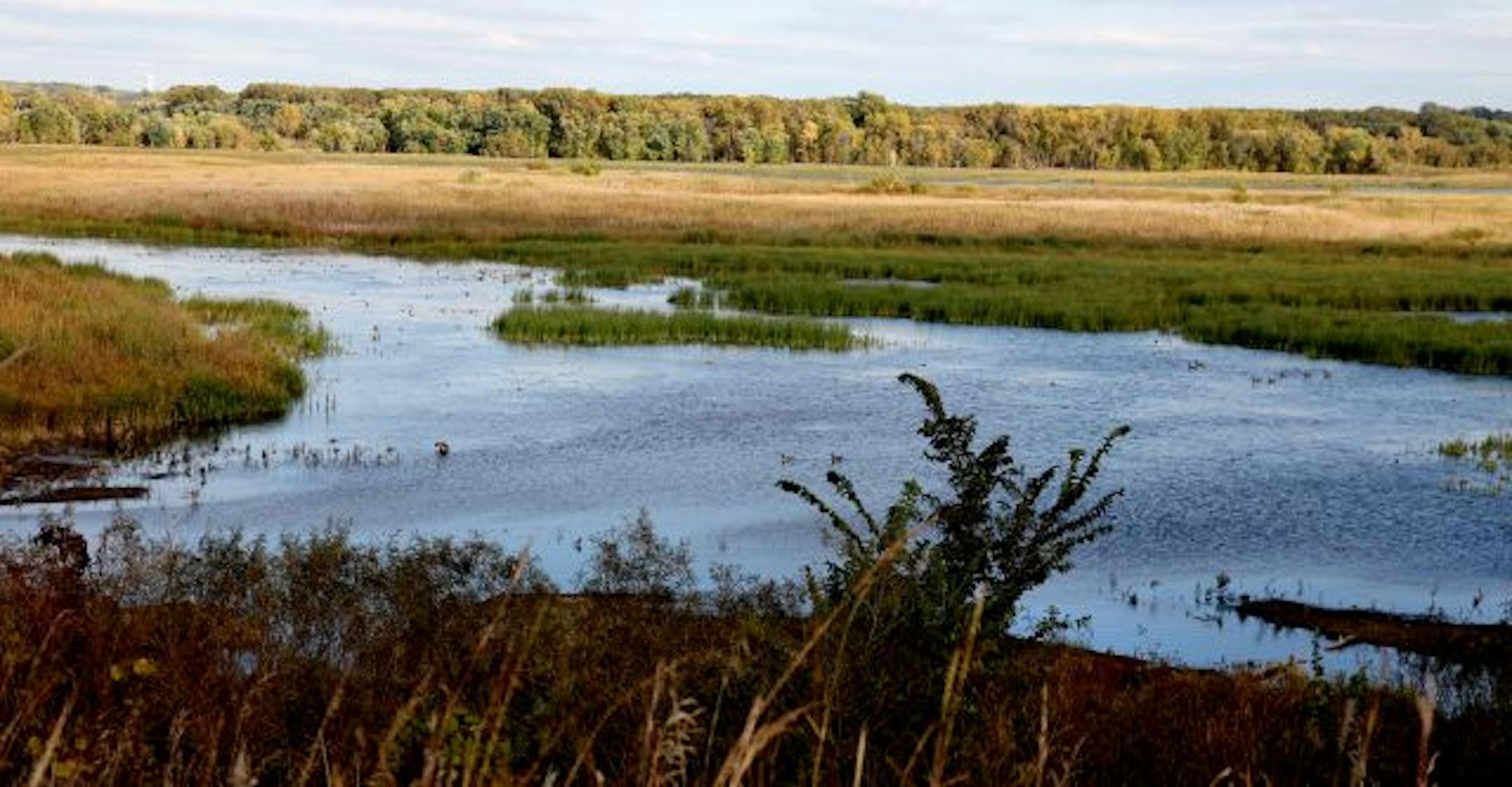
While everyone else moaned about the drought this summer, Minnesota Valley National Wildlife Refuge biologist Vicki Sherry watched water levels drop in Long Meadow Lake and rejoiced.
What was happening to the lake was visible to anyone who drove over the Hwy. 77 bridge between Bloomington and Eagan. Before recent rains, the water had dropped so low in some places that mud flats were exposed and the lake looked more like a collection of shallow pools.
Sherry said the 2-foot drop in water level was exactly what Long Meadow needed.
The 1,200- to 1,500-acre lake is a key stop for waterfowl on spring and fall migrations. But the variety of native plants in the lake had diminished with repeated flooding from the Minnesota River and water that was too high for some of the plants favored by ducks.
"We had too many water lilies, cattail and river bulrushes," Sherry said. "They're fine if you don't have them all in one place. But some areas were so choked with them that you couldn't even get through it."
Now, after a summer of low water that was helped along by nature and by a new water control structure that prevents the river from backing up into the lake, native plants like smartweed, arrowhead and beggar's tick have reappeared. The water is swarming with insects favored by ducks. And Sherry expects the roots of reestablished native plants that thrive in shallow water to help stabilize a lake bottom that had become loose from repeated flooding.
Trying to lower water levels
"By drawing it down, we create diversity of habitat," said Sherry. "Ducks like seed-bearing plants, and we were trying to get those to germinate in the summer. ... The water [control] structure allows us to manage water levels, and that was pretty impressive to see."


