

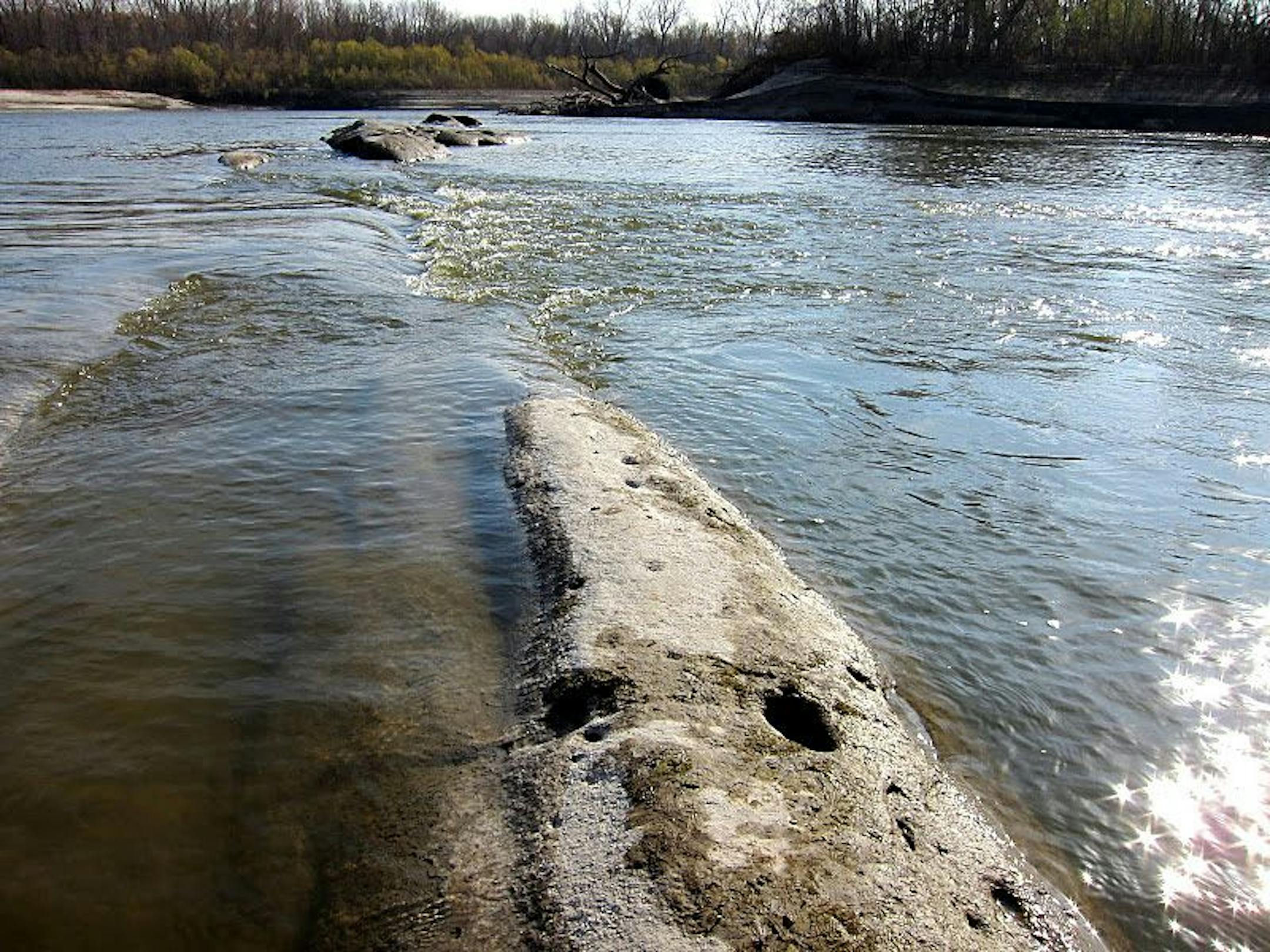
History is showing its face along the Minnesota River, thanks to the driest fall on record in the Twin Cities.
The river is so low that it's exposing large sandstone ledges and rapids for the first time in many years at a couple of spots between the cities of Carver and Jordan.
The "Little Rapids," also known as "Carver Rapids," are rich in history and one of the main reasons why the riverfront towns of Chaska and Carver were founded in the 1850s.
Jerrod Larson, who runs and hikes in the Louisville Swamp area in Scott County, said the massive outcroppings of rock in the Minnesota are impressive. The more dramatic stretch of rapids requires a 3-mile hike to view, he said, but another set is easier to access.
"A lot of the rest of the season, the river's too high or it's swamped out," Larson said.
The rapids are more than just landmarks. They are an enduring but largely forgotten part of history in what is now the southwest metro area.
"In the early years, rivers were the only roads, and steamboats couldn't pass much beyond Carver because of the rapids there," said John von Walter, vice chairman of the Carver Heritage Preservation Commission.
Passengers and merchandise heading upriver from St. Paul to New Ulm and Mankato had to stop at the rapids and transfer to smaller boats, he said, or continue their journeys by horse, stagecoach or oxcart.


