

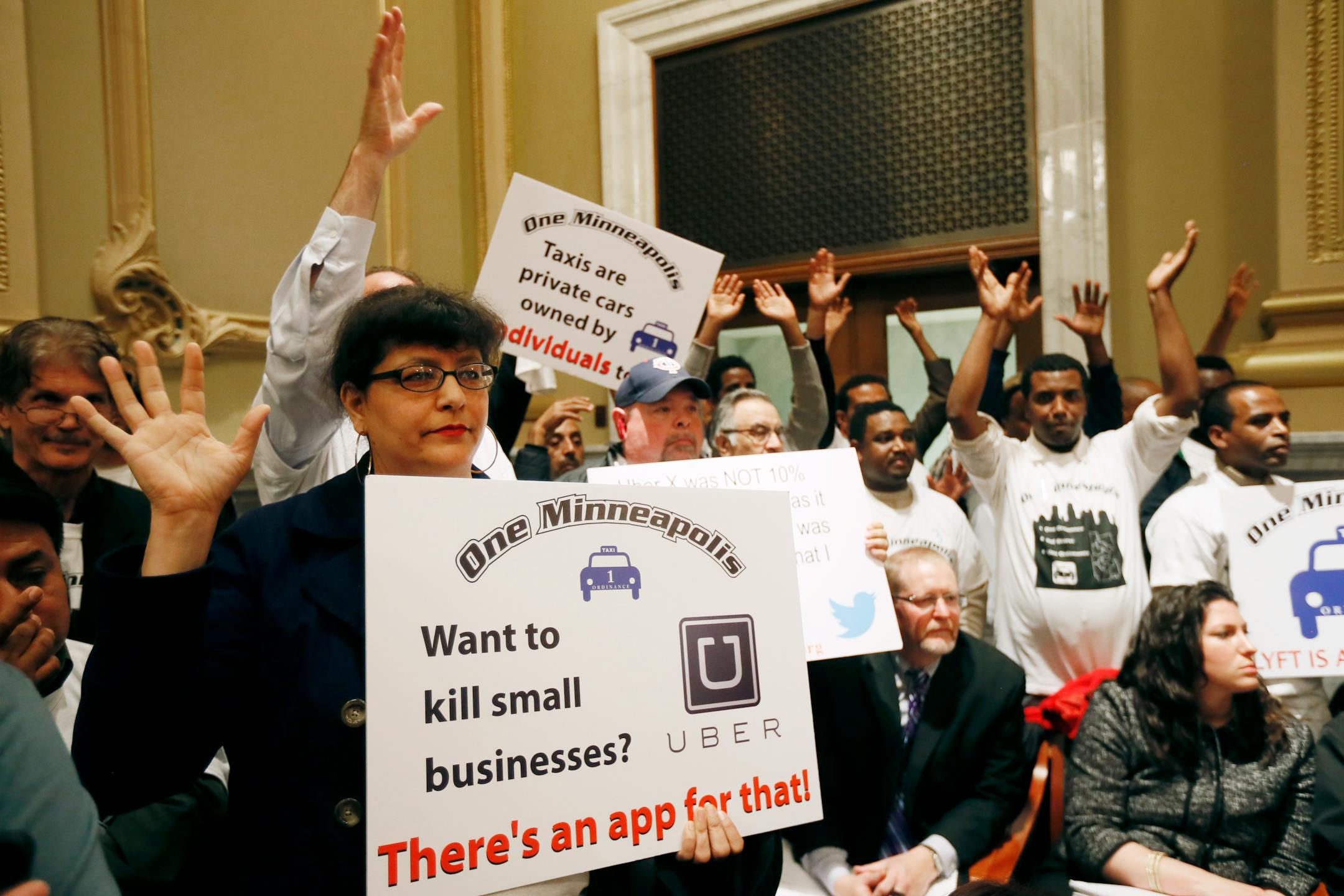
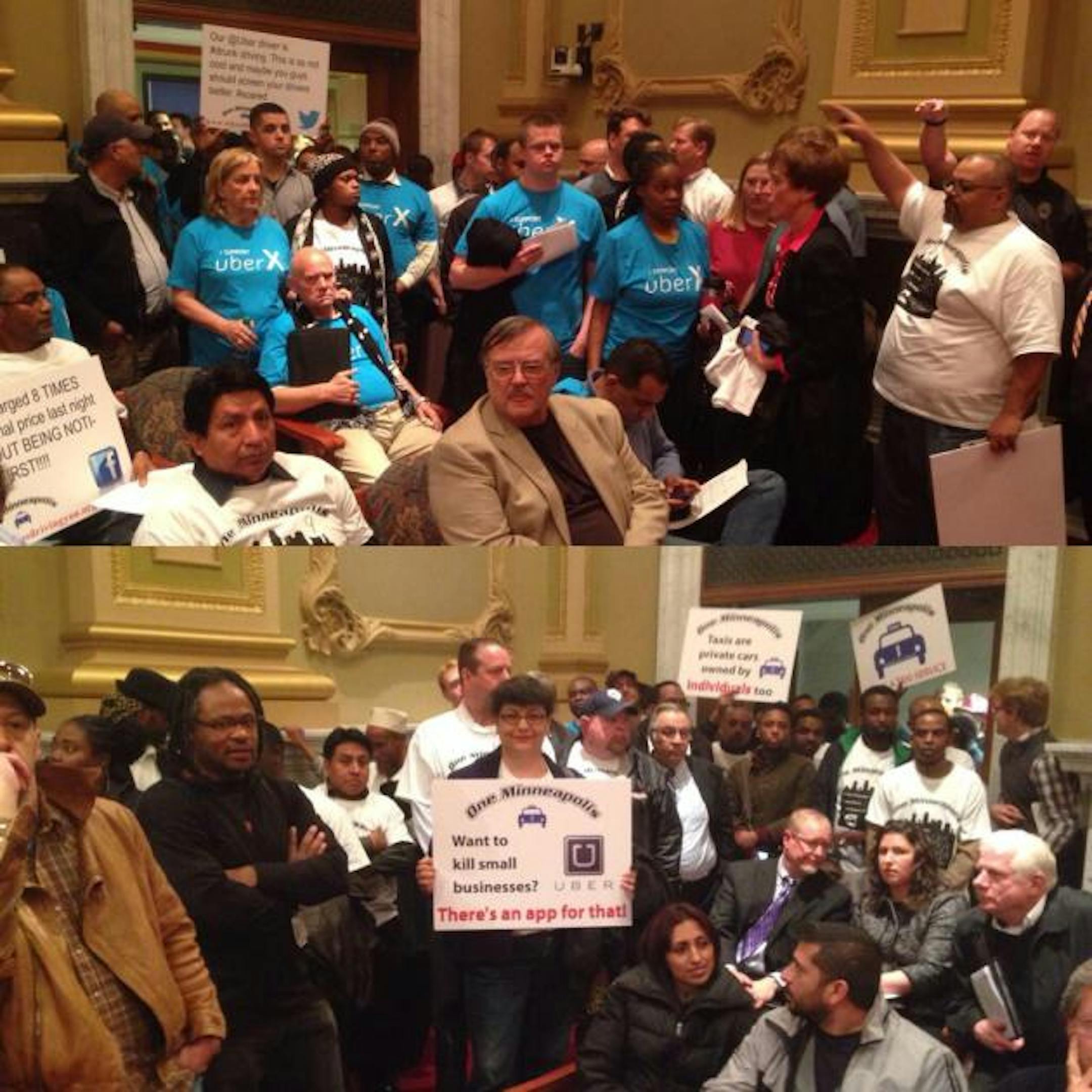
Pink mustaches, custom T-shirts, petitions and placards flooded City Hall Tuesday as opposing transportation companies clashed at a public hearing over proposed regulations for app-based services like Lyft and UberX.
At issue was whether the app-based services, which essentially allow people to become chauffers of their personal cars, are distinct enough from taxicabs to warrant more relaxed regulations. Taxi industry representatives, highlighting the growing use of smartphone apps to find cabs, said the services are similar enough to warrant one ordinance covering both.
The debate mirrors one happening in cities across the country, where Lyft and UberX have run up against regulators more used to dealing with traditional cabs. Lyft and UberX are currently operating illegally in Minneapolis, but city regulators have only cited and towed four UberX vehicles, said business licensing manager Grant Wilson.
The proposed rules would legalize Lyft and Uber as "transportation network companies" (TNC), while regulating their insurance, setting inspection requirements and imposing other requirements. By definition, however, only taxicabs could accept passengers that hail vehicles on the street — TNC rides must be prearranged.
The City Council panel weighing the new regulations took public testimony Tuesday but is expected to continue working on the ordinance for several weeks before a final vote.
Lyft and Uber supporters argued that the services are unique by allowing drivers to work part-time, make connections in their community and deliver superior service because of driver and customer ratings. "I have now built relationships with many of the drivers in the Lyft community," said Lyft customer Jesson Hunt. "I know them, they know me. I know their back story, they know mine."
The taxi industry argued that the proposed ordinance sets up a two-tier regulation that heavily benefits app-based companies. A long list drawn up by the industry's lobbyists at Faegre Baker Daniels notes taxi drivers can only charge the city-specified meter rate (TNCs are free to apply "surge" pricing), must submit to a city background check (versus a private one), must swap out cars every five years (versus 10 for TNCs) and can't charge cancellation fees (TNCs already do).
"They're cab drivers," said Zach Williams, owner of Rainbow Taxi. "We need one ordinance for all of this transportation because we're the exact same business."


