

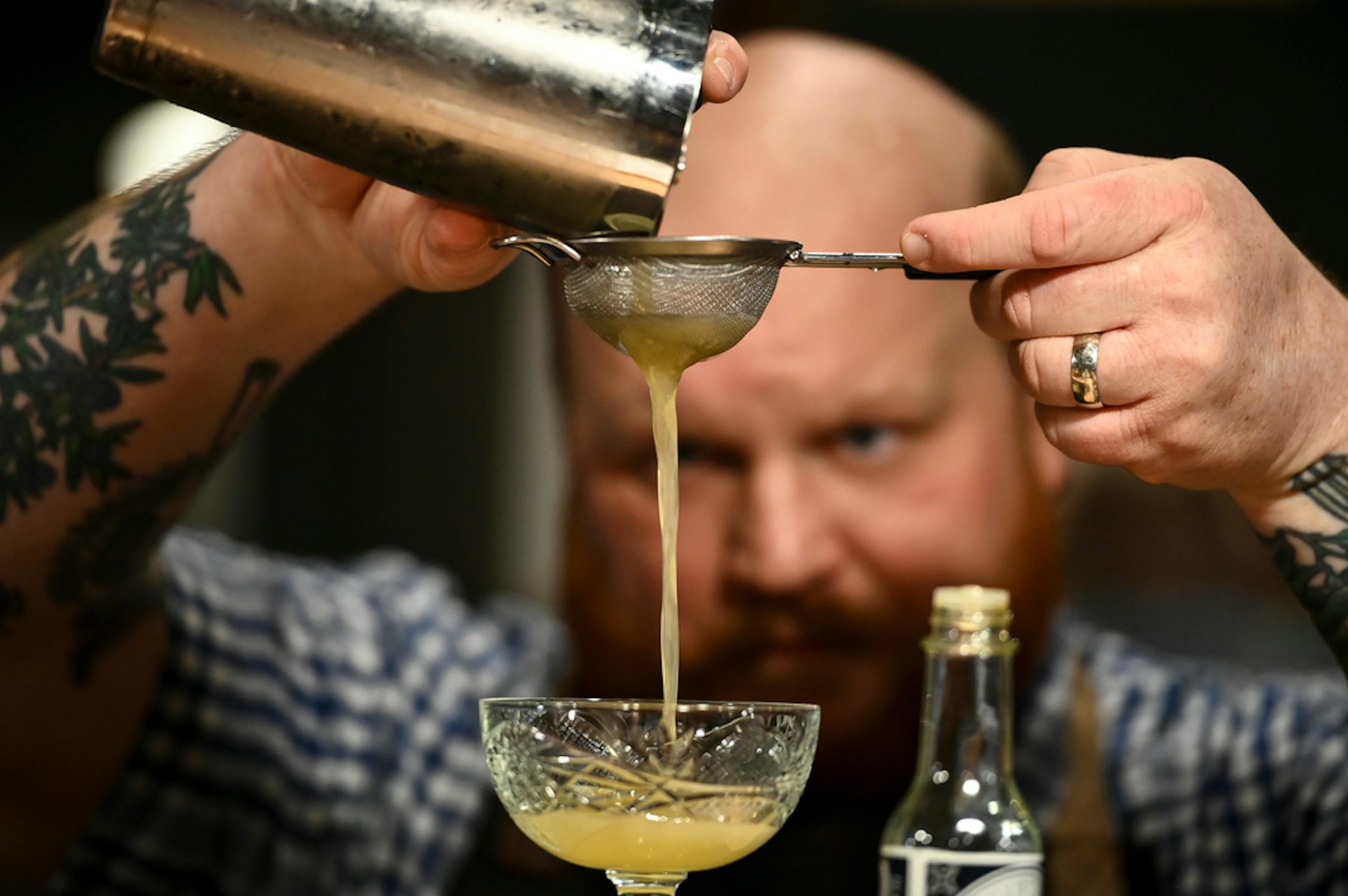
A smartphone is mandatory for a visit to a Twin Cities bar specializing in cocktails, first to snap (and then post) an image of a bewitching concoction, and second, to look up the exotic ingredients swirling in the glass.
From splashes of artisanal distillates blended into brandy drinks at Marvel Bar, to tangy tropical libations at Hola Arepa, to a goblet topped with a scoop of bubbling foam at Martina, sippers in the Twin Cities have an embarrassment of riches when they belly up to a cocktail bar these days.
"I'd rather watch someone make a cocktail than watch someone make food," said Cori Syring, sitting on a stool before the bartender at Parlour Bar in St. Paul. "There's an art to it that's just fascinating."
Cocktails are the drink of choice for a growing number of people out on the town and willing to pay $10 to $16 for a drink crafted by a bartender who might be more precisely called a cocktail chef.
"We want to start a conversation with our guests. 'What's the historical and sociological context of the ingredients?' That challenges guests to be part of dialogue rather than a bystander," said Marco Zappia, beverage director at Martina and Colita.
Equal parts theater, history and chemistry, craft cocktails span the generations, appealing to Gen Z imbibers ordering their first legal drinks to baby boomers on the prowl for an inventive thirst-quencher that may include heirloom ingredients, housemade elixirs, tinctures and cordials, spirits infused with roots, bark, flowers and herbs, dosed in secret ratios.
"We have 600 spirits and 500 of them are obscure, weird things that we are excited about," said Matthew Voss, who heads the team at Marvel Bar. "We have awareness of what's in the bottle; we know where the grain comes from, we've been to the orchards and distilleries to see the process, and that helps us share it."
Cocktails originated in the 19th century when juices, syrups and sweeteners disguised the often harsh spirits of the day. Skilled bartenders elevated mixed drinks into a high art, but that crashed with Prohibition in 1920, exiling many mixologists of the day to Europe and Asia to ply their trade.


