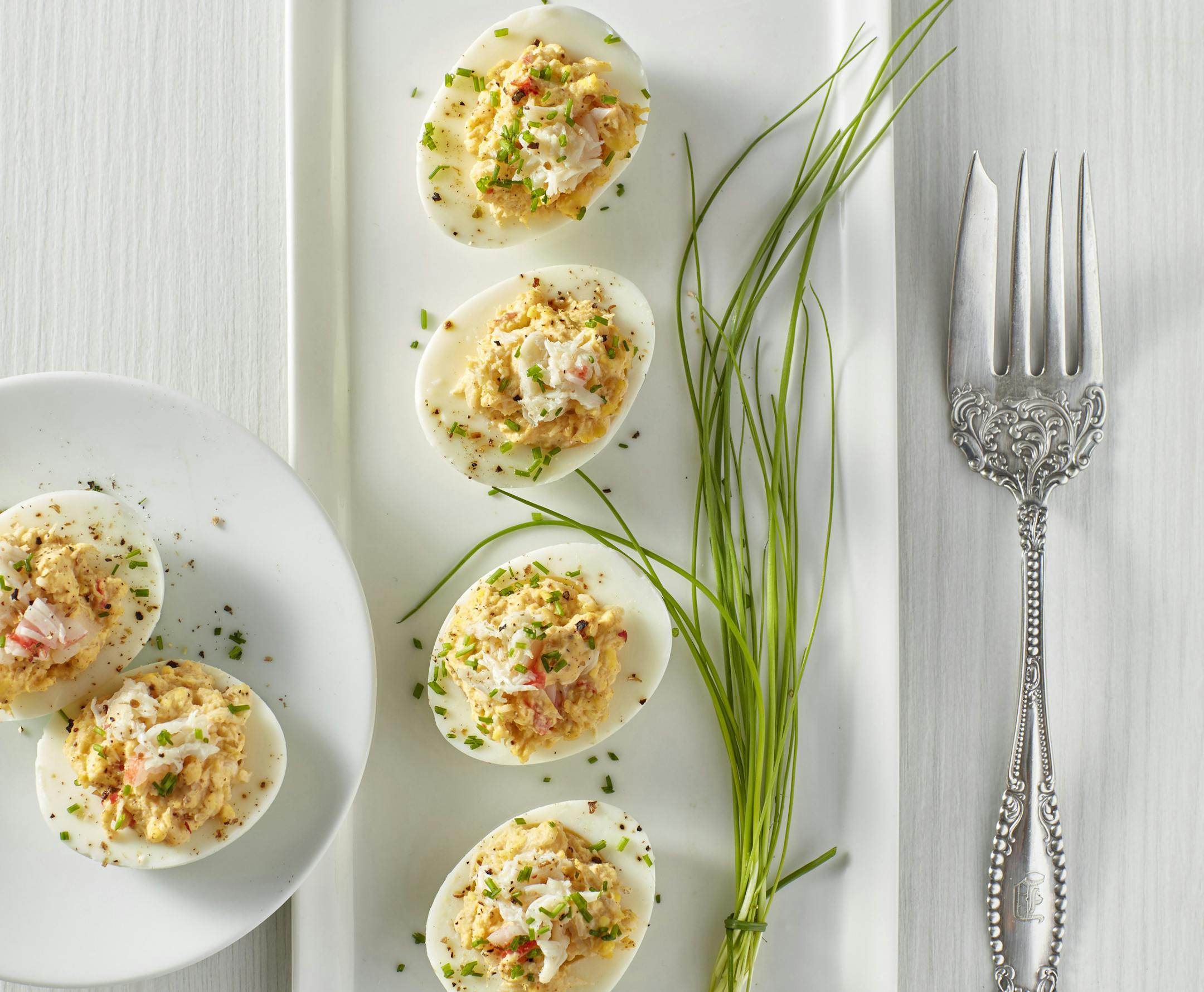
When everything else lets you down, eggs are always there for you. Forgot to thaw out that roast? Let's scramble some eggs for dinner. Need a high-protein snack? Peel a hard-cooked egg. Toast not cutting it for breakfast? Fry an egg and turn it into a sandwich.
Whatever your culinary dilemma may be, eggs are likely the answer, and for good reason. They're a quick-cooking, nutritious, inexpensive and tasty ingredient that most of us have in our refrigerators.
Because now more than ever you may need this superhero food to come to the rescue, here are a few tips and recipes that will be helpful before you get crackin'.
Eggs might seem like the simplest of ingredients, but cooking them can be tricky, so much so that cooking a basic omelet or fried egg is often a test given to new chefs seeking employment. This is true because, while eggs can be finicky, a good cook knows how to avoid any potential problems.
Those problems typically come in the form of heat, and here's why. Eggs are full of natural proteins. These proteins are all individual, free-floating, coil-like units. When heated, the protein coils unwind and begin to stick to other proteins, creating a mesh.
You can see it happening when you fry an egg and the white turns from clear to opaque. This indicates the proteins are linking together, forming a tight mesh that you can no longer see through.
If you cook the egg too long or at too high a temperature, the mesh tightens so much that it squeezes out any liquid and becomes dry and tough. Of course, what's too long and what's too high can be difficult to determine.
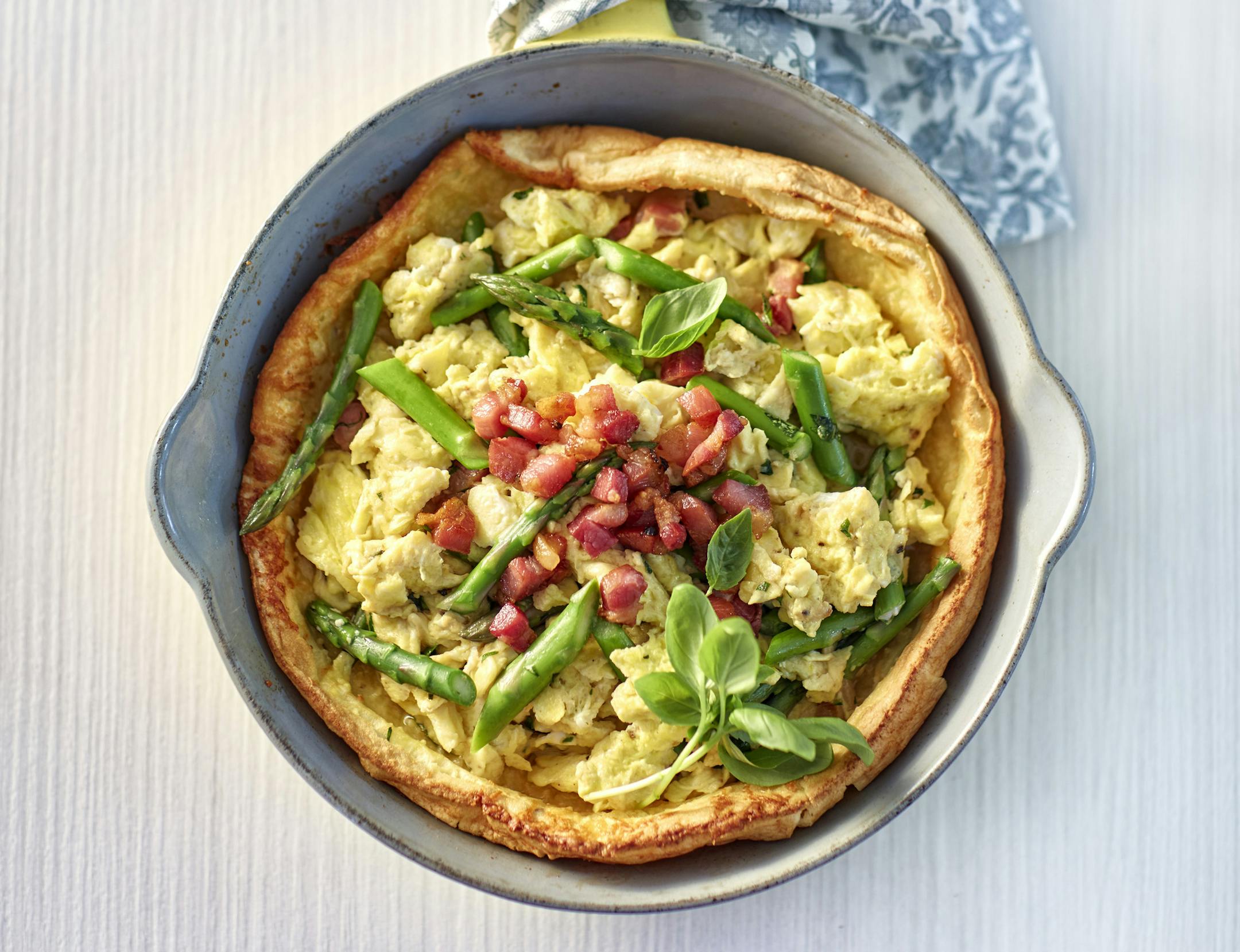
Let's take a look at Asparagus Basil Scrambled Eggs in Parmesan Dutch Baby With Crispy Pancetta. Scrambled eggs are a good illustration of the balance you need in time and temperature when it comes to cooking eggs.