

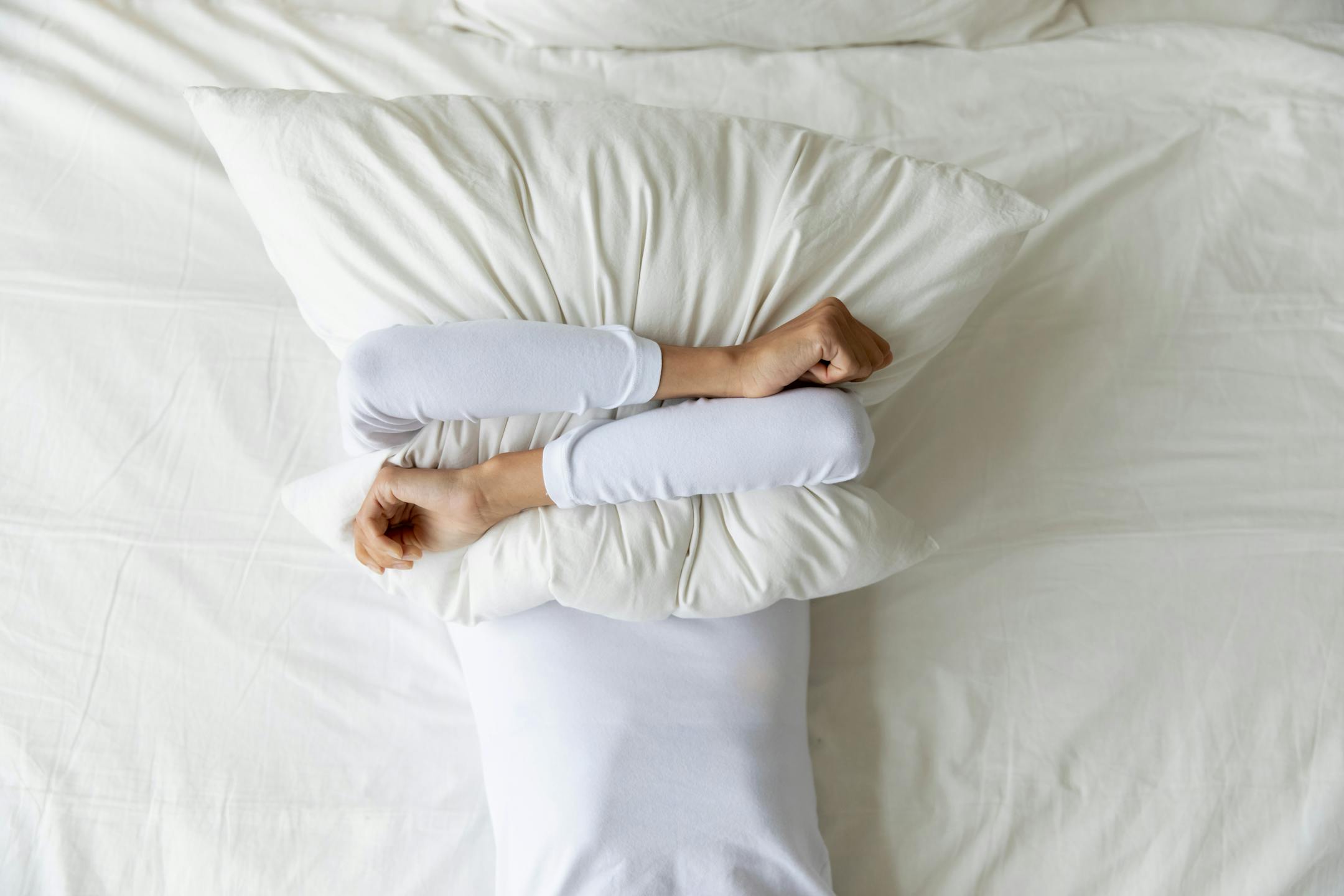
On Sunday evenings, Lauren Tynan watches the animated sitcom "Bob's Burgers" while maybe sipping a glass of wine. She's trying to stave off the Sunday scaries: a tendency to overthink the workweek ahead, her mind busily running through everything she needs to accomplish and sometimes landing on worst-case scenarios.
Tynan, 38, who lives in New York's Queens borough and works in communications, finds solace in "watching something that's light and airy." She also reminds herself that Sunday is still the weekend; it's still her time.
Natalie Zisa experiences a similar phenomenon, but because she works a Sunday-through-Thursday retail schedule, the anticipatory anxiety hits her on Saturday evenings. She spends many of her days off visiting family and friends in New Jersey, so heading back to her home in New York when it feels like everyone else still has one more day of freedom is hard. "On Saturdays when I wake up, I'm still pretty excited for the day, but those Saturday nights create so much anxiety," said Zisa, 26.
Instead of enjoying every minute of the weekend, many American workers, like Tynan and Zisa, describe being seized by anxiety, dread or simmering sadness because their precious days off are evaporating so quickly. The feeling usually creeps in on Sunday evenings and is "like a visceral reaction to the realization that the weekend is over," said Pallavi Yetur, a Los Angeles-based licensed professional clinical counselor. "And the weekend meant a sort of freedom, or ease, that is now being threatened."
So much for Sunday Funday.
The term "Sunday scaries" has become a catchphrase over the past decade, frequently popping up on social media platforms. It's so enmeshed in the common vernacular that even the White House has adopted it: "There's no Sunday scaries when you get to work for the American people every day," the official government account tweeted last month, accompanied by a photo of President Joe Biden and Vice President Kamala Harris. That prompted a flurry of responses, including: "The fact that you acknowledge Sunday scaries shows a level of compassion for working people that I appreciate."
Yetur theorizes that, for many people, the Sunday scaries worsened during the pandemic, as we began sleeping at the "office" and repurposing our kitchen counters as boardrooms. "I noticed it in myself, where I was starting to feel more exhausted constantly, and then I started hearing my patients talk about it, too," she said. The intensification may be rooted in the sameness of the pandemic - the sensation of being boxed into the same four walls, day after day, night after night - and in the fact that, for many people, the workweek has spilled over into what should be personal time.
"When we're not treating our weekends like actual weekends, with a real clear delineation between a work-life and a life-life, it does take a toll," Yetur said. "Ideally, we would be getting a sense of vacation vibes from a weekend, but during the pandemic, everything was the same."


