2:13
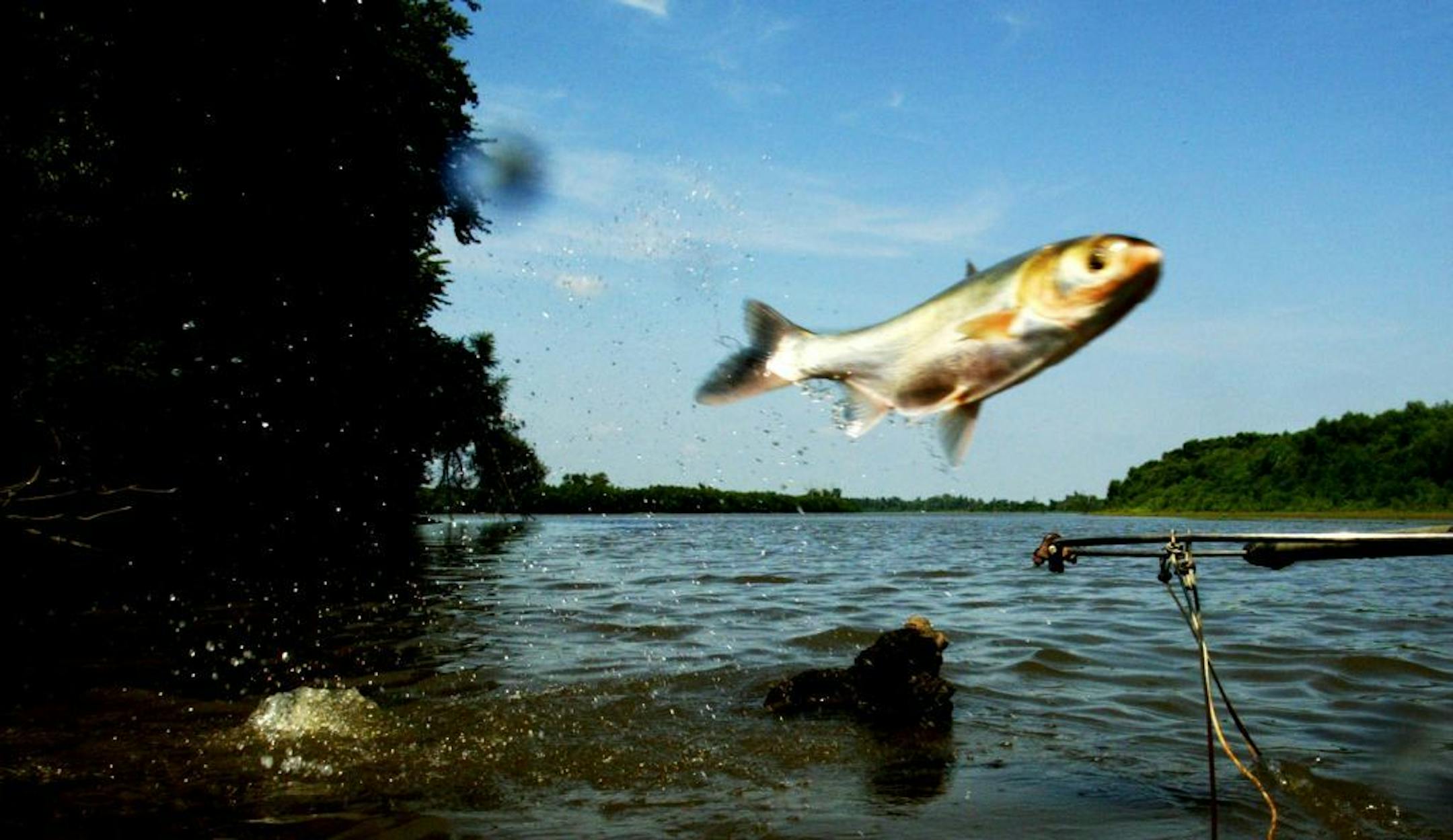
2:13DNA from the invasive silver carp has been found at 22 sites in the St. Croix River, a development that has deepened despair about the imminent arrival of the notorious leaping fish and doubts that state and federal officials can do anything to stop it.
The Minnesota Department of Natural Resources announced Thursday that 22 of 50 water samples taken between St. Croix Falls and Franconia tested positive for silver carp DNA. The samples did not test positive for the other three species of Asian carp that are believed to moving upriver from Illinois, and another 50 samples from the Mississippi River were negative.
The results are not conclusive evidence that the fish are living and breeding in the St. Croix -- none has been found in the river -- or that they are absent from the Mississippi, DNR officials said. The DNA could have come from dead carp, live carp someone dumped in the river or fish pellets used in hatcheries.
Still, it ratchets up the fear considerably, they said.
"This is disappointing news," said DNR Commissioner Tom Landwehr.
The four species of Asian carp have caused enormous ecological damage in the Illinois and Missouri Rivers, where they are well established. The carp eat 40 percent of their body weight every day in plankton and bugs, squeezing out every other creature up the food chain, from sunnies to fish-eating birds.
"They become the most dominant organism in the system," said Byron Karns, a biologist with the National Park Service. "They topple the food chain."
Much national attention has focused on stopping the carp from moving into the Great Lakes through a shipping channel in Chicago, and five states -- Michigan, Minnesota, Ohio, Pennsylvania and Wisconsin -- have filed a federal lawsuit demanding the closure of the shipping channel.