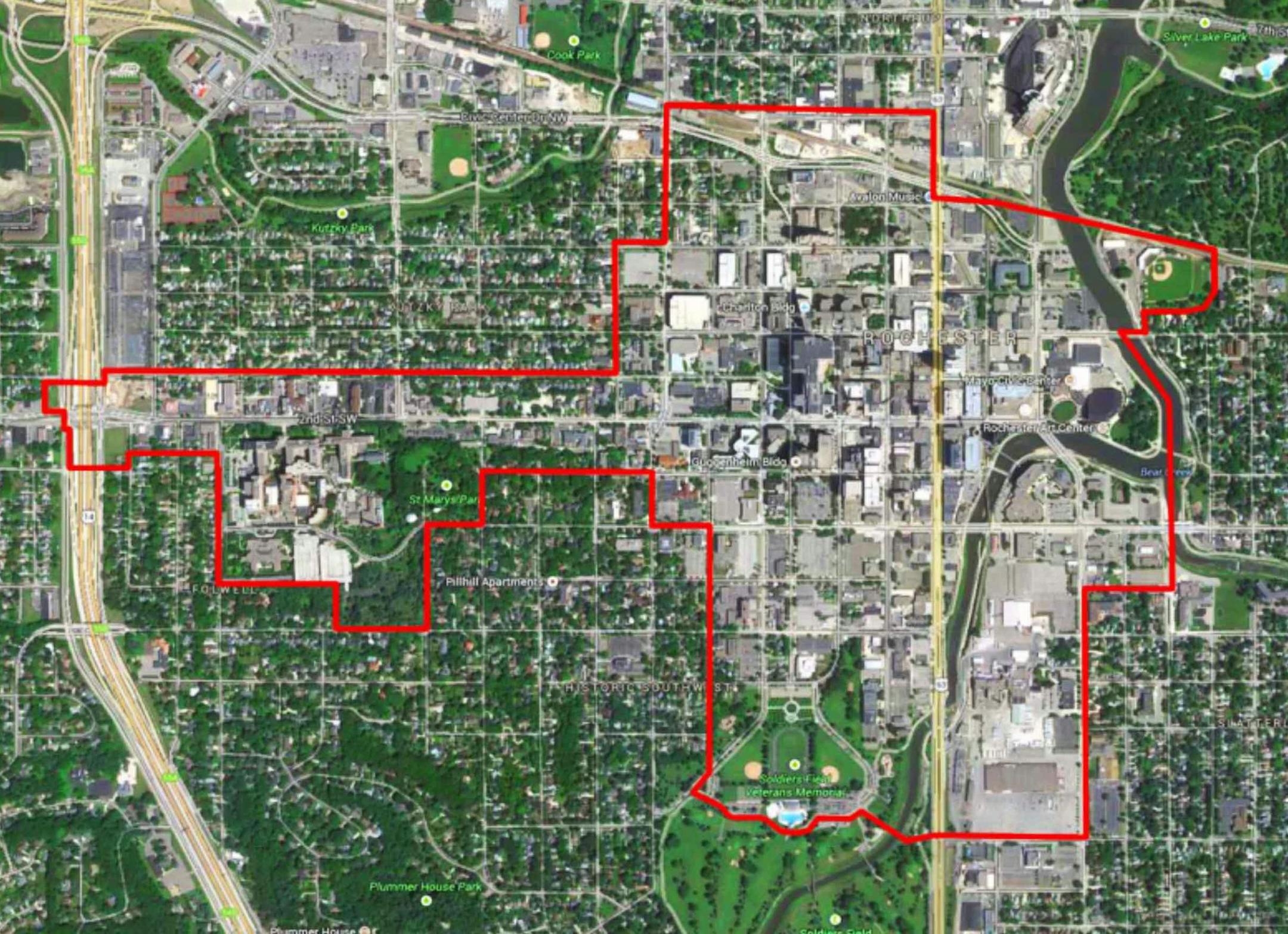
The $6 billion redo of downtown Rochester billed as "Destination Medical Center" remains little more than drawings and dreams, but with an important deadline only five months away, the development project that will marry billions in private investment with half a billion taxpayer dollars has begun to take shape.
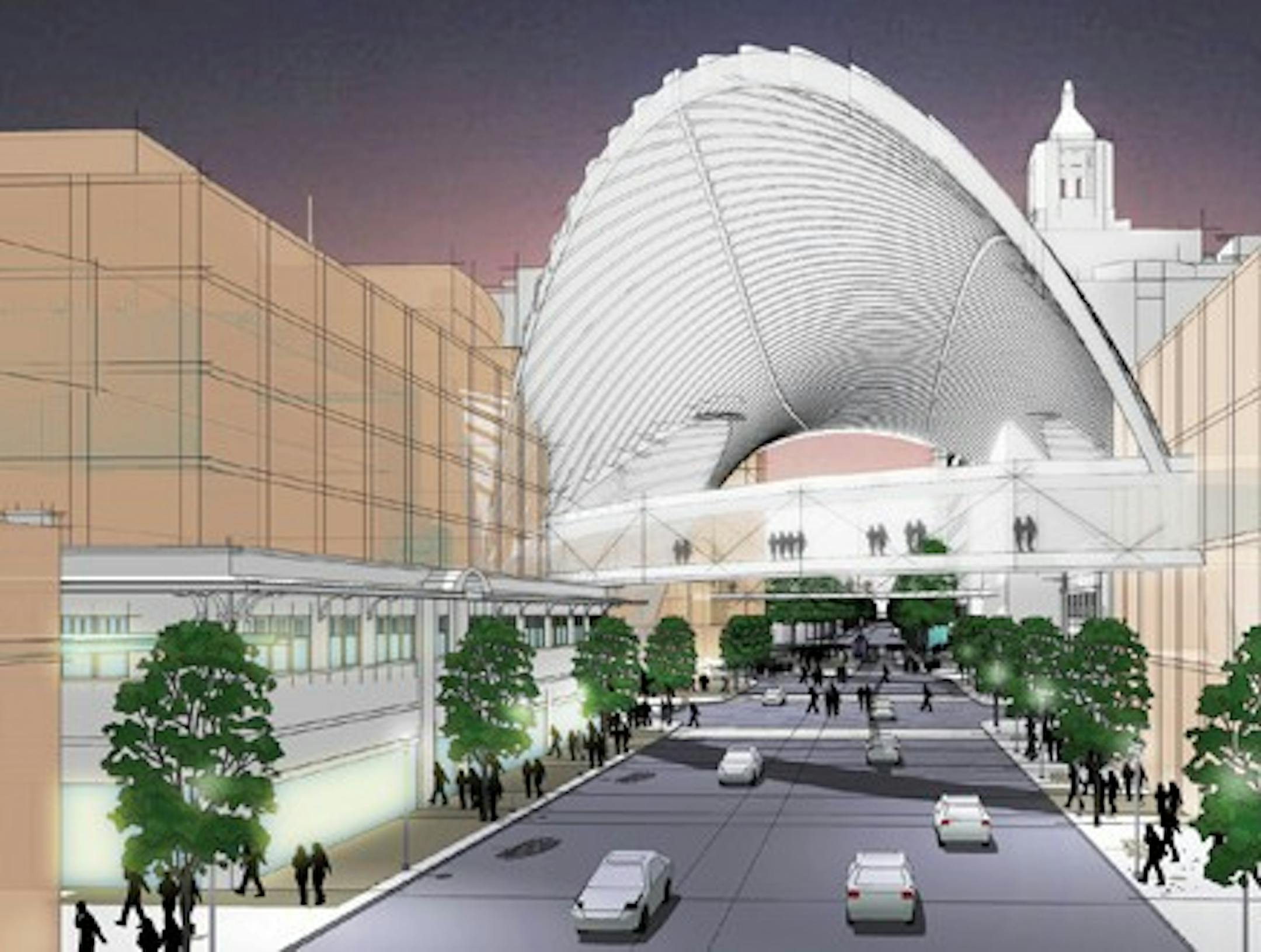
Images released by master plan architect Peter Cavaluzzi show how the project would remake the city's core, from the riverfront to the freeway and from Soldier's Memorial Field to Central Park, with a welcoming riverfront, soaring new structures and iconic elements that borrow from global destinations like Barcelona, Berlin and New York.
"The reception has been very good," said Cavaluzzi, a design principal with EE&K, an affiliate of the Perkins Eastman Company, an international planning, design and consulting firm.
Expectations for the project have been high since the Legislature last year authorized $455 million in taxpayer funds, most of which will pay for roads and sewers to support the overall project that the Mayo Clinic says will add 30,000 jobs to the city and create billions in new tax revenue.
Mayo pitched the project as a necessary step to stay competitive with world-class medical centers like Johns Hopkins. Mayo has pledged $3.5 billion and to leverage $2 billion in private investment to make Rochester a destination in its own right, with hotels, shopping and amenities that would draw and retain the best medical talent.
Cavaluzzi's unveiling of the "draft master plan" followed months of public input designed to gather the best ideas for reinventing Rochester.
"It's a vision that we really need to grab hold of and figure out how to make it happen," said Lisa Clarke, interim director of Rochester's Economic Development Agency.
Some of the plan's highlights include: a "Light Pavilion" soaring across Second Street and First Avenue in downtown Rochester and designating the area as the city's center, with a nearby ice skating rink similar to Rockefeller Center's; a public square near the Minnesota BioBusiness Center envisioned as a "Wi-Fi connected urban park," with a glass pavilion above the park called the "Translational Cloud" for meetings and events; a remade waterfront that borrows from other riverfront cities to include a farmers market, public spaces, a promenade and a performance space. Also nearby would be "Barcelona Corner," a transit station inspired by squares in Spain.