
Opinion | Does Melbourne, Australia, hold the solution to Minneapolis skyway malaise?

That city managed to revitalize spaces that were not serving the roles they once did. Here’s how it worked.

August 21, 2025 at 11:00AM
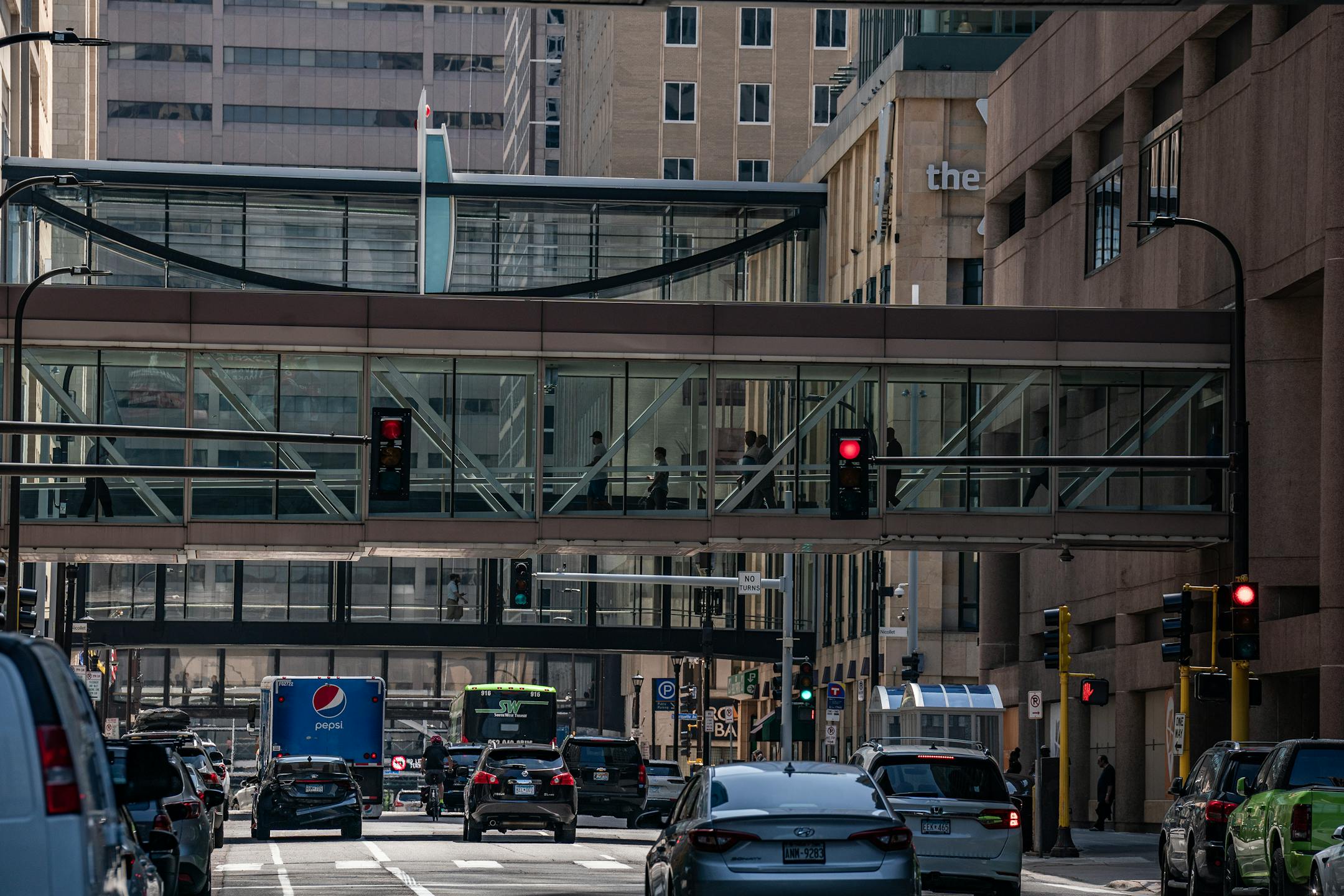
A skyway is visible above a street in downtown Minneapolis on July 31, 2023.
"When skyways were introduced eight decades ago they were a bold innovation in city design that proved wildly popular until recent times," John O'Sullivan writes. (Richard Tsong-Taatarii/The Minnesota Star Tribune)

Opinion editor’s note: Strib Voices publishes a mix of guest commentaries online and in print each day. To contribute, click here.

•••

Minneapolis is home to the eighth wonder of the world — but only in the eyes of non-Minnesotans.

I’m speaking of our skyway systems, a place that surprises and delights so many out-of-town visitors. The utopian vision of a magical second floor where travelers, commuters and shoppers alike can commune with one another is something that sparks the imaginations of those who have only heard it whispered about from afar.

Yet when those out-of-towners arrive here, they are greeted with the sorry state of our skyways. With opaque entry points, vacant storefronts and disjointed hours that confuse rather than welcome, these places are far from the visions held in the heads of visitors. They could be so much more.

I speak from experience — I’m the founding director of two walking tour companies on two continents: Melbourne, Australia; and Minneapolis. My career started as I spanned the globe, giving tours in more than 30 countries in the world as I was armed with a microphone and a bus, a boat or just on foot.

So when I returned home to Minnesota three years ago I was able to look at the state with fresh eyes. Every week, my staff and I host dozens of people from across the country and the world.

So it’s with this context that I can clearly say, the skyways are a fascinating and novel concept to visitors.

The early promise of the skyways was to be able to compete with suburban shopping malls. Southdale was the first, but many more would come. From the middle of the last century through to the dawn of the internet age, skyways served the shoppers. Then came the internet.

But the city worker still powered this city’s skyway economy, diligently coming into the office five days a week and regularly dining in the food courts, dropping off dry cleaning at the laundromat or getting a shoe shine. Then came the pandemic.

Downtown visitation is “now at about 70% of pre-COVID,” Kittie Fahey of the Minneapolis Downtown Council told me when I called her to speak about the subject. She shared a few graphs that showed promising bounceback, but those statistics are hard to reconcile with the current state of the many vacant storefronts visible at the skyways level, as well as the recent real estate news.

Within the last year, two Minneapolis skyscrapers have sold at a more than 90% discount from their last sale. Developers don’t want the buildings, and the workers who are being beckoned back are not happy about it. Try as he might, Minneapolis Mayor Jacob Frey can’t put the toothpaste back in the tube that is the work-from-home revolution.

So Minneapolis is left here to wait for things to get better. The skyways sit here as a largely disused asset. An exciting and unique place peppered with vacant spaces and forgettable chain restaurants.

Inspiration on what to do lurks around the world. We need just look at my former home of Melbourne.

Admittedly, you can’t get much further from Minneapolis than Melbourne. Draw a line through the center of the Earth from Minneapolis, and the closest naturally inhabited country is Australia. Yet Melbourne in the 1980s has a lot in common with Minneapolis of the 2020s.

It too was struggling to resuscitate the downtown as folks moved further and further outside.

It too struggled to market its harsh winter weather.

It too had a massive disused asset ripe for revitalization.

Australian laneways (“alleyways” in American parlance) crisscross downtown Melbourne, and have now become a hive of activity. Marketed as the “culture capital” of Australia, visitors and locals alike flock to the independent bars, restaurants, museums, record stores and live music venues hidden behind the main streets.

These laneways were inauspicious places to put an entertainment district. Originally used for trash removal and deliveries — and places to use the toilet — laneways as entertainment places were a surprising and novel use of a disused asset. This didn’t all happen by accident. In 1993 as Melbourne struggled to bring visitation back to the city center, it commissioned a city plan that would rethink its city as a place for artists and makers, a place that folks would aspire to live in and around.

Their state government updated the liquor laws to allow for small bars to operate without the need to sell food. The city took a “fine grain” approach to development, favoring small retail spaces of under 1,000 square feet. In short, the city took a strong interest in making the laneways attractive places for young entrepreneurs to open hip shops that would attract large numbers of people in.

Turning our attention back to Minneapolis: When skyways were introduced eight decades ago they were a bold innovation in city design that proved wildly popular until recent times.

Notwithstanding the interesting but impractical suggestion that we tear down our skyways, it’s time we look for bold new approaches. Turning skyways into attractive independent shopping and dining districts isn’t without its challenges. Downtown developers will need to agree on keeping them open on evenings and weekends.

We’ll need to develop a bold, possibly gaudy new signage system that makes everyone aware of where to access the skyways. We’ll need to convince city and state officials to change laws so our skyways have more than just another chain restaurant in them.

This all seems like a big task. But we’ve built something remarkable before. Why not do it again?

John O’Sullivan is the creator of @OneMinuteTours, the largest social video channel in Minnesota, about Minnesota. He lives with his wife and two children in south Minneapolis.

about the writer

about the writer

John O’Sullivan

More from Commentaries

See More
card image
M. SCOTT BRAUER/The New York Times

The Prescription Drug Affordability Board is one tool we have to stop price gouging and make drug costs more affordable.

card image
card image