

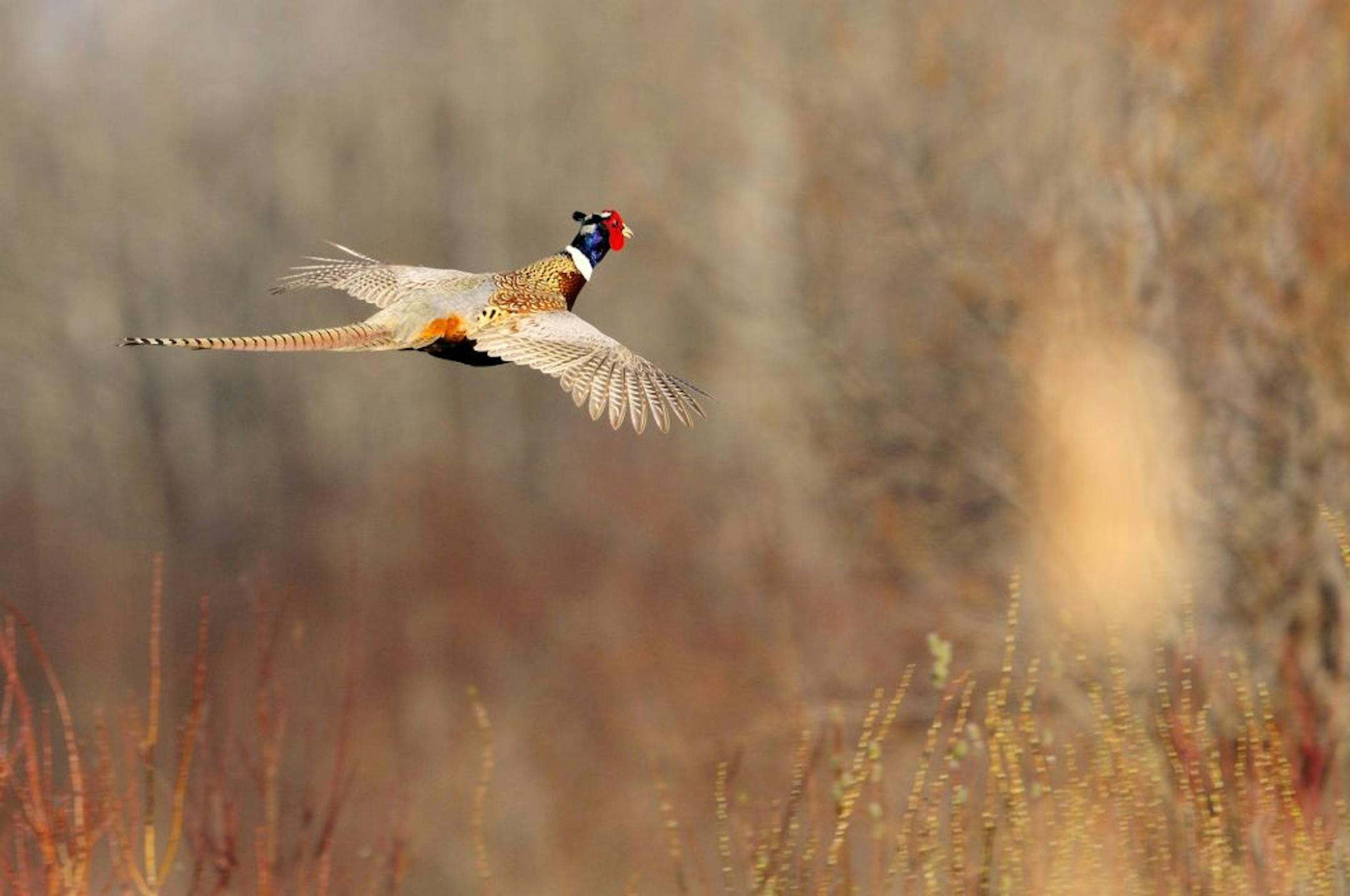
Tabor Hoek will hunt with his dad at the family farm near Windom when the 2012 pheasant season opens Saturday.
But looming in the back of his mind will be the decline in pheasant habitat that poses long-term problems for Minnesota's 78,000 ringneck hunters.
Across Minnesota and the Midwest, farmers -- prompted by record crop prices -- have taken hundreds of thousands of acres of grasslands out of federal conservation programs and planted them with corn and soybeans. On Oct. 1, Minnesota lost 164,000 acres, mostly grasslands, that had been enrolled in the federal Conservation Reserve Program (CRP).
About 66,000 of those acres -- or 103 square miles -- were in pheasant country.
"There are people who will show up to hunt pheasants on Saturday, and the habitat won't be there," said Hoek, 48, an avid hunter and private lands coordinator for the state Board of Water and Soil Resources.
The lost grasslands are equal to about 17 percent of the state wildlife management area lands in the pheasant region.
"When you're plowing up prairie, it obviously has an impact not only on the landscape and pheasants but on water resources and the environment," said Bob Larson, 68, of Wayzata, longtime board member of Pheasants Forever.
"The Dust Bowl era was a man-made calamity," he said. "The question is are we going to relive our history?"


