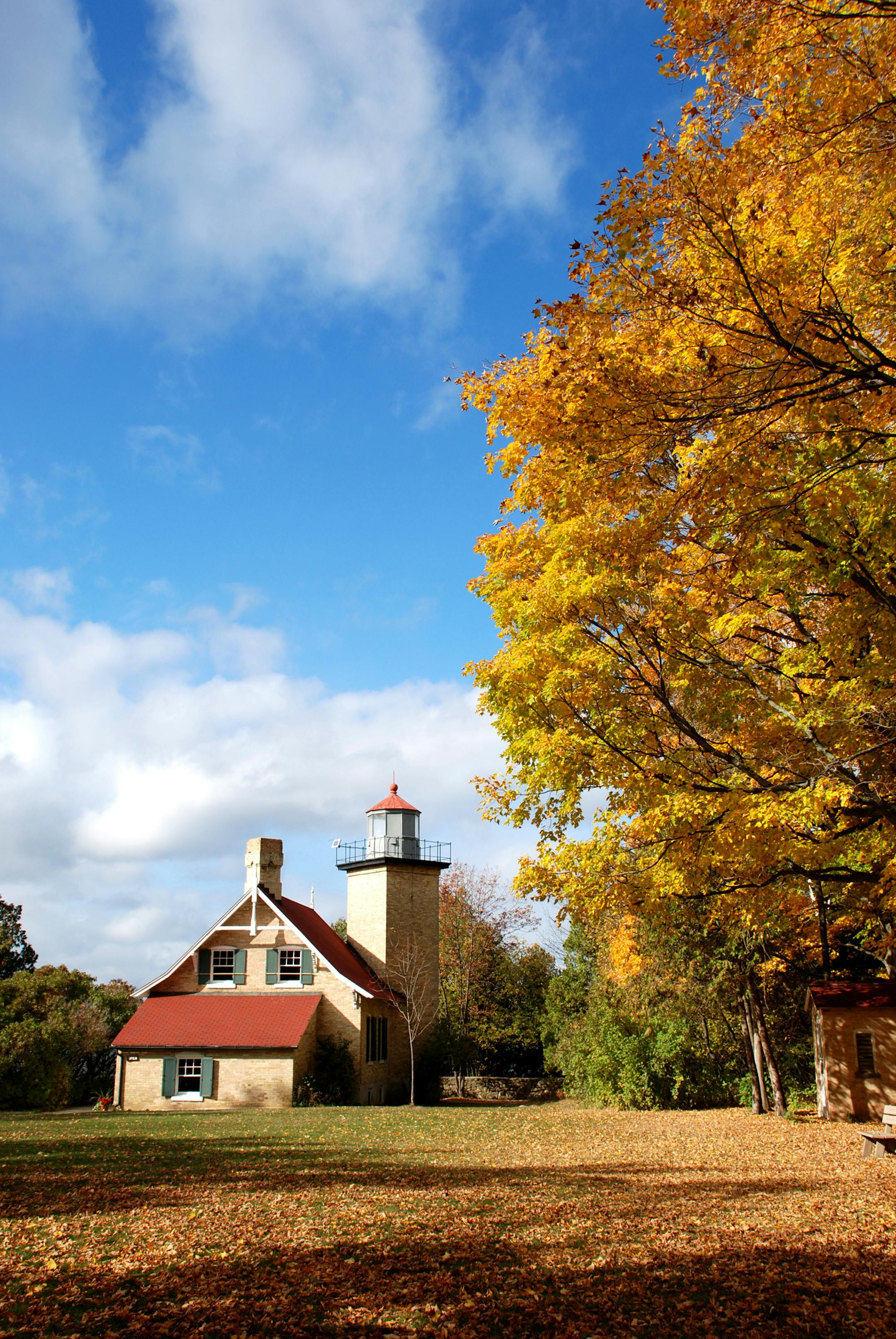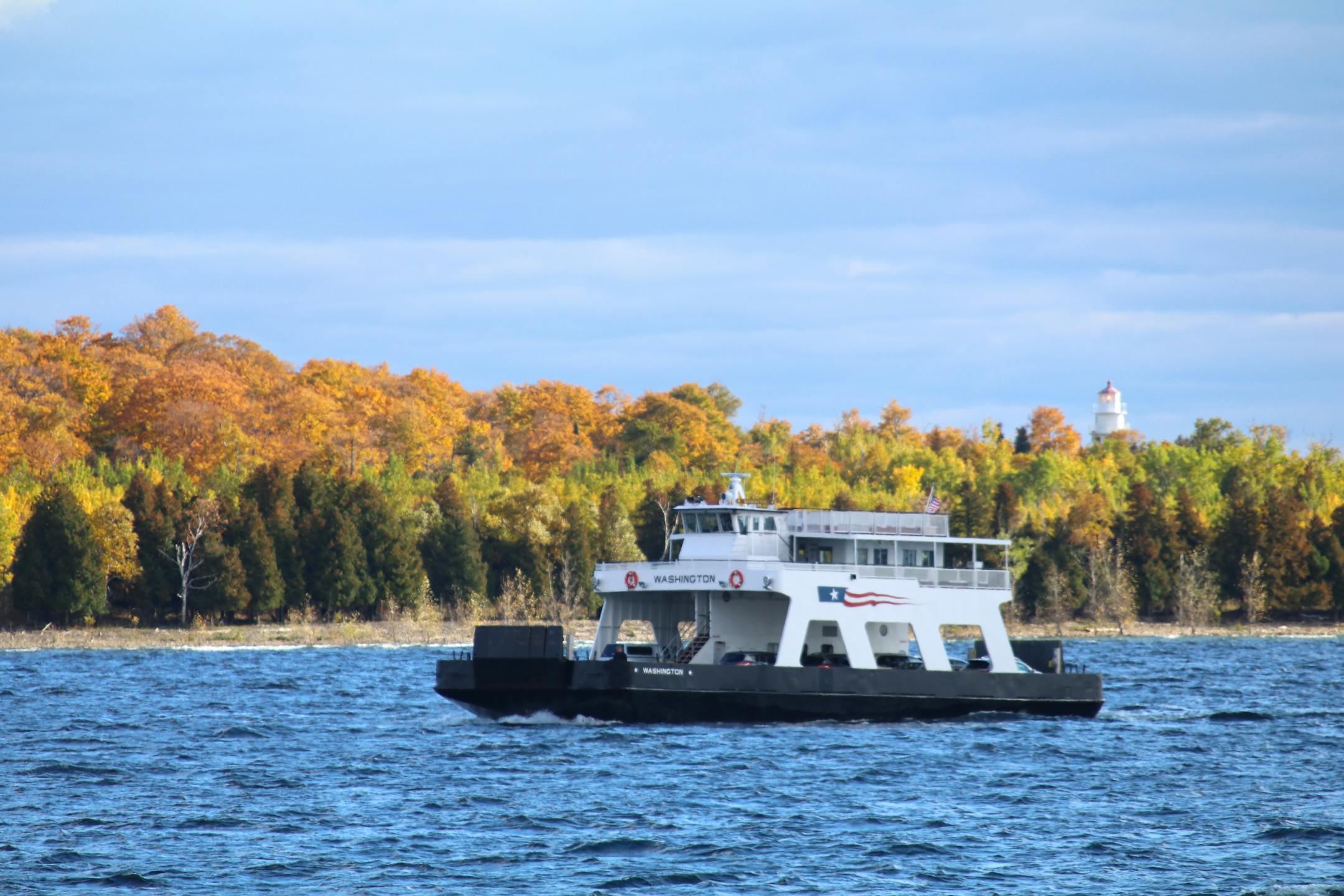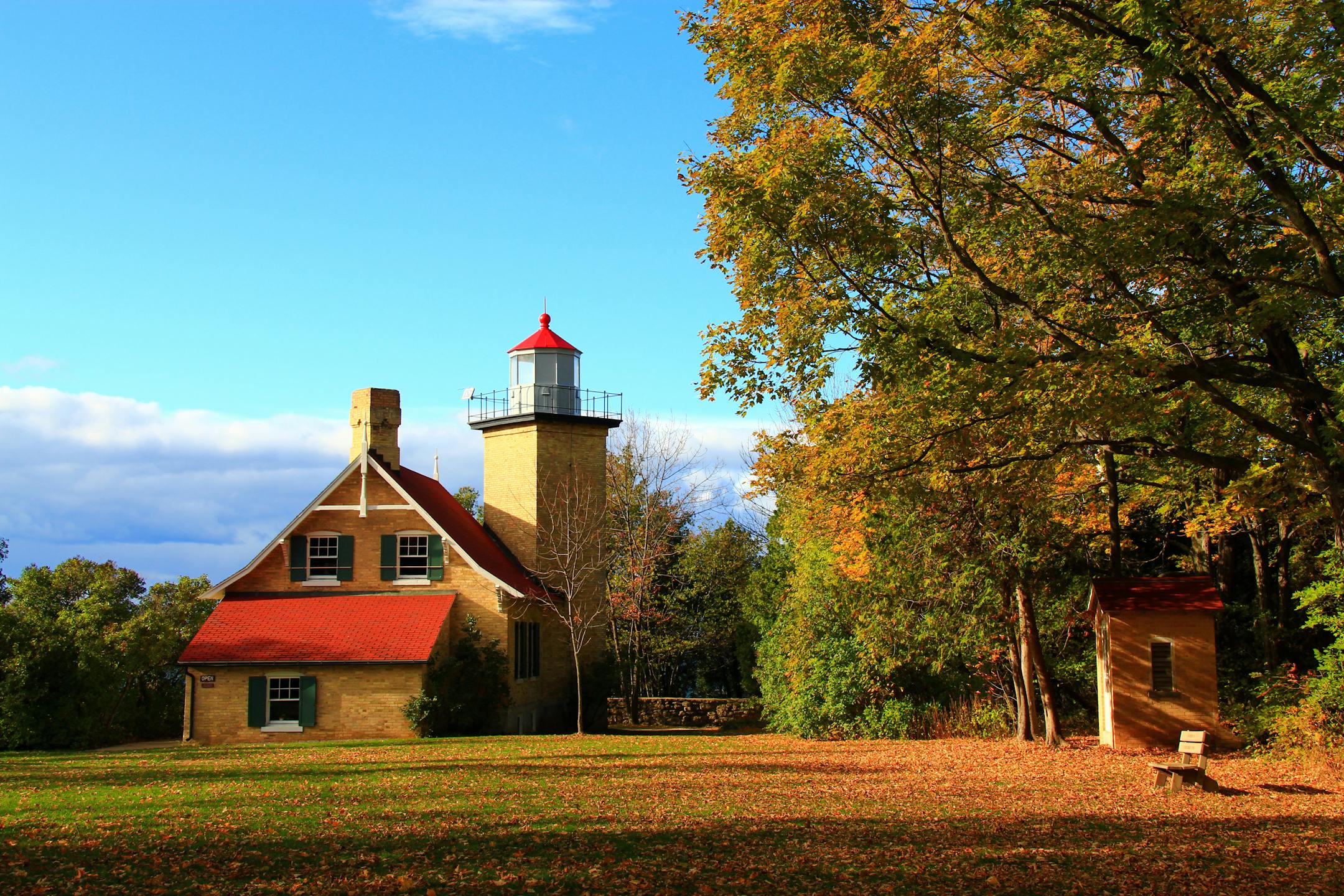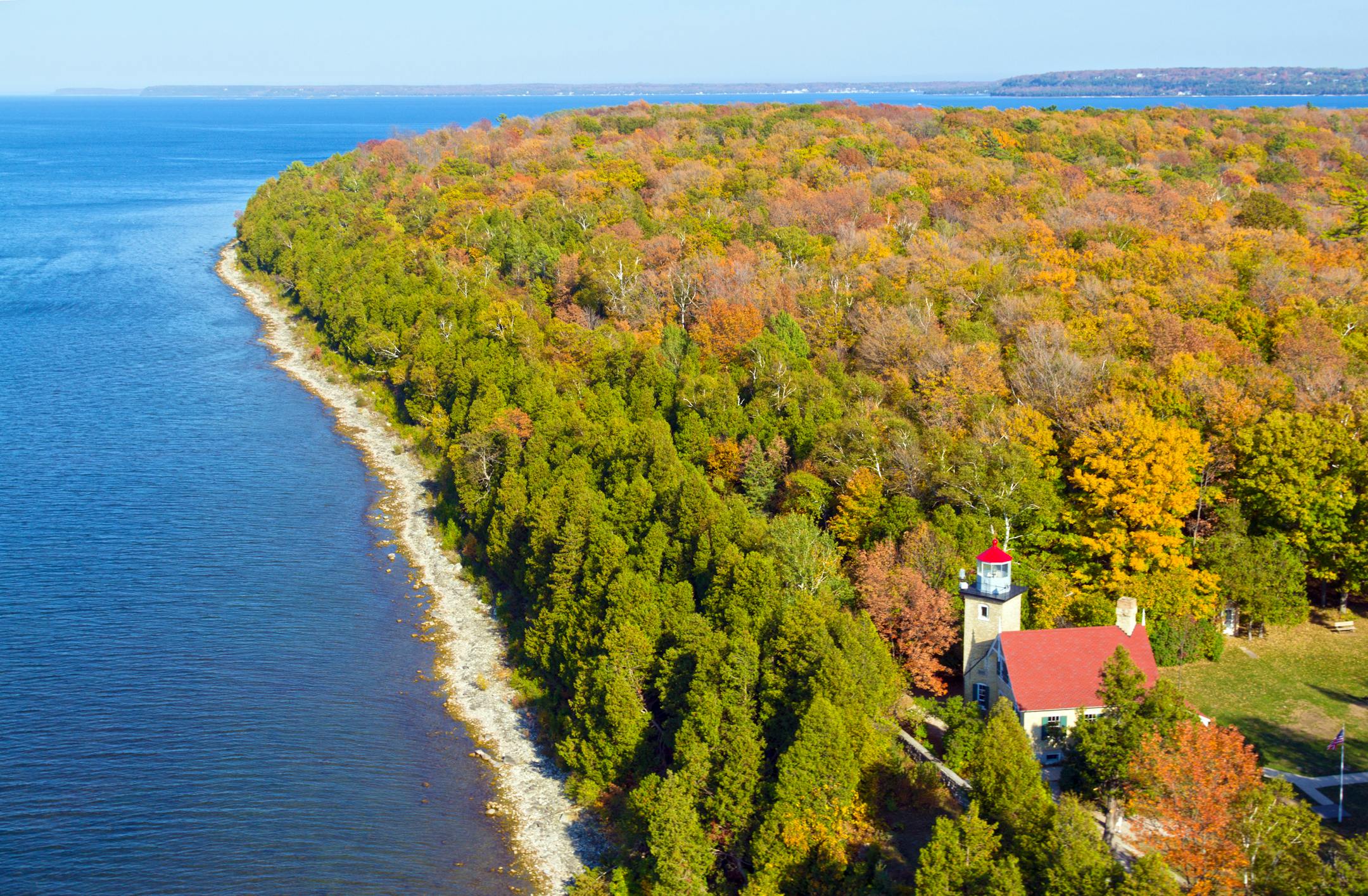
From the double-deck tour boat Norra Dorr, passengers on a 90-minute tour grab photos of the red-domed tower. But in the fall, the natural beauty surrounding the 1868 lighthouse is as Insta-worthy as the beacon itself.
Here in Door County — Wisconsin's unofficial leaf-peeping capital — the narrated cruise sails round-trip from the village of Sister Bay and hits some of the most scenic spots. Vivid yet ephemeral autumn hues blaze against a cerulean sky. Jagged rock formations reveal gaping holes that are portals to mysterious sea caves. Leaves flutter from the trees like delicate gold and scarlet butterflies, alighting gracefully at the water's edge.
The 70-mile-long Door Peninsula is home to a series of fishing villages turned resort towns that attract droves of Midwesterners looking to escape big-city stress. And few things are more relaxing than being out on the water on a bright autumn day. Guide Chuck Erickson argues that the perspective from the water can be more rewarding than a land view.
"The [color] contrast is much more obvious. This time of year, the water is a dark blue. The cedar trees on the bluff stay a dark green," Erickson said. "The taller trees that make up the top crown are all deciduous, and therefore, all the brilliant colors."
The boat tour dives into the region's maritime history. According to folklore, the Potawatomi and Winnebago tribes gave Door County its name. They called the treacherous strait that links Green Bay to Lake Michigan "Death's Door" after an epic battle resulted in the drowning of hundreds of warriors.
Other stories claim it was French explorers who named the strait "Porte des Morts," Death's Door in English. The name was converted to Door County, a good thing since Death's Door doesn't exactly sound like an inviting vacation spot. Wherever the forbidding moniker came from, one thing is certain: More than 200 shipwrecks remain beneath these waves in an eerie maritime graveyard.
As the Norra Dorr approaches Anderson Dock in Ephraim, a graffiti-covered warehouse stands like a tattooed rebel among the hamlet's pristine historic structures, some dating back to the 1850s when Scandinavian Moravians settled here.
The warehouse, now home to the Hardy Gallery that exhibits regional artists, hasn't been vandalized. Sailors once wrote on its walls the name of their ship and the date they were in port to create a record. Over time, tourists started leaving their own marks, and now it's an Ephraim tradition.