

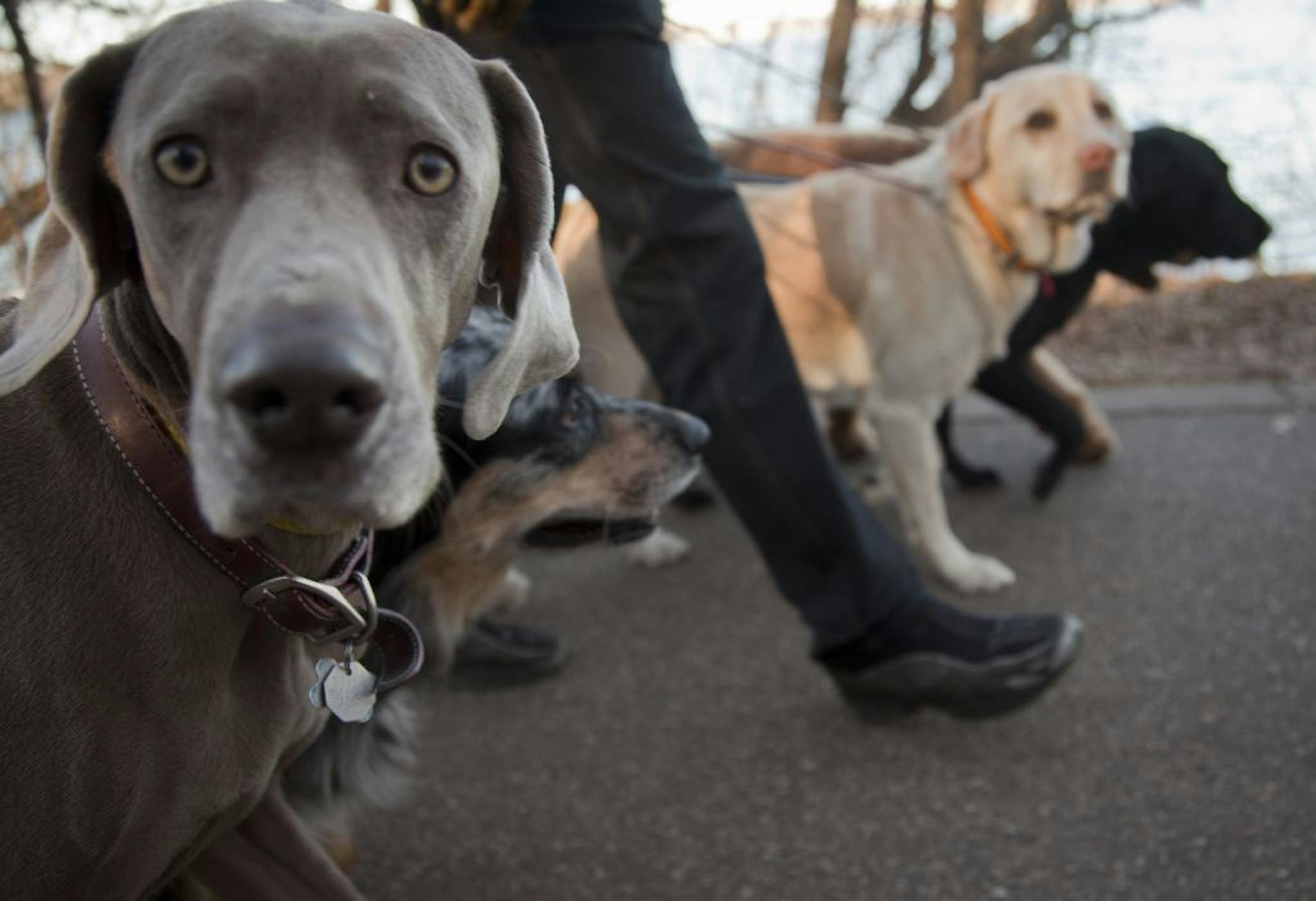
My landlord recently installed a fence around the shared front yard of our building in Upstate New York. Each of her tenants has a dog, and she thought it would be nice to provide a safe off-leash space where they can run around and chase a ball.
But this act of kindness has introduced an unfortunate new temptation. When it’s time for one of my dog’s three daily walks and the weather is bad, or I’m particularly busy (or particularly lazy), I now sometimes think: “Maybe I’ll just let him into the yard?”
Of course, I’m happy to have a place to let him out for quick pee breaks. But I fear falling into a pattern of regularly skipping walks. Research indicates that many humans do: A 2011 study from Michigan State University on the benefits of dog-walking found only two-thirds of its subjects routinely walked their dogs. According to experts, this forgoing of walks doesn’t only make neurotic dog guardians like myself feel guilty. It can significantly affect your dog’s emotional and physical well-being.
“First of all, dogs don’t exercise by themselves, for the most part,” says Stephanie Borns-Weil, an assistant clinical professor at the Cummings School of Veterinary Medicine at Tufts University. The amount of exercise a dog needs varies based on age, breed and health — it can be as little as 30 minutes a day or as much as a few hours — but virtually all dogs need exercise in some form.
The typical yard, Borns-Weil says, just doesn’t offer enough stimulation to prompt an adequate amount of movement. Unless you’re spending time playing with your dog, “they’re just going to sit there,” she says, “because the space is familiar.” She compared it to reading the same book over and over again, or seeking enrichment by hanging out in your bathroom.
This need for exercise, while crucial, isn’t even the most important reason to walk your dog. They may or may not get some exercise in the yard, Borns-Weil says, “but they’re not getting companionship [from their human], and they’re not getting the mental stimulation that comes from seeing new things, or, from the point of view of a dog, sniffing new things.”
Dogs that don’t have these needs met “are subjected to some of the same effects of long-term chronic stress on their health that people are,” she says, ranging from depression and anxiety, to problems with the immune system. (Studies have found that dogs in shelters, too, benefit from direct human interaction, which reduces stress and stress-related behaviors.)
To help your dog get the most out of her walk, let her explore. “Sniffing is the way that dogs experience the world,” says Valli Fraser-Celin, a humane dog training advocate. Where humans have 6 million olfactory receptors, research shows dogs can have up to 300 million; it’s how they acquire information about their environment and communicate. Dogs can tell which animals have been nearby — including sniffing out their gender and information about their health. A friend’s dog walker used to equate the act of sniffing to a dog “checking their email.”

