

Opinion editor's note: Editorials represent the opinions of the Star Tribune Editorial Board, which operates independently from the newsroom.
•••
NATO'S renewed unity in response to Ukraine's fight to repel Russia's invasion is a signal achievement for Western leaders. And the alliance is poised to strategically build upon its revitalization by adding two Nordic nations, Sweden and Finland, which already are capable military partners. Doing so would greatly extend NATO's direct border with Russia, and thwart one of the justifications Russian President Vladimir Putin uses for his unprovoked invasion of Ukraine — stopping NATO expansion.
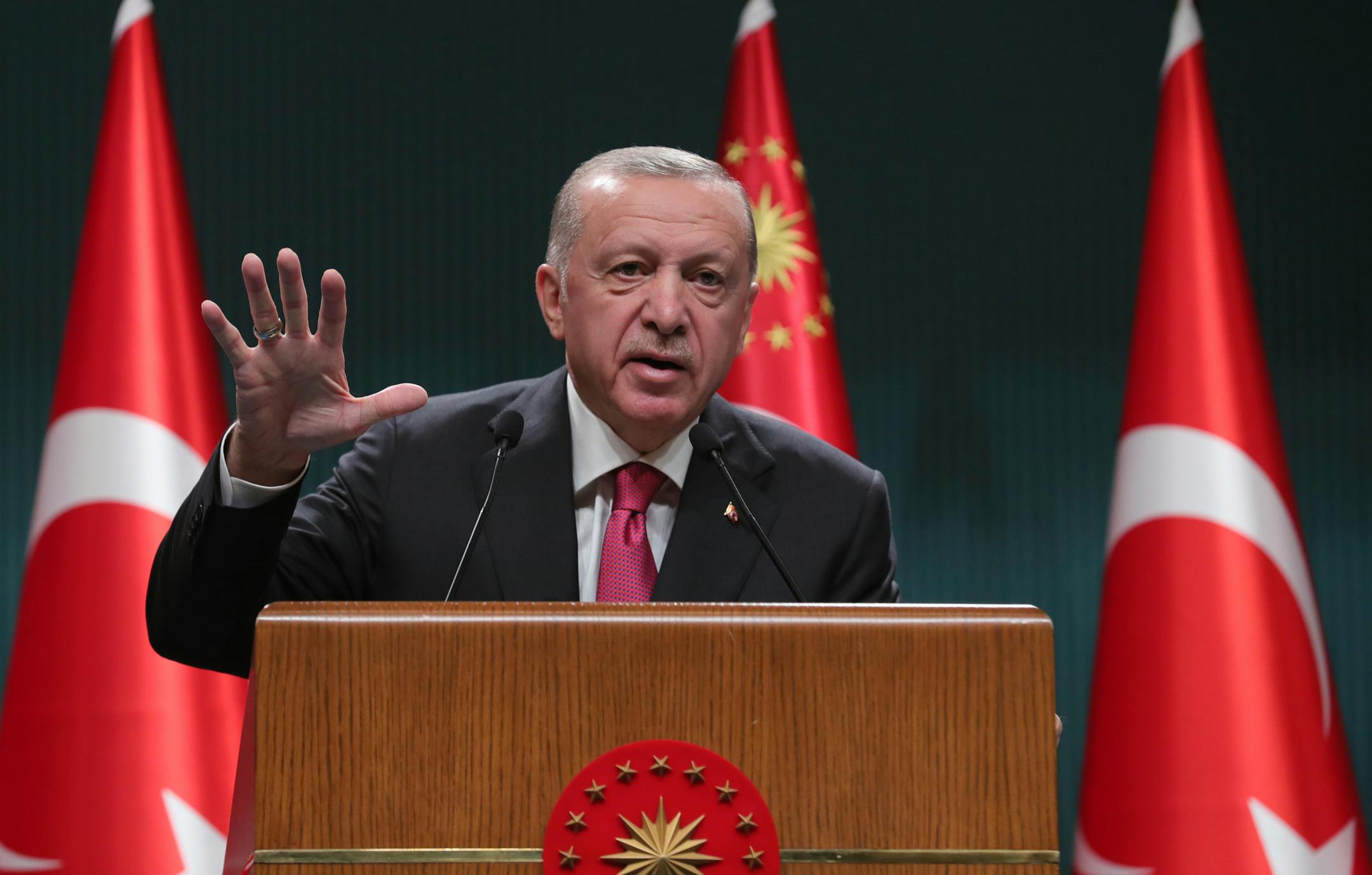
But one capital now stands in the way of Sweden and Finland's bid. And it's not Moscow, but Ankara, where Turkish President Recep Tayyip Erdogan has hardened his position against welcoming these two vital nations into the alliance.
Every other NATO nation appears eager for this diplomatic and military upgrade. But the alliance works on consensus, so Turkey in effect has veto power that may rob NATO of such a powerful addition.
Erdogan's main reason is his perception of Stockholm's and Helsinki's lax attitude toward Kurdish militants belonging to the PKK, or Kurdistan Workers' Party. Turkey, the European Union and the U.S. all consider the PKK a terrorist organization. "Turkey wants the candidate countries to curb the activities of all terrorist organizations and extradite the members of these organizations," Erdogan wrote in a commentary for the Economist.
Erdogan has long also called for the extradition of Fethullah Gulen and some of his followers. Gulen is a Turkish cleric whom Erdogan believes was behind a failed coup attempt in 2016. Among other enduring demands are an end to arms embargoes put in place after Turkey's incursion into northern Syria. Turkey invaded in part to fight against another Kurdish organization, the YPG or People's Protection Units, that was aiding the U.S. in the fight against ISIS. (On Monday, Erdogan announced a new military operation in Syria to try to finish a 20-mile "safe zone" along its border.)
Turkey "has a policy of being very assertive as a regional leader," Marc Pierini, a visiting scholar at Carnegie Europe, told an editorial writer. Speaking from Brussels, Pierini, a former E.U. ambassador to Turkey, said that Erdogan "considers that position of the country geographically, the military strength of Turkey, its economic progress at least until recently — all that justifies a bigger say on the international stage."


