

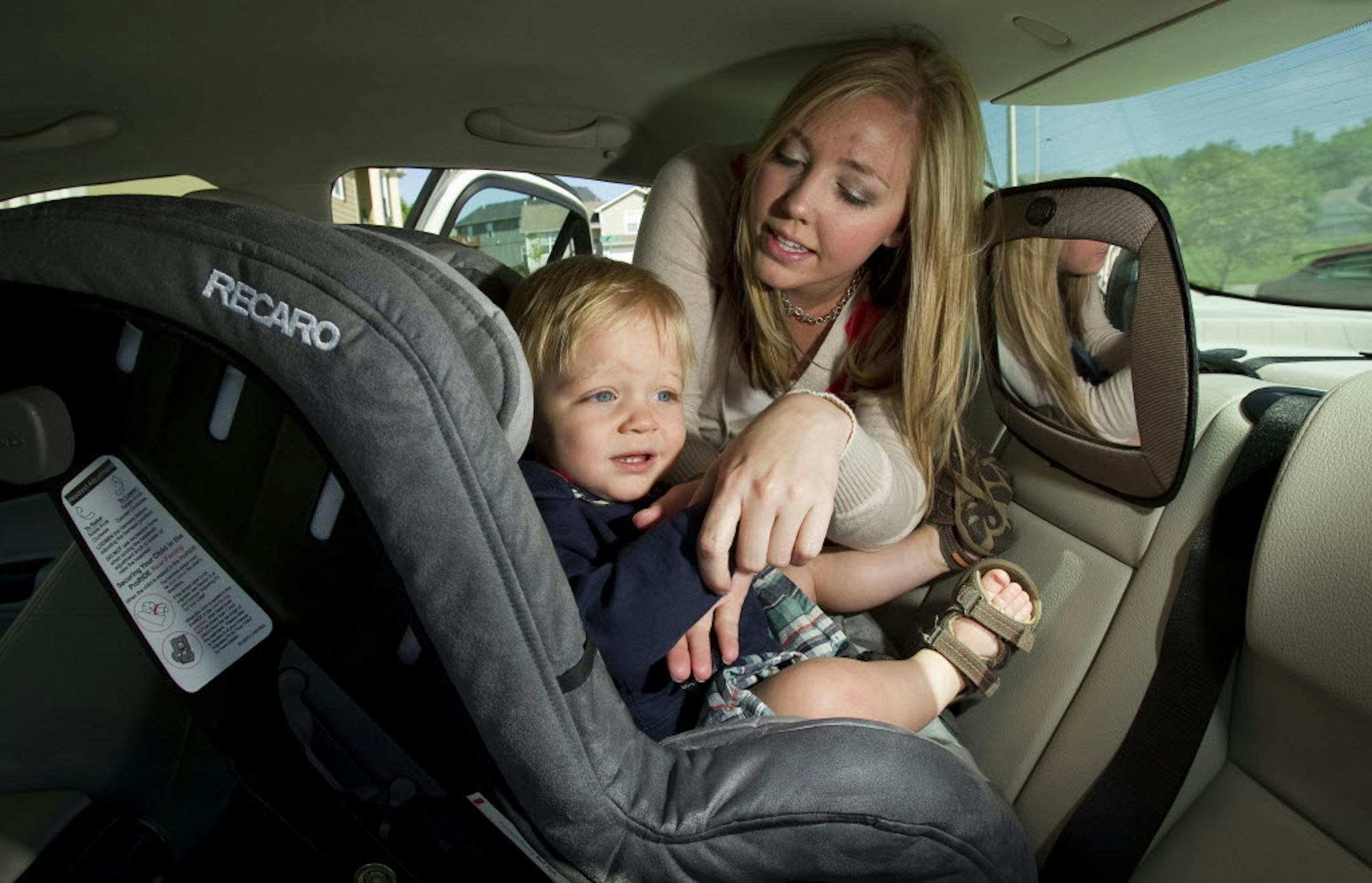
Eco-conscious parents might use cloth diapers, make their own baby food and dress their little ones in hand-me-downs, but even their greenest efforts are often thwarted by the hunk of plastic in the rearview mirror: the car seat.
That's because car seats older than six years cannot legally be donated for safety reasons, so they most commonly end up in landfills or basement storage rooms. That's all changing in Minnesota, where a new statewide program through the Recycling Association of Minnesota recycles old or unwanted child safety seats.
"The number one question people ask is where they can recycle aluminum cans for money, and the second question is where they can recycle car seats," said Ellen Telander, the Recycling Association's executive director. "There was a huge demand for this program because of the huge recycling community in Minnesota."
The program is called REseat and it employs people with disabilities to disassemble the car seats before sending them to local facilities to be recycled into metal, and plastic landscape tiles.
On Nov. 15, America Recycles Day, the Recycling Association of Minnesota is holding a special drop-off car seat recycling event from 7:30 a.m. to 8 p.m. at the Linden Hills Ace Hardware Store, 2813 W. 43rd St., Minneapolis. It will cost you $10 per seat to recycle a car seat, but in return you will receive a $10 voucher to the hardware store to go toward any $25 purchase. For questions, call 952-473-0048 or e-mail ram@recycleminnesota.org.
Aimée Tjader • 612-673-1715


