

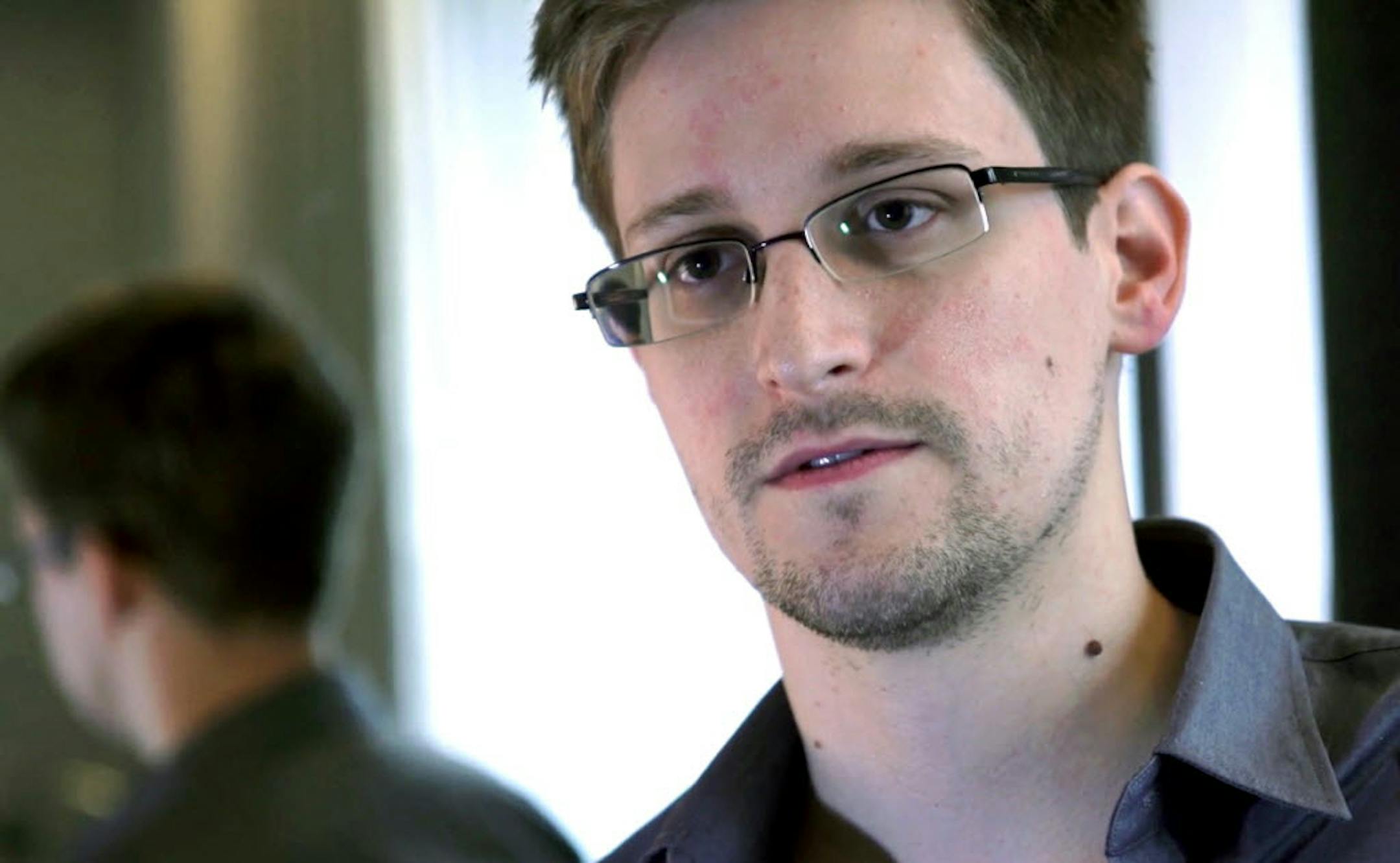
Responding to reporters this week, President Obama had an appropriately measured take on the search for Edward Snowden, whose leaks have sparked an international debate over National Security Agency surveillance methods.
"No, I'm not going to be scrambling jets to get a 29-year-old hacker," Obama said. Not only will he not scramble jets, Obama seemed to cool his jets, at least diplomatically, when he said he had not called the leaders of Russia and China in order to detain Snowden.
"I'm not going to have one case with a suspect who we're trying to extradite suddenly be elevated to the point where I've got to start doing wheeling and dealing and trading on a whole host of other issues, simply to get a guy extradited so he can face the justice system," Obama said.
Obama's right to downplay the diplomatic stakes, even if critics excoriate the president's foreign policy as feckless. After all, it's unlikely that even a direct appeal by Obama would have convinced Chinese President Xi Jinping or Russian President Vladimir Putin to extradite Snowden, who is accused of violating the Espionage Act, among other charges.
In fact, the realpolitik reality is that it really doesn't depend on who is president, said Barry Pavel, vice president of the Atlantic Council.
"I'm not convinced they [Russia and China] would have treated this any differently if it was Ronald Reagan, John McCain or Mitt Romney," Pavel said in an interview. "This is nation-state stuff, and they are doing what nation-states can do, and getting away with it."
The United States should do nation-state stuff, too. But it should do it smartly, and not let the quest for Snowden supersede its strategic objectives. And it especially shouldn't let the Snowden story transcend the more profound need for a national debate over privacy and security.
That's the issue that Snowden claims to represent. But by naively allowing himself to be a pawn of Chinese and Russian leaders, he's actually given a global PR boost to their repressive regimes. Indeed, Snowden's choice of hiding in Hong Kong and Russia conveniently obscures the reality of Russian and Chinese suppression of its own citizens and immoral enabling of homicidal regimes in Syria, North Korea, Iran and elsewhere.


