

U.S. forces withdrew from Iraq in 2011. But they're being drawn back in.
The Defense Department says that 4,087 U.S. troops are officially deployed in Iraq to fight the Islamic State of Iraq and the Levant (ISIL), but many experts believe there are more on the ground. And on Tuesday, a Navy SEAL became the third U.S. service member to die fighting ISIL.
The stakes are growing higher for the U.S. — not only because of rising troop levels, but also because of the threat ISIL poses globally.
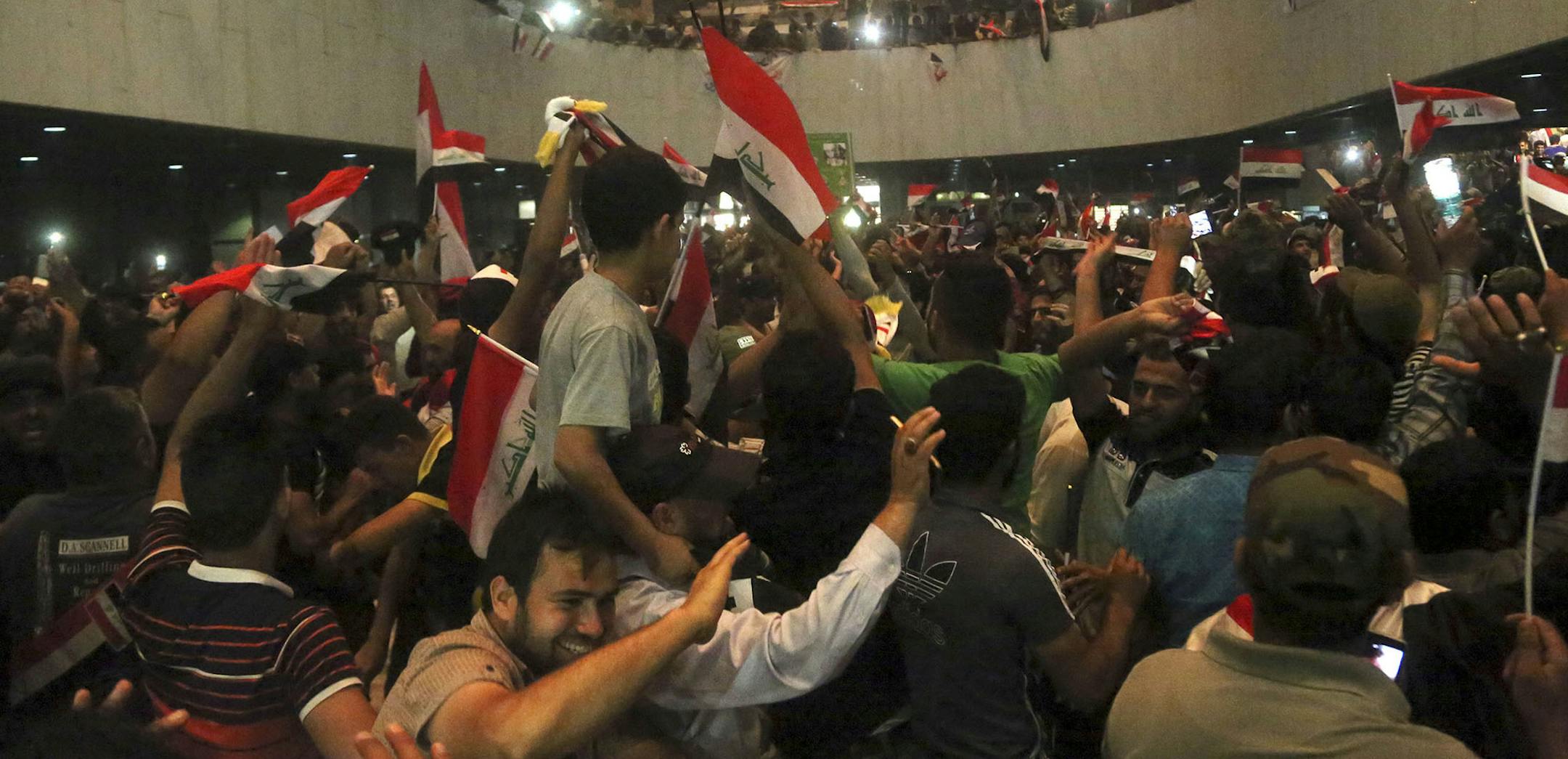
Defeating the metastasizing terrorist organization may have become more difficult since Saturday, when growing political instability boiled over in Iraq. Protesters loyal to Shiite cleric Muqtada al-Sadr breached concrete barriers surrounding the Green Zone — the site of elite Iraqi institutions and foreign embassies — and ransacked portions of Iraq's Parliament building. Al-Sadr's supporters soon withdrew, but some menacingly promised a return.
The events further shook confidence in the shaky rule of Prime Minister Haider al-Abadi, whom the U.S. backs as a more reasonable alternative to the irresponsible rule of former Prime Minister Nouri al-Maliki.
Al-Abadi's promise of a cabinet shuffle and other reforms to curb corruption has been resisted by some in Parliament.
Al-Sadr's ostensible motive was to push for the reforms. But it was also a show of his political clout, a dynamic displayed during the Iraq war when militias loyal to the Al-Sadr family fought against U.S. forces.
This schism between Shiites comes amid even deeper sectarian divisions in Iraq that already complicate the campaign against ISIL. U.S. options are relatively limited, unless President Obama or his successor decide to rapidly ramp up U.S. troop levels — an option that seems to have little domestic support.


