

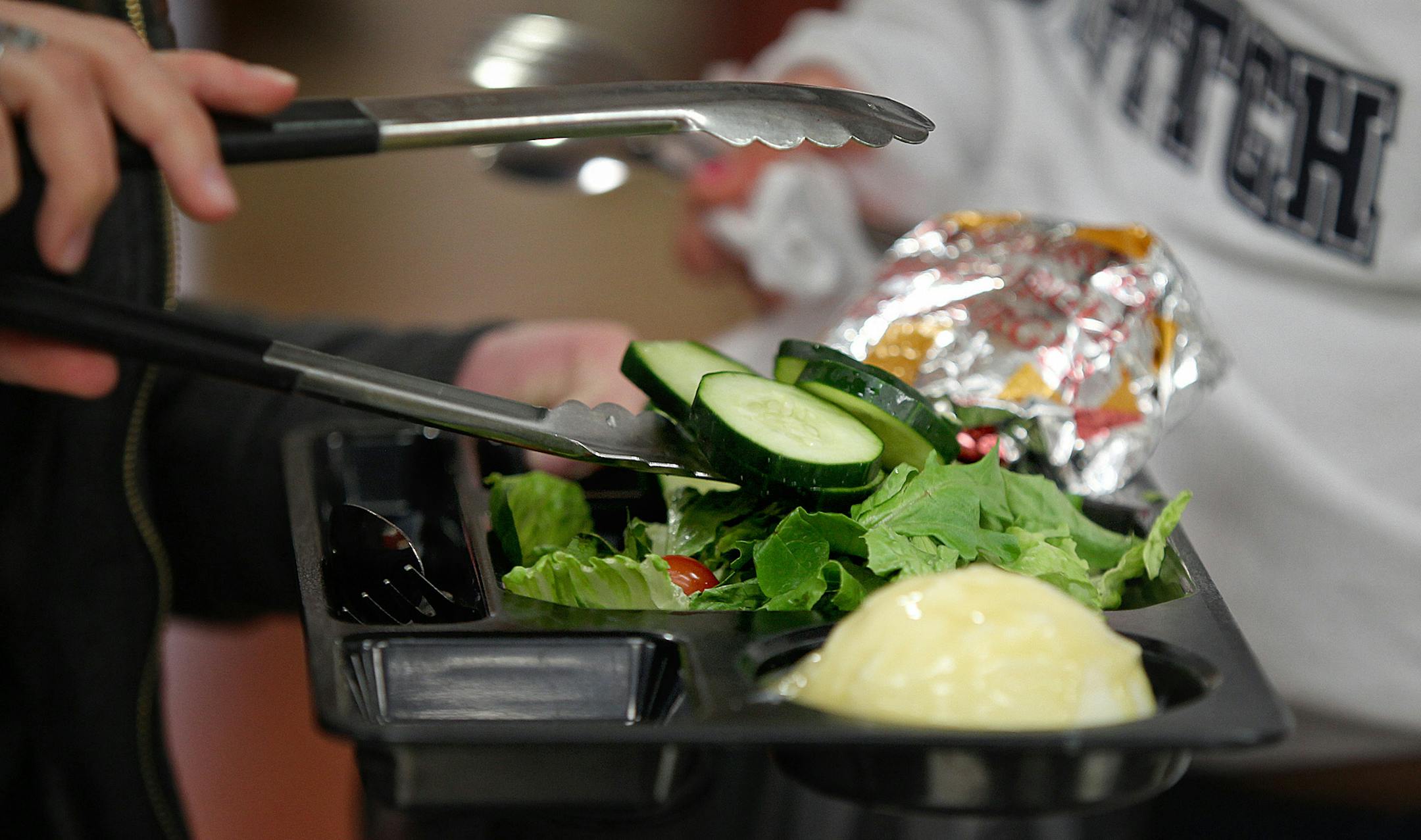
Reasonable people would agree that growing schoolchildren should have enough to eat during the day. Research shows that having a good breakfast and midday meal aids academic achievement.
But who is responsible for providing those meals — parents or schools — became a hot discussion topic this week in Minnesota after a local advocacy group released the results of a survey on lunchroom policies and practices in the state.
Mid-Minnesota Legal Aid, which advocates on behalf of low-income children, surveyed about 94 percent of the 350 school districts statewide and found that 46 have policies or practices in place that call for schools to immediately or eventually refuse hot lunches to students who are unable to pay.
According to Mid-Minnesota, most of those districts allow students to receive a small number of lunches on credit, or provide them with alternative meals, before refusing to feed them. Some of the 46 districts enforce their policies on all students, while others only turn away middle- or high-school students. Some say they do not strictly enforce their policies.
In what appear to be relatively rare cases, some schools take food away from students whose accounts aren't paid up, sometimes dumping that food in front of the students and their classmates. And although most districts go to great lengths to try to contact parents discreetly when accounts are running low or are tapped out, several have said they have stamped reminders such as "LUNCH" or "MONEY" on children's hands.
Mid-America found that 53 percent of districts offer "less nutritious" meals to students rather than turning them away, and that 32 percent always provide a hot lunch to low-income students even if the child is unable to pay.
Most troubling are those seemingly extreme incidents in which students are denied lunch in front of their classmates or stamped with pay-up messages meant for their parents. No child in Minnesota should be publicly shamed because of a delinquent lunch account.
The most recent figures available from the state Department of Education show that 263,041 of Minnesota's 845,177 students were eligible for free hot lunch, while another 60,703 received reduced-price lunches for 40 cents each, with the public picking up the rest of the cost.


