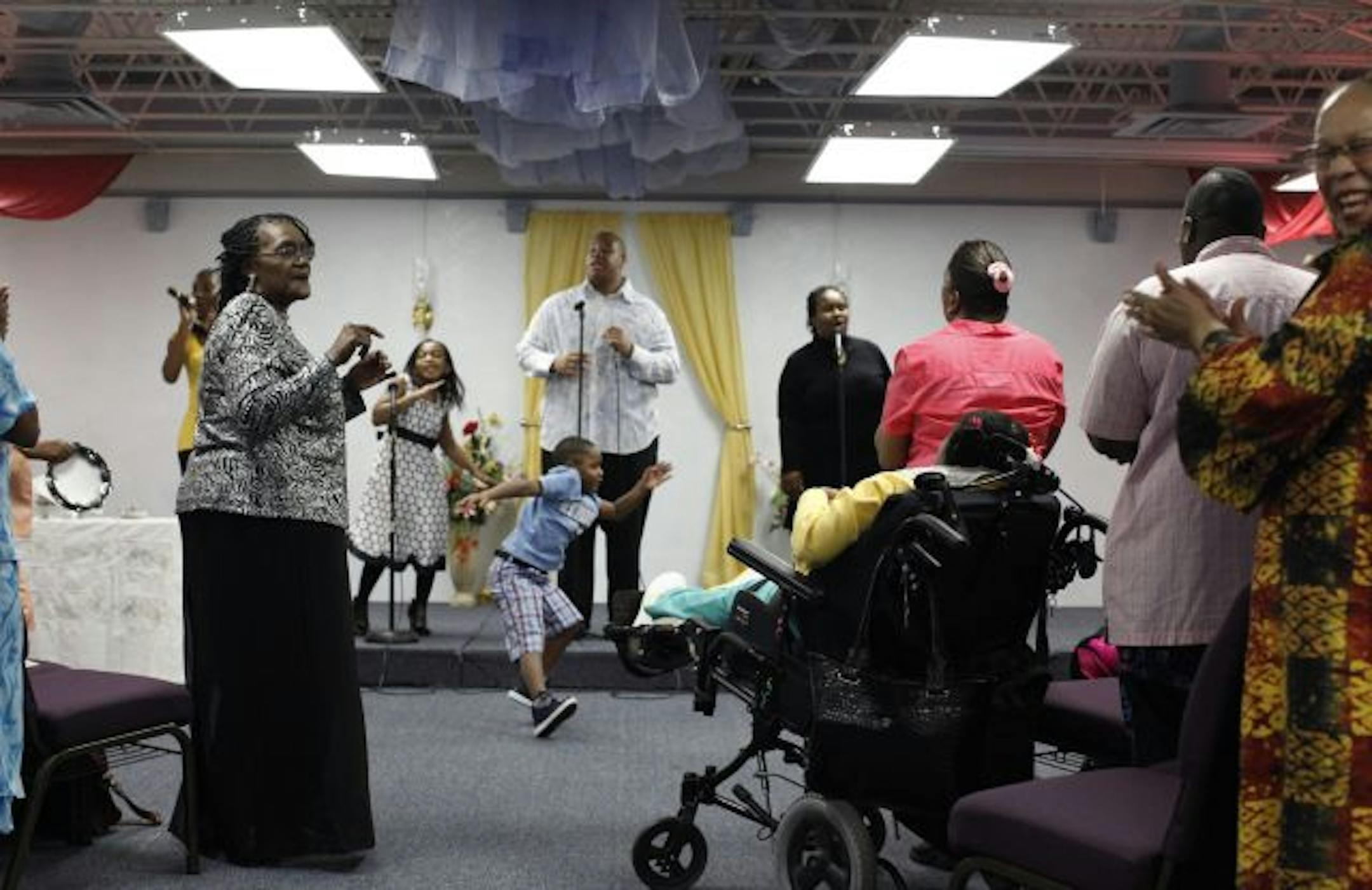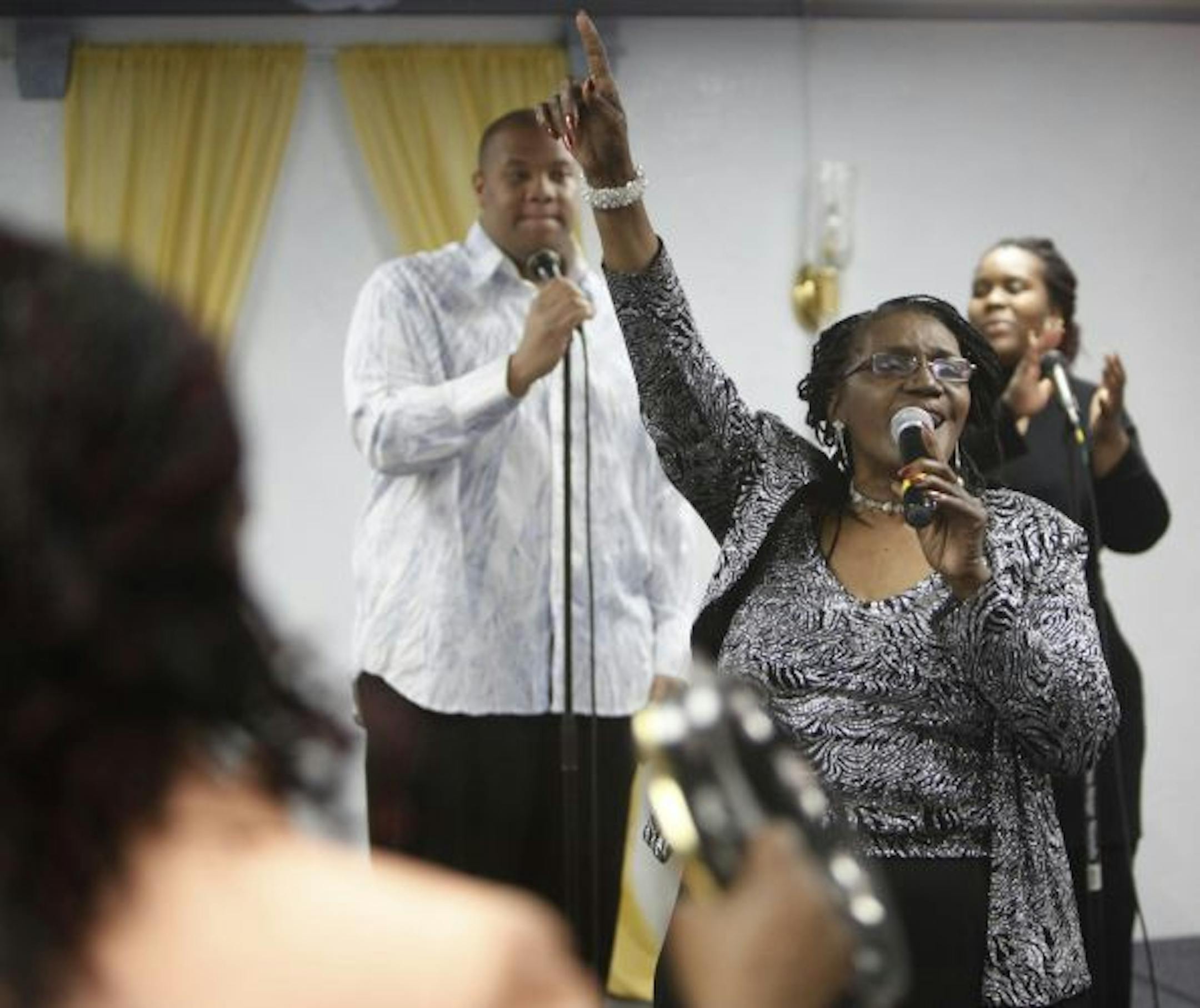
In 1993, the Rev. Hattie Horne reached a point where "I could either do what God wants or what man wants. So I decided to do what God wants." She wasn't using "man" in the generic, "mankind" sense. She meant it in the specific, gender-related way. She wanted to become a pastor, but the male minister at her church believed that women weren't qualified.
So, she quit and started her own church. Actually, it was more like a prayer group that held meetings at her house, which was convenient because most of the people who attended were family members.
"It was myself and Iris, my aunt, cousins, sons and grandchildren," she said.
Iris Cather was, and is still, Horne's entire support staff. But these days the family members have been joined by enough others to form the 150-member True Love Church at 1525 Glenwood Av. in Minneapolis.
Horne, 62, is one of only 23 black women who are senior pastors in the Twin Cities. With 312 African-American churches in the metro area, that means that 7 percent of them have women as senior pastors, a figure in line with nationwide averages.
Horne is convinced that being part of a black church made it tougher for her to be taken seriously as a minister.
"I know plenty of white women ministers who have had it hard, too," she said. "But I do think it's harder in the black church. Too many black churches are run by boards that are still all-male. They're the good old boys, and they make separate programs for the women. Well, I don't believe in separate women's programs, and I don't believe in the good old boys."
Bettye Collier-Thomas, director of Temple University's Center for African-American History and Culture in Philadelphia, said that Horne is not alone in encountering sexism in the church. It's a topic she explores in a recently published book, "Jesus, Jobs and Justice: African-American Women and Religion."