

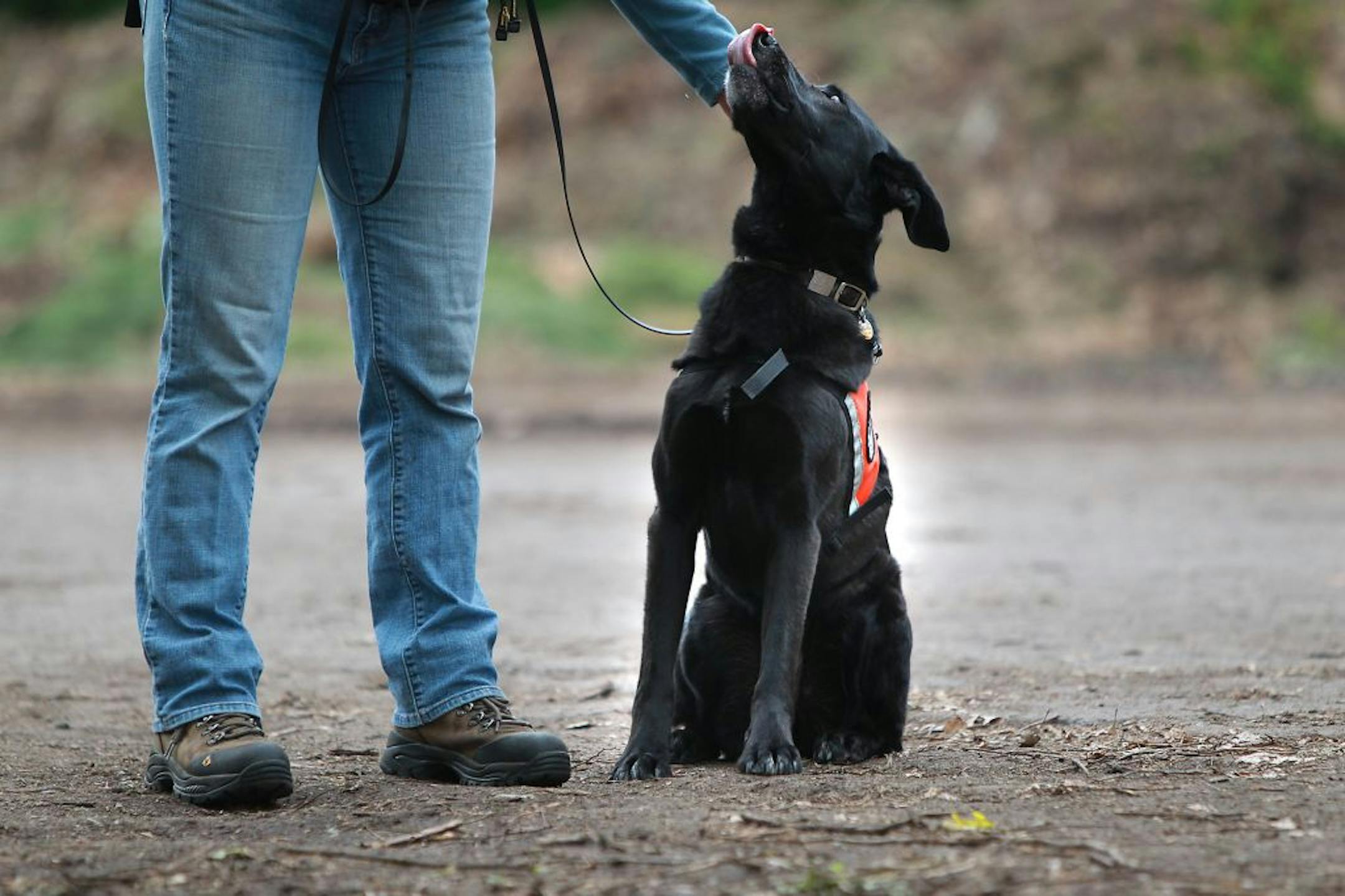
Dogs learning to sniff out emerald ash borers and ash wood are about to wrap up their Minnesota training, but they won't immediately be put to work for lack of funding.
"The training has gone better than we expected," said Liz Erickson, Minnesota Department of Agriculture spokeswoman.
She said that trainers didn't know when the training started earlier this year whether the dogs would be able to detect either ash wood or the invasive species that now threatens ash trees across North America.
"We're hopeful these dogs can be used for more than just a pilot program, finding infestations earlier than we're able to visually."
The training, involving dogs from a Reno, Nev., tracker-training program and $370,000 in federal money, began in the spring. That money has run out, and state officials will have to find more from the Legislature, the federal government or other sources, Erickson said.
The dogs have been trained to detect both infested and clean ash wood as an aid to the state's ash quarantine, affecting Houston, Winona, Hennepin and Ramsey counties, where the borer has been found.
They were expected to be put to work at truck weigh stations, wood processing sites and firewood dealers, including convenience stores, where they would likely detect infested wood much more quickly than human inspectors, Erickson said.
On Thursday, the dogs are scheduled to visit Great River Bluffs State Park near Winona to try their skills at detecting infestations in standing trees, rather than lumber or firewood. The park is known to be infested.


