Dog years: Reflections on the most-loyal of hunting companions

Star Tribune outdoors writer Doug Smith has had some of his best outings with Macy, Abby, Katie and others.

October 1, 2015 at 10:57PM
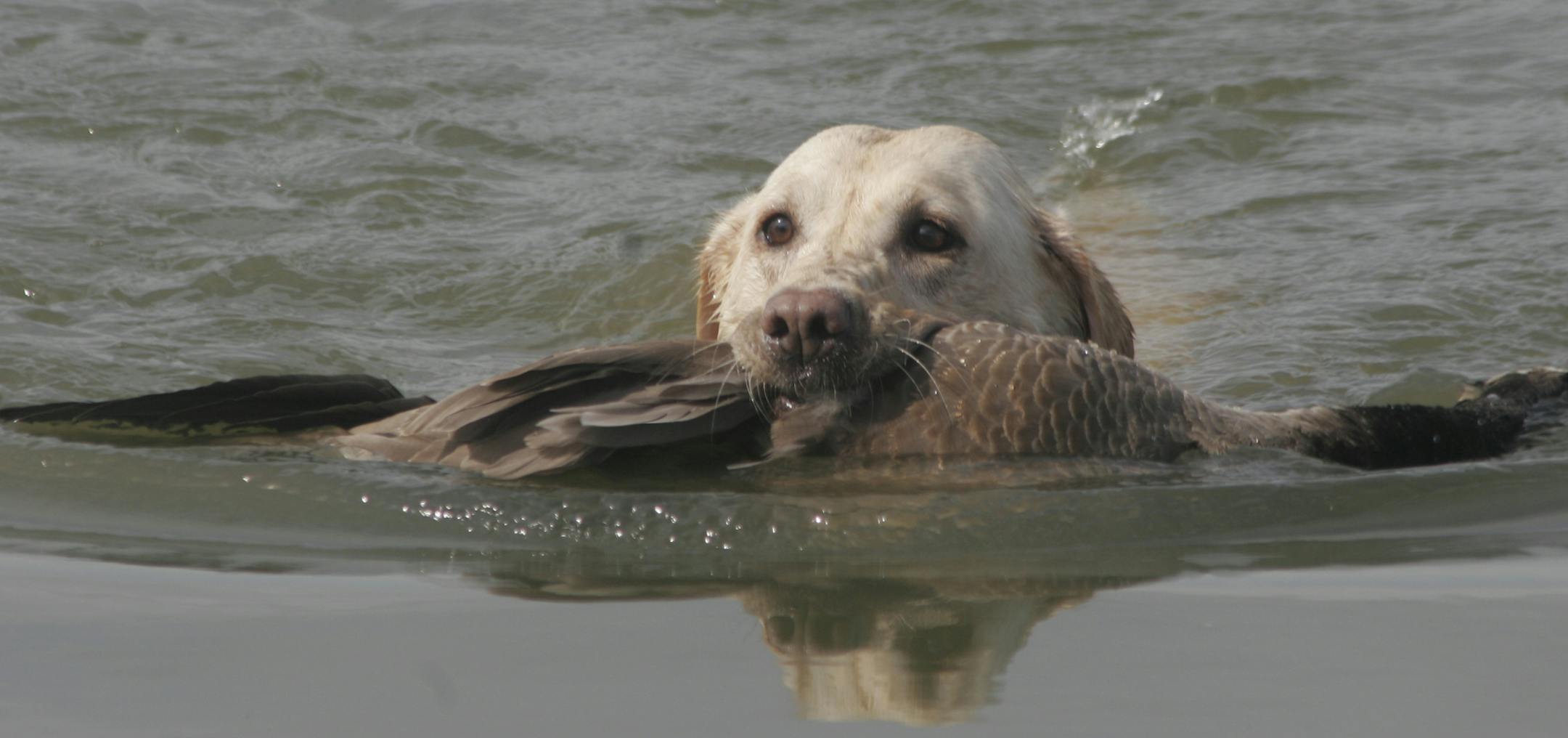
Doug Smith/Star Tribune; Sept. 6, 2008; Macy, a yellow Lab, retrieves a Canada goose felled during the opening of the September Canada Goose hunting season recently at Marsh Lake in western Minnesota. ORG XMIT: MIN2015092811084629
Macy, a Labrador retriever, is 12 and the oldest of the author’s two living dogs. This season might be Macy’s last in the field. (The Minnesota Star Tribune)

My numb fingers clung to my 12-gauge shotgun as I navigated the edge of a frozen cattail slough on a crisp, silent morning last December.

Ahead, near some trees, a nervous rooster flushed with a cackle, barely in range for my scattergun. I took a single, fleeting shot, then watched my two yellow Labrador retrievers scamper ahead through the brush, noses to the snow-covered ground.

Moments later, Bailey, the youngest (and fastest), proudly returned with a long-spurred ringneck in her mouth.

"Good girl,'' I said, surprised I had hit the pheasant and elated that Bailey had found and retrieved it. I knew a late-season rooster was a true trophy.

Some would say I was hunting alone that day. But I wasn't.

Hunting friends were too busy for the late-season hunt, so I drove to southwestern Minnesota with my two canine companions. They're always eager for a hunt. They don't complain when birds are scarce, the temperature is too cold or too warm, or when I miss an easy shot.

And they certainly don't care if the motel bed is as hard as a ­frozen slough.

All of which is to say bird hunting with your own dog — one you raised and trained and fell in love with — is one of life's great pleasures. It's a pleasure I've enjoyed for 35 years. While hunting over any good dog is rewarding, it's not the same as hunting over your dog.
For me and many other bird-dog owning hunters, much of the joy of pursuing ruffed grouse or pheasants or ducks comes from the interaction between us and our dogs.

Without them, hunting would be, well, just hunting. Something essential would be missing.

Over some 35 hunting seasons, I've been fortunate to have had four good hunting dogs. My first was an energetic springer spaniel named Katie, a little black-and-white hunting machine — with a heart. Her docked tail pulsated wildly when she was on the scent of a bird.

And there was no quit in the little dog. One afternoon, after several days of hunting in tangled, burr-laden cover near the Missouri River in South Dakota, her nose and feet were raw and bloodied. I tried to leave her in the truck to rest, but she yipped incessantly in protest as I walked away.

So along she came.

She hunted until she could no longer hear my dog whistle. After nearly losing her in a cornfield on a November pheasant hunt, I realized our partnership was sadly over.

My second canine hunting partner was a black Lab, Abby, a loving dog who desperately wanted to please. For a dozen years, she accompanied me on countless hunting trips across the Midwest and Canada. Despite my inadequate training, she was a fabulous hunter with a keen nose who made some remarkable retrieves. They are ones I still recall with friends who witnessed them.

I knew I had myself a hunting dog when I sent her across a 40-yard river on a blind retrieve. She gamely swam across, scoured the riverbank until she found the downed pheasant, then swam back.

And there was the crippled snow goose in Saskatchewan that she pursued, quickly disappearing in the wind-swept slough. We paddled after her, but failed to find her after a lengthy search. Distraught, we returned to our hunting spot, and there was Abby — with the snow goose.

Of course, one reason hunting dogs become so special is because they are more than hunting dogs. They are family members. My kids grew up with Abby. She always gamely accepted their hugs and tugs, and didn't mind snapping food out of their little hands.

And when you spend months working the dogs with whistles, hand signals and commands, and then see them flush a tight-holding rooster or swim through a slough choked with weeds to retrieve a downed duck, the reward is palpable. There's pride, of course, but it's more than that.

It is friendship.

My youngest Lab, Bailey, is 6, is in her prime, and has proved to be an excellent hunter and a wonderful companion. In the field, she's all business. But she's also the most affectionate dog I've had — the only one that has been allowed on the couch, not just to sleep, but to cuddle and nudge us with that wet nose.

Which is why losing your longtime hunting companion is so painful. I've had to put two dogs down. Gut-wrenching experiences one doesn't forget.

Now my oldest Lab, Macy, is 12, and this likely will be her last hunting season. The thought has been on my mind lately.

I'll savor our time together this fall, both in the field and in those small-town motel rooms, where she'll hop onto the bed, nuzzle me and groan happily after a long hunt.

And she won't complain about a hard mattress.

Doug Smith • doug.smith@startribune.com


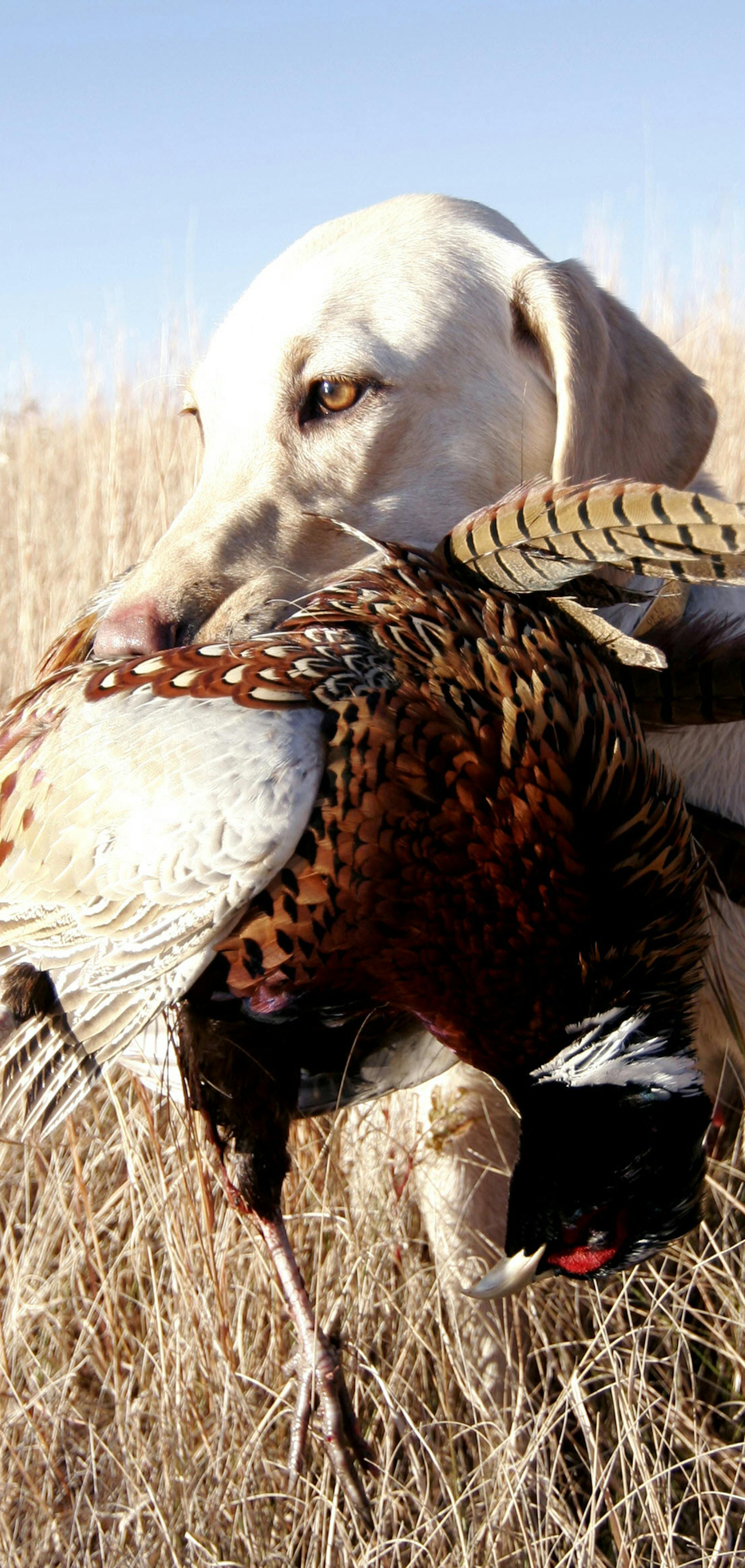
Doug Smith/Star Tribune; Oct. 19, 2011. North-central South Dakota. Bailey, a 2-year-old yellow Lab, holds a prized rooster she retrieved. ORG XMIT: MIN2015092814434351
Bailey (The Minnesota Star Tribune)
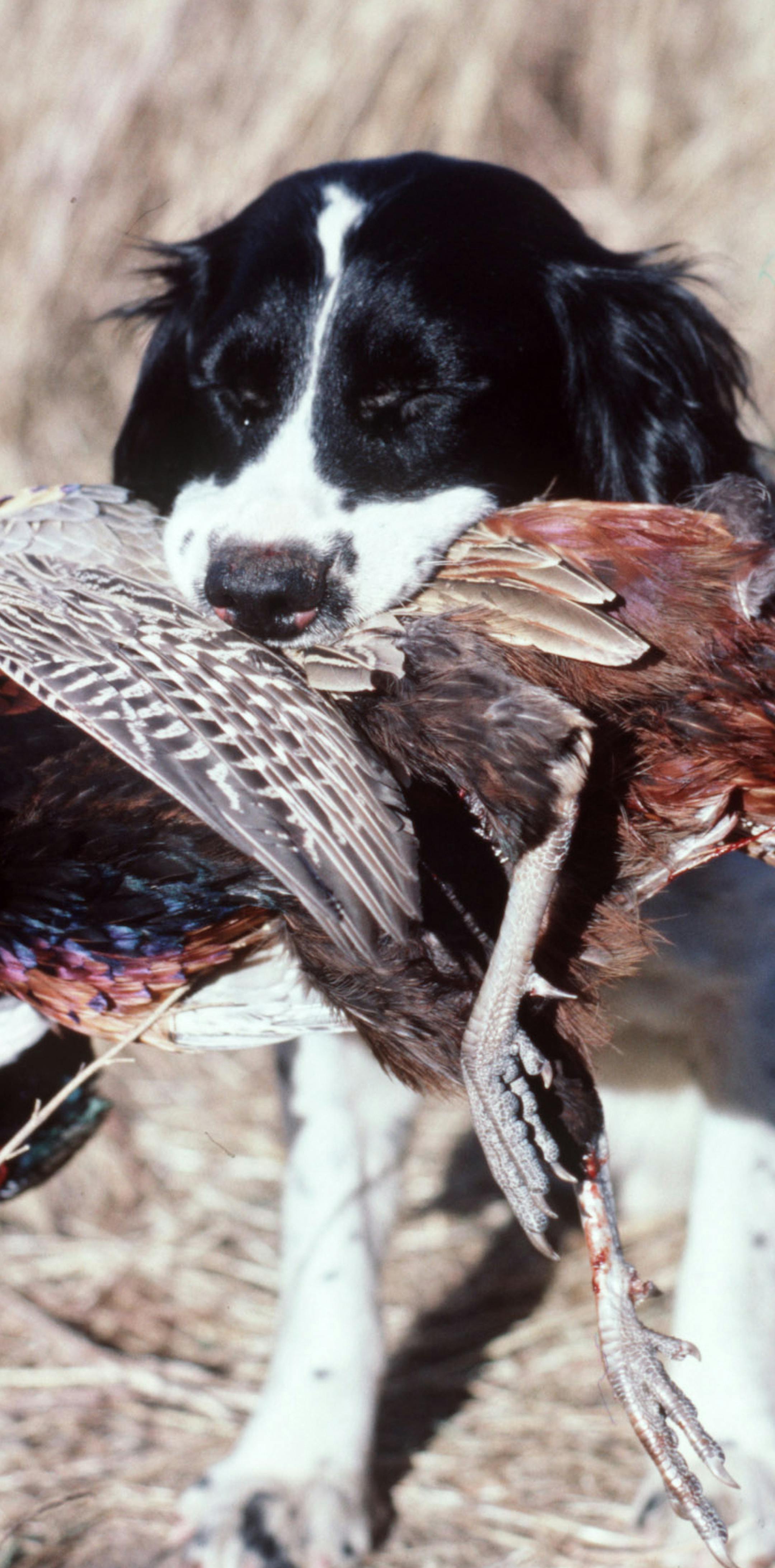
Katie, Doug Smith's springer spaniel, with a South Dakota pheasant. ORG XMIT: MIN2015092815401662
Katie (The Minnesota Star Tribune)
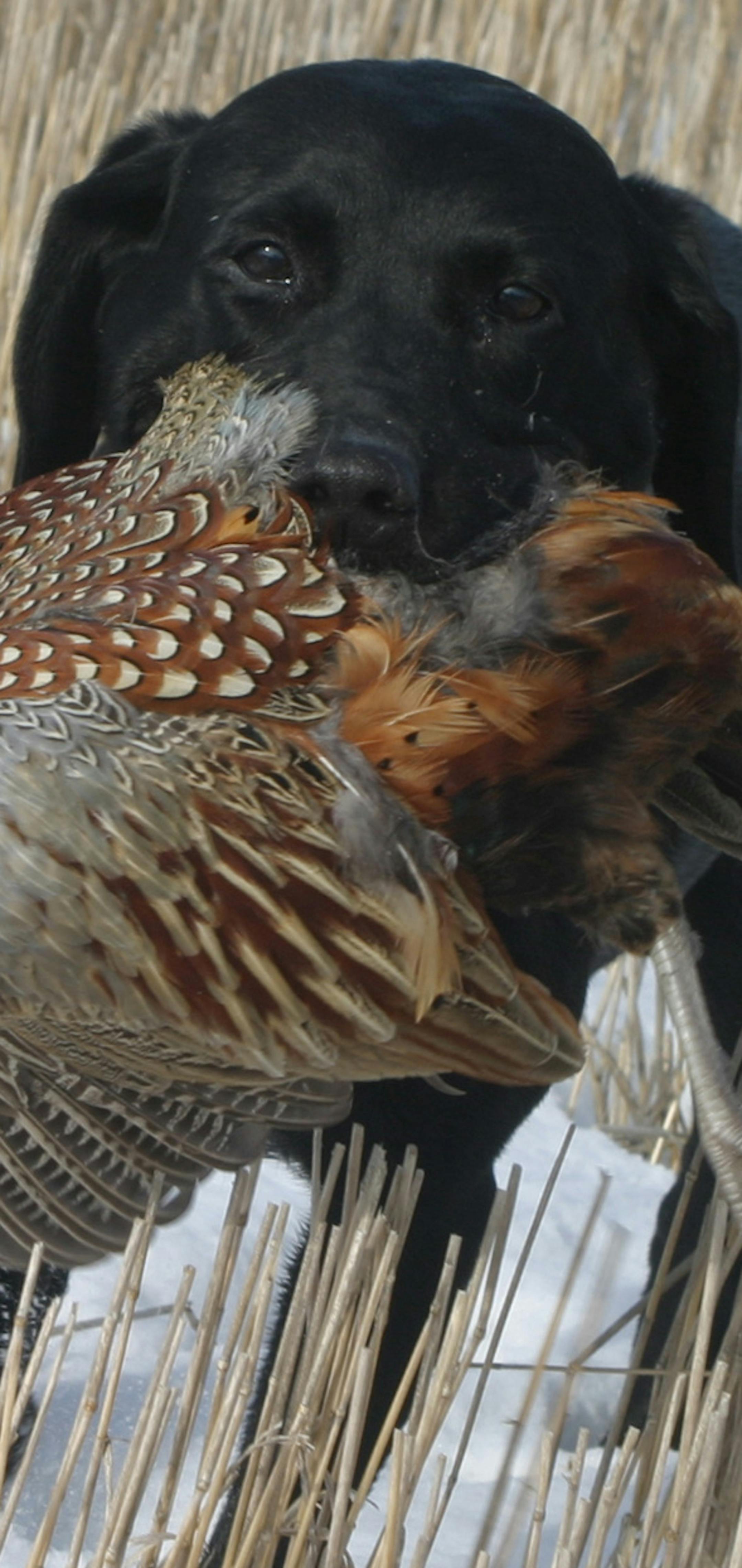
Abby, a black Labrador retriever, fetches a downed rooster. ORG XMIT: MIN2015092815383361
Other Smith family hunting partners: From left, Bailey, Katie and Abby (The Minnesota Star Tribune)
about the writer

about the writer

DOUG SMITH, Star Tribune