
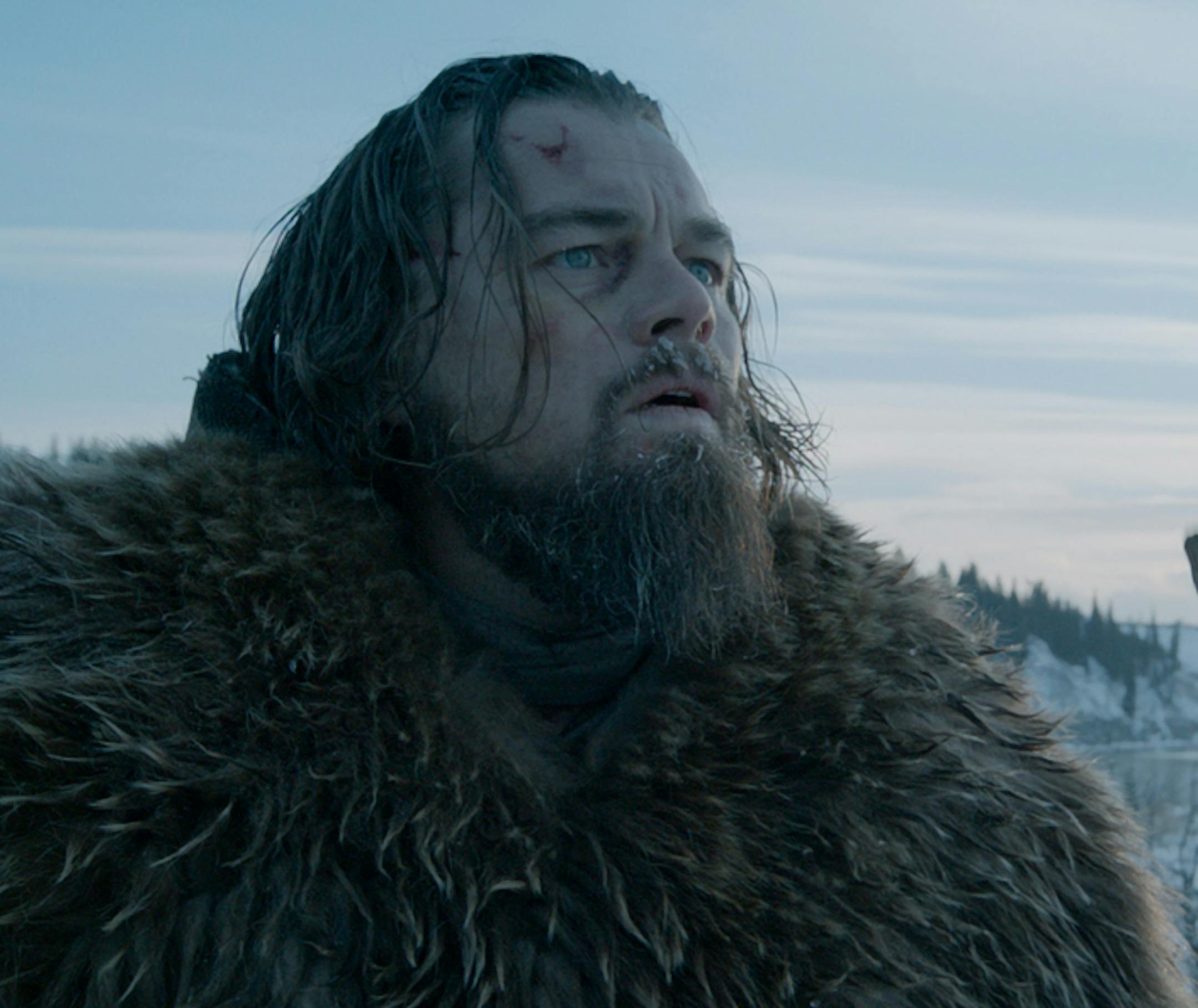
Does #OscarsSoWhite controversy overlook diversity in 'The Revenant'?

The Wrap
February 12, 2016 at 3:34PM
Leonardo DiCaprio, who received a best-actor nomination, stars in "The Revenant."
Leonardo DiCaprio, who received a best-actor nomination, stars in "The Revenant." (The Minnesota Star Tribune)

In a year when "The Revenant" is a leading Academy Award contender for best picture, its rare, authentic glimpse into Native American culture has been overshadowed by protests over the Oscars' lack of diversity.

The irony is not lost on filmmaker and comedian Sterlin Harjo, who joked this week on NPR that "our adopted brother, Leo DiCaprio, is about to get an Oscar for a film that had Native people in it, actually speaking Native languages, and now there's a call for boycott. Come on. Just give us this one."

Native Americans are rarely portrayed in film the way they were in "The Revenant" — if they're portrayed at all. Irene Bedard, the voice of "Pocahontas" and "Tree of Life" actress who is of Inupiat, Yupik, Inuit and Cree ancestry, told TheWrap that she's disappointed with the way the community is usually depicted in film.

"I'm just offended that as far as Native people go today, we have next to no representation in the media," said Bedard. "We're the invisible people, and when we get portrayals, they are in the past, and those portrayals are also the stories of us as victims or as savages. We can't be seen as true human beings."

And according to Bedard and Harjo, that's what makes "The Revenant" a watershed for Native Americans in film. Alejandro Iñárritu, the film's director, placed emphasis on accurately portraying not only the languages spoken by various tribes in the film, but also the clothing and customs of indigenous peoples.

Otherwise, it seems Hollywood is seldom interested in films about American Indians that don't comport with long-held stereotypes, according to Bedard, Harjo and James Lujan, chair of the Department of Cinematic Arts and Technology at the Institute of Native American Arts in Santa Fe.

"It seems that ['The Revenant'] is a very fair portrayal of First Nation people, but on the negative side it's just reinforcing those images of a native person stuck in the 19th century," he said. "You'd be surprised to hear how many people don't live in teepees or don't wear buckskin."

"How many times have I been hung in a film? How many times have I portrayed a woman being raped?" Bedard said. "I'm really glad DiCaprio was able to [SPOILER ALERT] protect the woman from being raped [in "The Revenant"], but there are so many other positive stories to tell."

Actress Lily Gladstone told TheWrap at the Sundance Film Festival, "Being a Native American actress, I can't tell you how many roles I get submitted for where I'm the one who gets shot in the back or the one in this five minutes or the one who is this trope, this archetype, rather than a person." But her role in the new film "Certain Women," also starring Kristen Stewart, has her hopeful about the industry.

"For my first breakthrough role, it's amazing to be stepping into a role where I can say I am playing a woman of color in a leading role," she said.

Whether that marks the start of a trend remains to be seen, but the Academy of Motion Pictures Arts and Sciences recently proposed changes that will strive for greater diversity after Oscars voters failed to nominate a single actor or director of color for the second year in a row.

"Was I surprised? No," said Bedard of the mass snub. "As a member of the invisible people, we are used to being overlooked. I have been nominated for a Golden Globe, but I still have to prove not only that I am a Native American actor, but that I'm an actor."

"I've been in the industry for 20 years; it's hard to not become cynical, but I take it as a personal challenge that it's really up to us Native Americans to be more aggressive in telling our stories," added Lujan.

Bedard thinks the changes proposed by AMPAS represent a step in the right direction, but agrees with Lujan that American Indians need a louder, more assertive voice.

"There's a lot of work to be done," she said. "Instead of crying over the injustices, it's more like, what can we do? That's what it's about."

about the writer

about the writer

The Wrap

More from No Section

See More
FILE -- A rent deposit slot at an apartment complex in Tucker, Ga., on July 21, 2020. As an eviction crisis has seemed increasingly likely this summer, everyone in the housing market has made the same plea to Washington: Send money — lots of it — that would keep renters in their homes and landlords afloat. (Melissa Golden/The New York Times) ORG XMIT: XNYT58
Melissa Golden/The New York Times

It’s too soon to tell how much the immigration crackdown is to blame.