

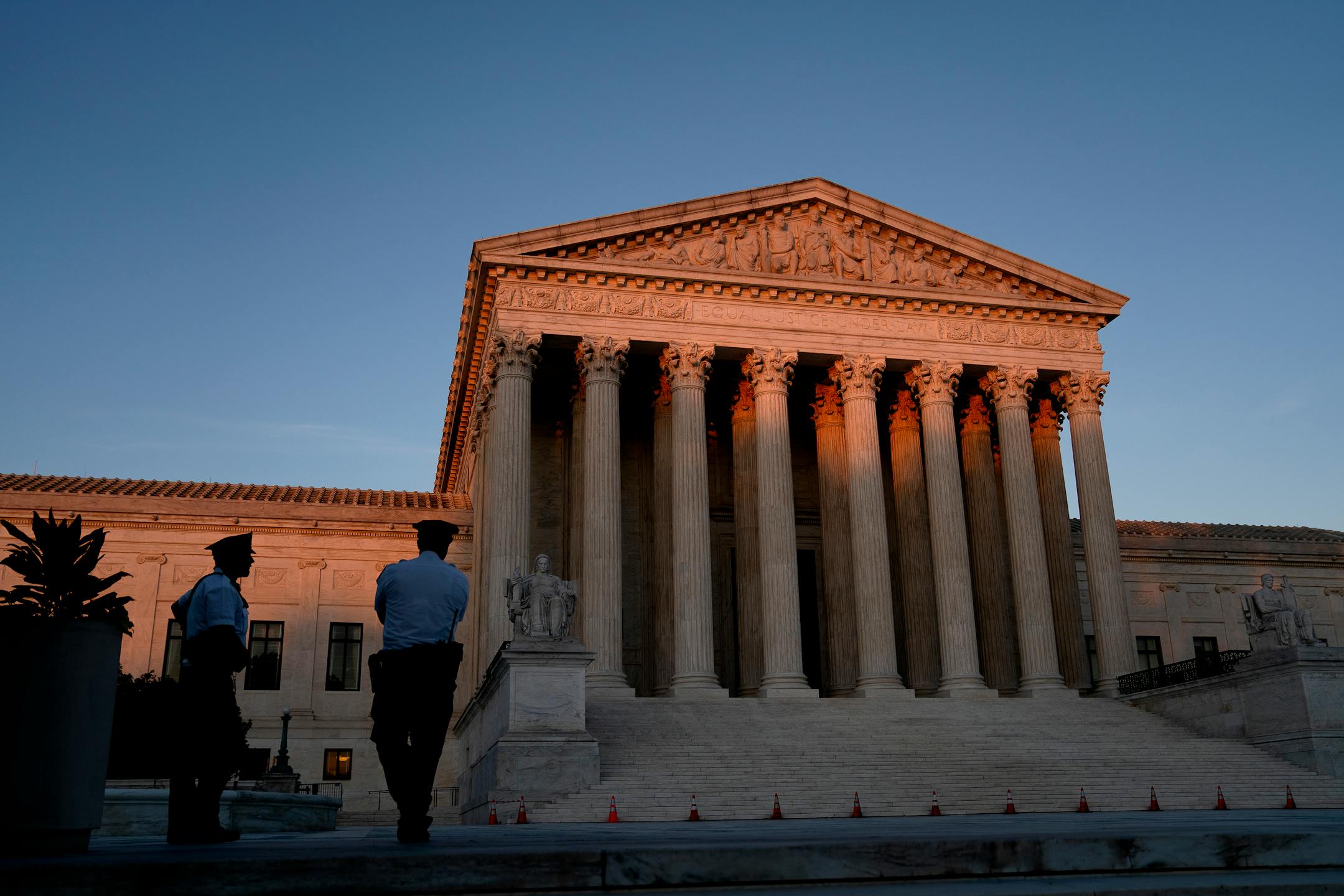
Is it time for a dramatic change in the way the Supreme Court does business?
No one really expected that question from the new 36-member commission President Joe Biden established in April to study potential court reforms. He created it to fulfill a campaign promise, but most people assumed it would focus its sights on relatively limited proposals, such as whether terms limits should be imposed on Supreme Court justices and whether the number of justices on the court should be increased.
But instead, at its first public meeting on June 30, the commission came roaring into life determined to raise a bigger, broader and even more controversial subject: Does the Supreme Court wield disproportionate power that needs curtailing?
In particular, the commission zeroed in on what's known as "judicial review," the awesome power the nine justices of the court have to strike down laws passed by Congress or the states if they're deemed to conflict with the U.S. Constitution.
I hadn't even realized that subject was open for discussion. I was wrong.
"The Supreme Court is an anti-democratic institution," said Nikolas Bowie, an assistant professor of law at Harvard Law School, in powerful testimony to the commission. He argued that the court had a long history of invalidating laws designed to expand political equality and had been "silent at best" on the dispossession of Native tribes, the exclusion of Chinese immigrants and the persecution of political dissidents, among other subjects.
Bowie said it would be good to do away with the power of judicial review.
Samuel Moyn, a Yale Law School professor, also criticized judicial review, and proposed various reforms to weaken it. "Constitutional law is now more openly 'politics by other means' than some once believed or hoped," Moyn said.


