

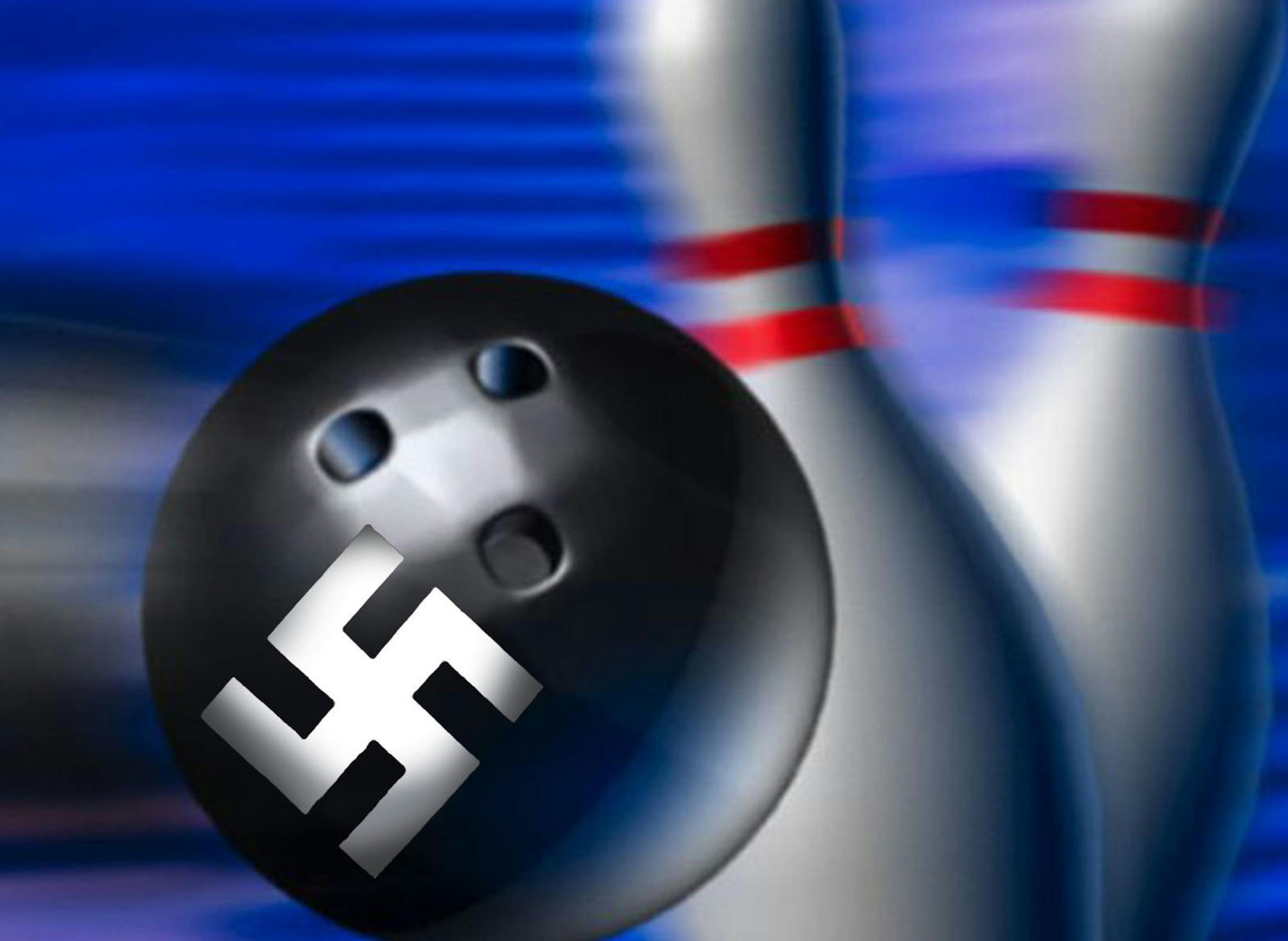
In recent decades, many social scientists have drawn attention to the importance of "social capital." The term is meant to capture the value, economic and otherwise, that comes from social networks, through which people frequently interact with one another. But what if social capital ends up contributing to the rise of extreme movements, including fascism?
It is well-established that individuals and societies can gain a great deal from civic institutions, such as parent- teacher associations, athletic leagues, churches and music clubs. High levels of social capital have been associated with numerous social benefits, including improvements in health, promise-keeping, trust, altruism, compliance with the law, child welfare and individual happiness.
Harvard University political scientist Robert Putnam has done a great deal to explore the beneficial effects of social capital. In his book "Bowling Alone," he documented what he saw as its decline in the United States, connecting that decline with a wide range of social problems.
Pointing to research by Putnam and others, many have argued that the U.S. and other nations should make a sustained effort to measure and increase social capital, with particular attention to civic associations that help to generate it.
At the same time, social capital can have a dark side. If people are in a social network whose members are interested in committing crimes, social capital will promote criminal activity. A fascinating recent study called "Bowling for Fascism" goes much further: It shows that the rise of Nazism was greatly facilitated by unusually high levels of social capital in Weimar Germany.
The research offers an important and novel perspective on Adolf Hitler's ascension to power. And by identifying conditions that help to spread extremism, it also offers lessons for the present, including the risk of terrorism.
The study, conducted by New York University's Shanker Satyanath and his co-authors, is based on a wide range of original materials, including Nazi Party membership lists and hand-collected data from 112 German towns. The central question: Who was most likely to join the Nazi Party?
In the late 1920s and early 1930s, Germany had an exceptionally vibrant civil society that included clubs involved in hiking, animal breeding, shooting, gymnastics, bowling, fire fighting and singing. The authors' principal finding is that in cities with dense networks of clubs and associations, Germans were far more likely to join the Nazi Party. In their words, "a dense fabric of civic associations went hand-in-hand with a more rapid rise of Nazi party membership."


