

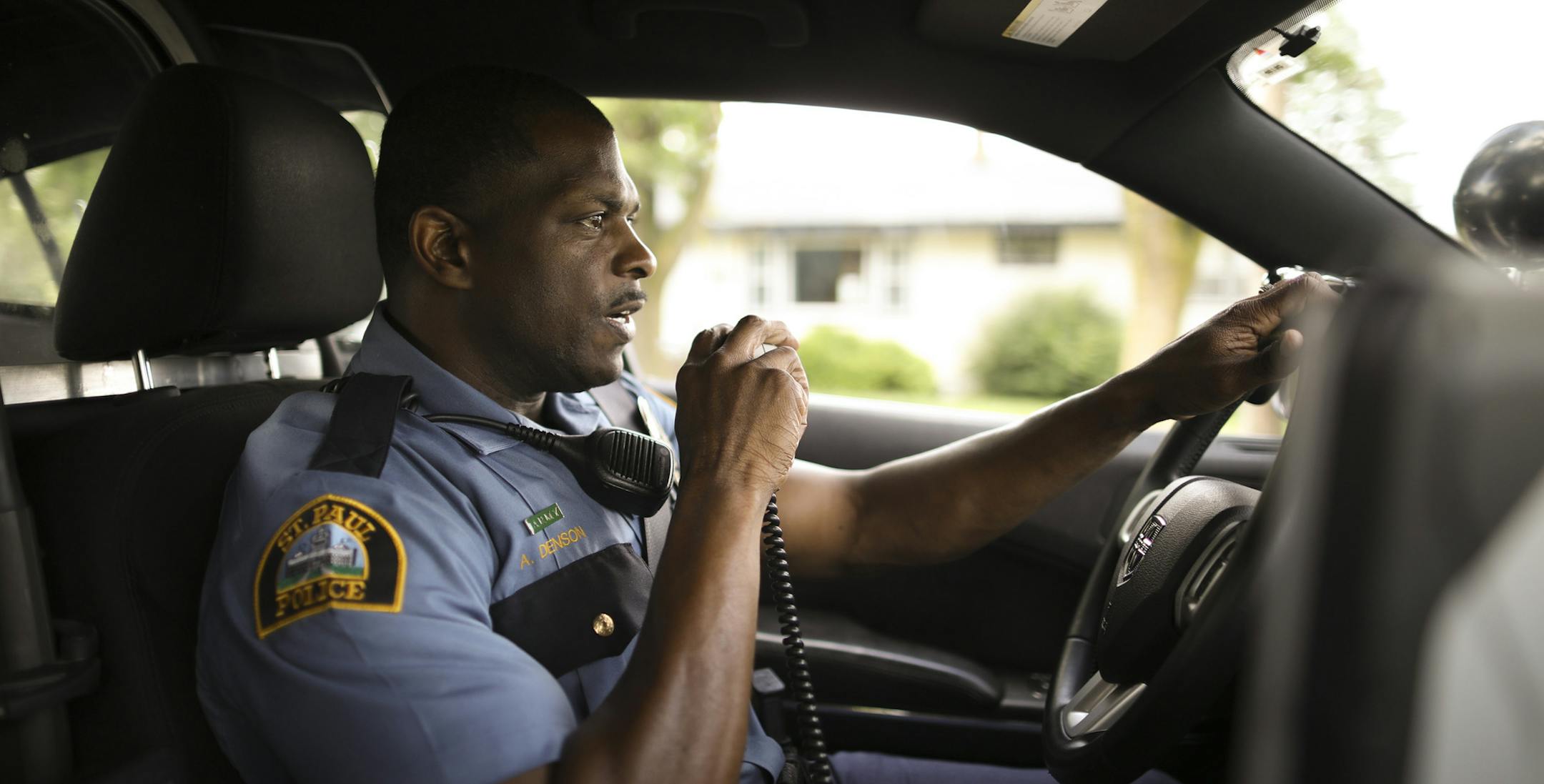
For the second year in a row, a police-involved shooting has hijacked summer tranquillity in these Twin Cities. The name Justine Damond, killed by a Minneapolis police officer after calling 911 on July 15, has become as tragically familiar in the past two weeks as the names Philando Castile and Jamar Clark have been for more than a year.
If your conversations about their deaths are like mine, you've by now heard someone of long local standing offer a soliloquy about the differences in police culture and control between Minneapolis and St. Paul.
In this tale of Twin Cities, St. Paul is typically cast as the admirable sib. It's where police officers are closer to the community because many of them grew up there and live there still — as opposed to Minneapolis, where most officers have suburban addresses. It's where a commitment to diversity has long been evident. St. Paul's first African-American police chief took office 25 years ago. In Minneapolis, that happened last week.
In St. Paul, it's said, kids think of a Disney movie, not the cops, when they hear the word "thumper."
Sorting myth from fact in that comparative narrative isn't easy. But it's a timely exercise. The longing in Minneapolis for a police force that citizens can trust to act in accordance with their best values — in other words, a force like the one they've heard exists in St. Paul — is now the driving emotion in this year's city election campaign. Voters are going to hear plenty of politicians talk about improving police performance and culture. Knowing how policing actually differs in these two towns might help voters sort serious proposals from frivolous ones.
In that spirit, I welcomed a suggestion from reader Edmund Levering, a Minneapolis expat and community organizer now living in Colorado. Take a look at the differences in civilian review of complaints about police performance, he urged. A strong civilian review process can do a lot to curb excessive use of force and keep citizens in charge, Levering advised.
If "strong" means independence from police control, St. Paul's civilian review process is the more muscular. But it is only recently so. Just last December, the City Council eliminated two seats reserved for police officers from the citizen commission that reviews police misconduct complaints. At the same time, the commission was enlarged from seven to nine seats so that it could more fully reflect the diversity of the Capital City's population.
It was a change long favored by community watchdogs and recommended by a 2015 University of Minnesota audit of the city's circa-1994 civilian review process. But it might not have happened if a sense had not been building that the city's reputation for benign policing no longer matched reality. A Star Tribune analysis last year found that of 161 police-involved deaths in Minnesota since 2000, 29 had happened in Minneapolis, 24 in St. Paul. Factor in the larger population in Minneapolis, and St. Paul has a higher police-involved death rate per capita.


