Q: We're wondering if birds that overwinter here live longer lives than birds that migrate.
A: This is an excellent question, and it's still being studied by researchers. Migration is full of dangers, but then, living through a long, cold winter can also be hazardous. Some things we know: Spring and fall see the most bird deaths, and these are the periods when migrants are on the move. And the greater the migration distance (some birds travel only to the southern U.S., while others go as far as Argentina) the more deadly it is.
I checked in with Andrew Farnsworth, a researcher who studies migration at the Cornell Lab of Ornithology, and he noted that this is a complex issue. We humans change the landscape with our development, pollution and climate warming, negatively affecting all wildlife. Resident birds (aka sedentary birds) in an area undergoing major development might be affected more than migratory birds that can get away for part of the year. But then, migrants need stopover sites for feeding and resting along the way, and as these shrink or disappear, this affects their survival.
Recent studies suggest that some migratory birds may have smaller brains than their stay-home cousins, which may be an energy-saving strategy. And a smaller brain could be a factor in length of life.
Migratory birds live faster-paced lives than non-migratory birds, and they tend to have shorter life spans. But then they tend to raise larger numbers of offspring, which may offset some migration losses. Overall, it seems safe to say there is strong evidence that points to sedentary birds having a longer lifespan.
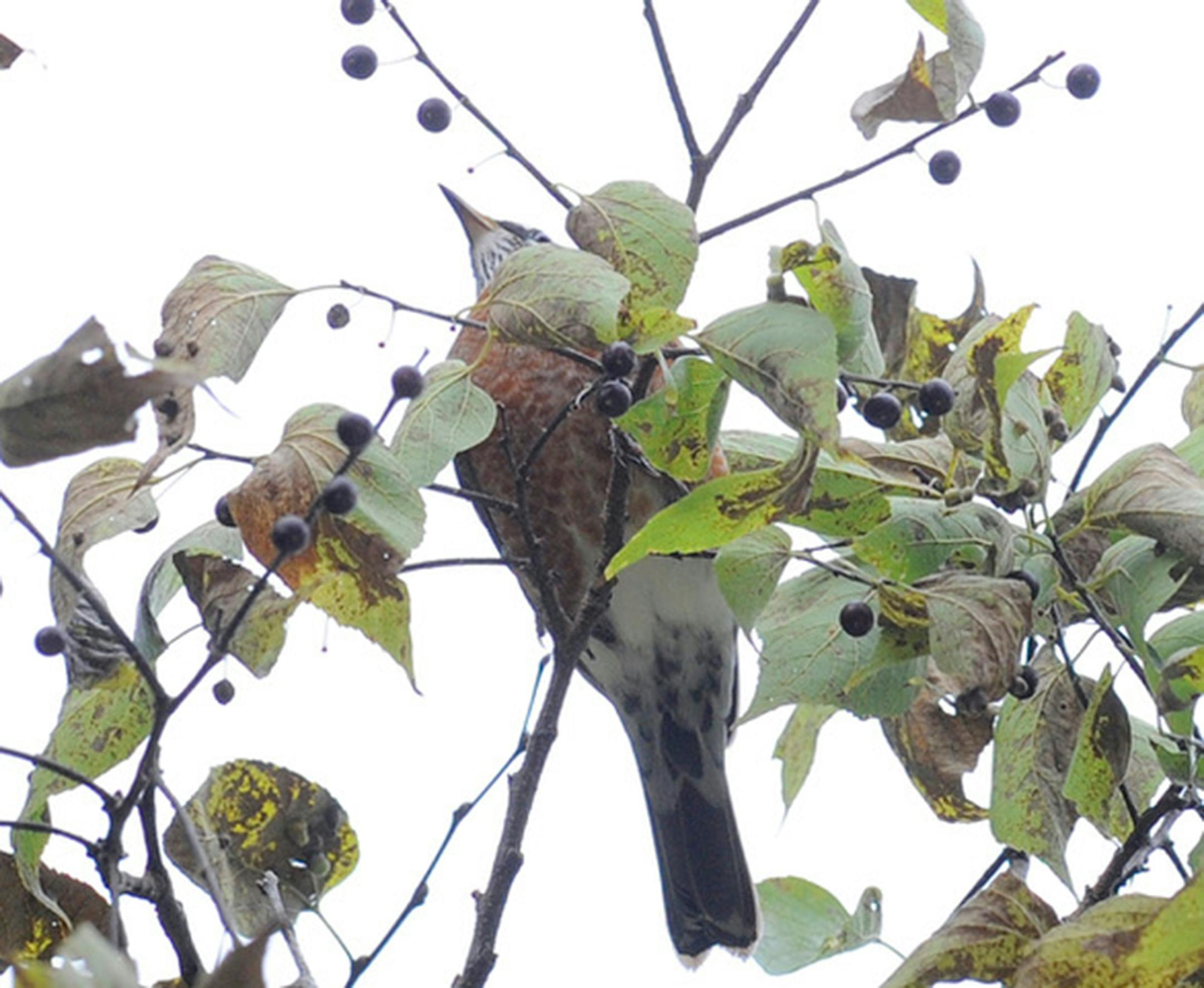
Where are the robins?
Q: I noticed a lack of robins in Duluth this fall, and others have said the same. Robins usually flock in to feed on my mountain ash berries, but not this year. Any input?
A: I checked with Laura Erickson, noted author and birder, who lives in Duluth and also is very fond of robins. She agrees that they were noticeably absent around town this fall, and she feels it was due to food abundance. "There's so much food everywhere up here, not just mountain ash berries, but lots of crabapples and other fruits," so robins were probably gorging themselves elsewhere, she noted. Early September is usually when large flocks of robins begin to pass over Duluth, but that big migratory push was delayed this year.