
Do Karl-Anthony Towns, Timberwolves have to box out more to be elite rebounders?

The Wolves, Towns find success on the glass without boxing out very often

February 28, 2018 at 12:53PM
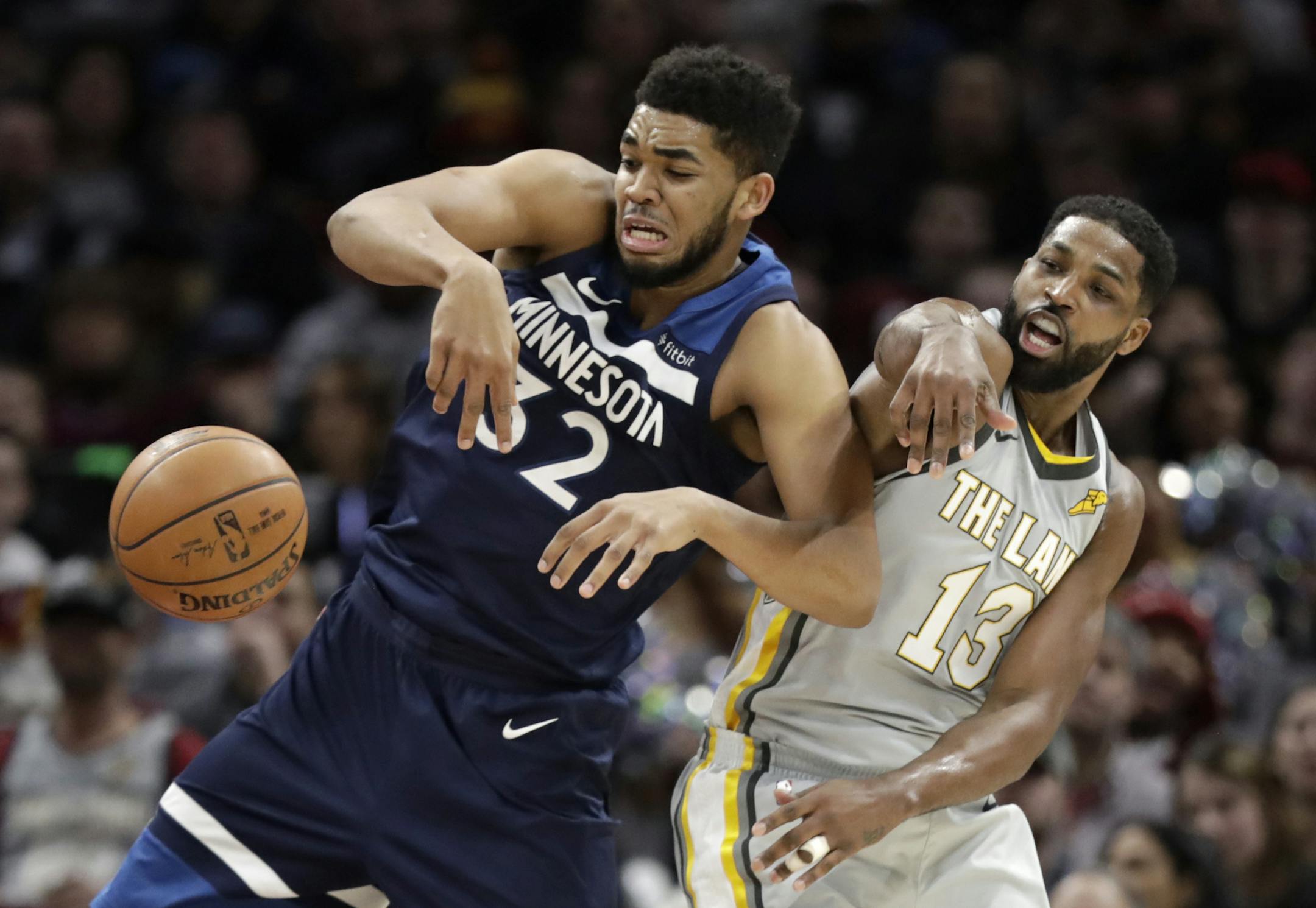
Minnesota Timberwolves' Karl-Anthony Towns (32) and Cleveland Cavaliers' Tristan Thompson (13) battle for a rebound in the second half of an NBA basketball game, Wednesday, Feb. 7, 2018, in Cleveland. The Cavaliers won 140-138 in overtime. (AP Photo/Tony Dejak)
Karl-Anthony Towns battled the Cavaliers’ Tristan Thompson for a rebound earlier this month in Cleveland. (AP photo by Tony Dejak) (The Minnesota Star Tribune)

A few weeks ago, the NBA trotted out a few new toys on its official website. The league, which already has a vast database of advanced statistics, added a few more for the perusing of fans, players and coaches. One of the new statistics tracks how many times per game teams box out.

Guess who ranks last? The Timberwolves.

The Wolves apply this staple of fundamental basketball fewer times (19.8 per game) than any other team in the NBA. It begs the question — does that also make the Wolves a bad rebounding team?

Coach Tom Thibodeau couldn't care less about the box-out stats.

"Do you know who's charting it? I question the accuracy of a lot of those things," Thibodeau said.

The NBA, which has 10 to 12 cameras in every arena to track all kinds of advanced stats like box outs, defines a box out as, "The number of times a player made physical contact with an opponent who was actively pursuing a rebound, showed visible progress or strong effort in disadvantaging the opponent, and successfully prevented that opponent from securing the rebound."

But Thibodeau may be right to be skeptical about those numbers. The league still is refining the box-out data, and a spokesman said the stat was temporarily removed from the site Tuesday to inspect some inconsistencies.

Thibodeau said he was more concerned with rebounding margin, where the Wolves rank 14th for the season. All this is to say, the Wolves are a good rebounding team and they're also a subpar rebounding team, depending on which end of the floor you're watching.
ADVERTISEMENT

The Wolves are one of the best offensive rebounding teams in the league, according to a metric called offensive rebound percentage, which measures the rate at which the Wolves grab every available offensive rebound. They are fourth at 24.8 percent. That high number of offensive rebounds has also allowed the Wolves to get 14.2 second-chance points per game, good for third in the league. It's one reason why the Wolves have such an efficient offense (they are third in offensive rating).

"When you look at the offensive categories, there's several categories in which we're in the top five," Thibodeau said. "So, I think we're a very good offensive team. We're going to score a lot of points. The question is how well are we going to play defensively? That's where our challenge lies."

They're not helping themselves on the boards. On the defensive end, the Wolves are tied for 24th in defensive rebound percentage at 76.2. Charlotte is No. 1 at 81.5. This is where the lack of boxing out might be showing its head. You generally don't box out when trying for an offensive rebound, but you typically have to when trying for a defensive rebound.

Center Karl-Anthony Towns has become one of the leading rebounders in the league even though he doesn't box out as much relative to other top rebounders. Towns averages 12.3 rebounds per game, good for fifth in the league. According to the NBA's new stats, he boxes out only six times per game, 29th in the league.

Towns said it's not automatic that he boxes out every time he goes for a rebound. In observing Towns in recent games, he rarely takes his eyes off the ball as a shot is going up and tends to rely on his natural abilities to get rebounds rather than using his strength to box out, which isn't the worst thing in the world when you're 7-feet tall. There aren't many players who will be able to get over your back.

"I just take good logical guesses where the ball is going to go when the ball is up," Towns said. "Put myself in a position where I could grab it and use my athleticism and length. Obviously boxing out is a big thing, just making sure I locate the [opponent], see what they're doing, see if they're being aggressive as well. See if they're backing up. You have to take a quick glance and make a judgment call."

But being an elite rebounder, he said, requires the ability to track a rebound as it's coming to the rim and boxing out.

"You have to be able to do both," Towns said. "You have to understand the situation. Sometimes that situation calls for outjumping somebody, sometimes it's out-fundamentaling somebody for a rebound. You have to do both if you want to be an elite rebounder."

At least according to the NBA's new stats — for whatever you think they're worth — the Wolves could stand to box out a little more.

Chris Hine is the lead writer for North Score, the Star Tribune's new sports analytics beat. Find his stories at startribune.com/northscore.

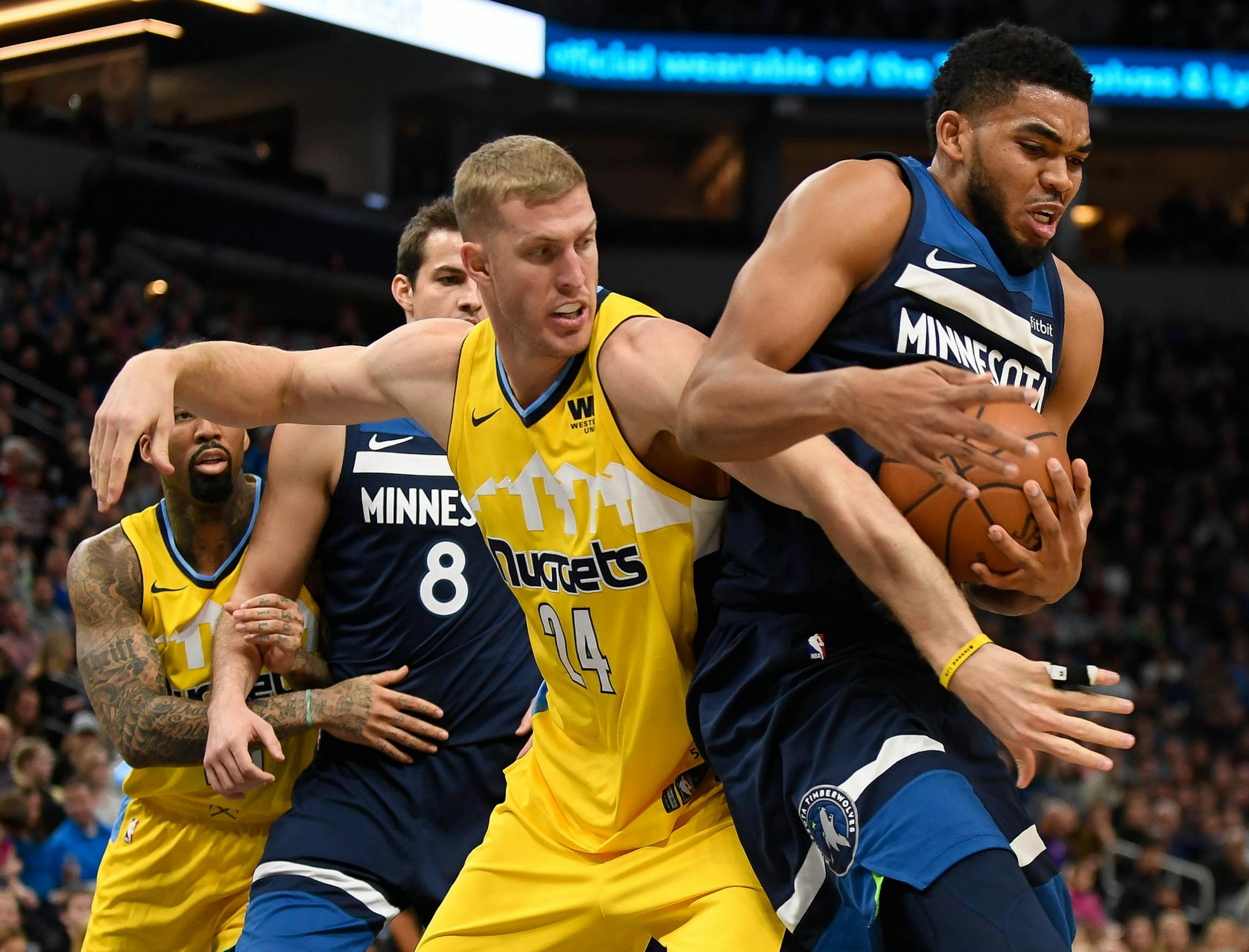
The Denver Nuggets' Mason Plumlee (24) and the Minnesota Timberwolves' Karl-Anthony Towns (32) battle for a rebound in the second quarter on Wednesday, Dec. 27, 2017, at Target Center in Minneapolis. (Aaron Lavinsky/Minneapolis Star Tribune/TNS) ORG XMIT: 1219647 ORG XMIT: MIN1712272041053747
Wolves center Karl-Anthony Towns is averaging the fifth-most rebounds per game in the NBA but doesn’t box out nearly as often as other top-performing rebounders. (The Minnesota Star Tribune)
about the writer

about the writer

Chris Hine

Sports reporter

Chris Hine is the Timberwolves reporter at the Minnesota Star Tribune.

See Moreicon

More from Wolves

See More
card image
Eric Gay/The Associated Press

There will eventually be three teams at the Feb. 15 tournament. Edwards lost on a tiebreaker to San Antonio’s Victor Wembanyama.

card image
card image