

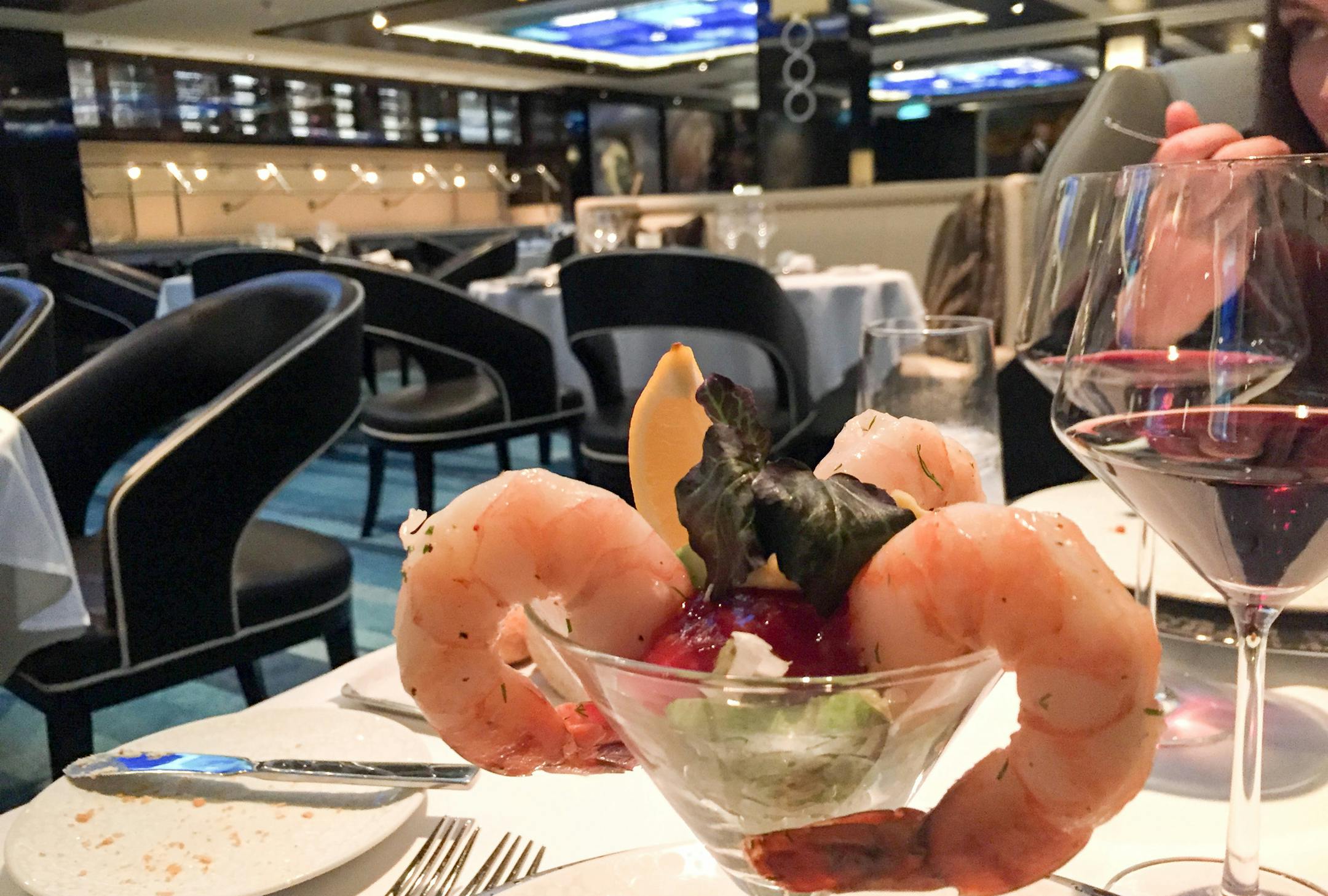
It is a scrumptious dilemma, but a dilemma nevertheless.
There are 29 dining options on the Norwegian Escape, and it's kind of paralyzing.
Escape, which debuted in November, is a sleek, modern example of where cruise ship dining is going: Everything in dining is a choice, and lots of choices cost extra.
In fact, with more than 4,000 passengers on a sold-out cruise to the Eastern Caribbean, I could not decide if 29 options were too many or too few. Passengers swamped O'Sheehan's Grill. They queued up at regular dining rooms. Some were turned away from the Japanese restaurant Teppanaki. Cagney's Steakhouse was sold out for the whole cruise on the very first day. I tried Food Republic, a clever global fusion restaurant. I sampled the Haven, the elegant dining room for premier passengers. But at the end of the week I kept thinking, what did I still miss?
If the dining atmosphere on Escape seems more chaotic than on traditional cruise ships, that is on purpose, says Jovo Sekulovic, hotel director of the Escape. Having so much choice is not bad, he says. The Freestyle Dining system introduced by Norwegian in 2000, with no set dining times or tables, has proved so popular that most other lines have copied it in part.
"It gives you a possibility of sitting with others if you wish, but the possibility of having a miserable cruise is actually very low," Sekulovic says. "It is less bad this way than the other way, because you have more choices."
A zillion decisions
Cruise enough and you will have a dining story to tell. You may have encountered the tablemate who talks of nothing except her husband's brain tumor. Being assigned to the "singles table" could mean a week of torture. Tablemates may turn out to be delightful or become lifelong friends.
Because of these and similar issues, cruise lines have increasingly decided to transfer dining decisions to the customers. But the tidal wave of choices can be overwhelming.


