5:12
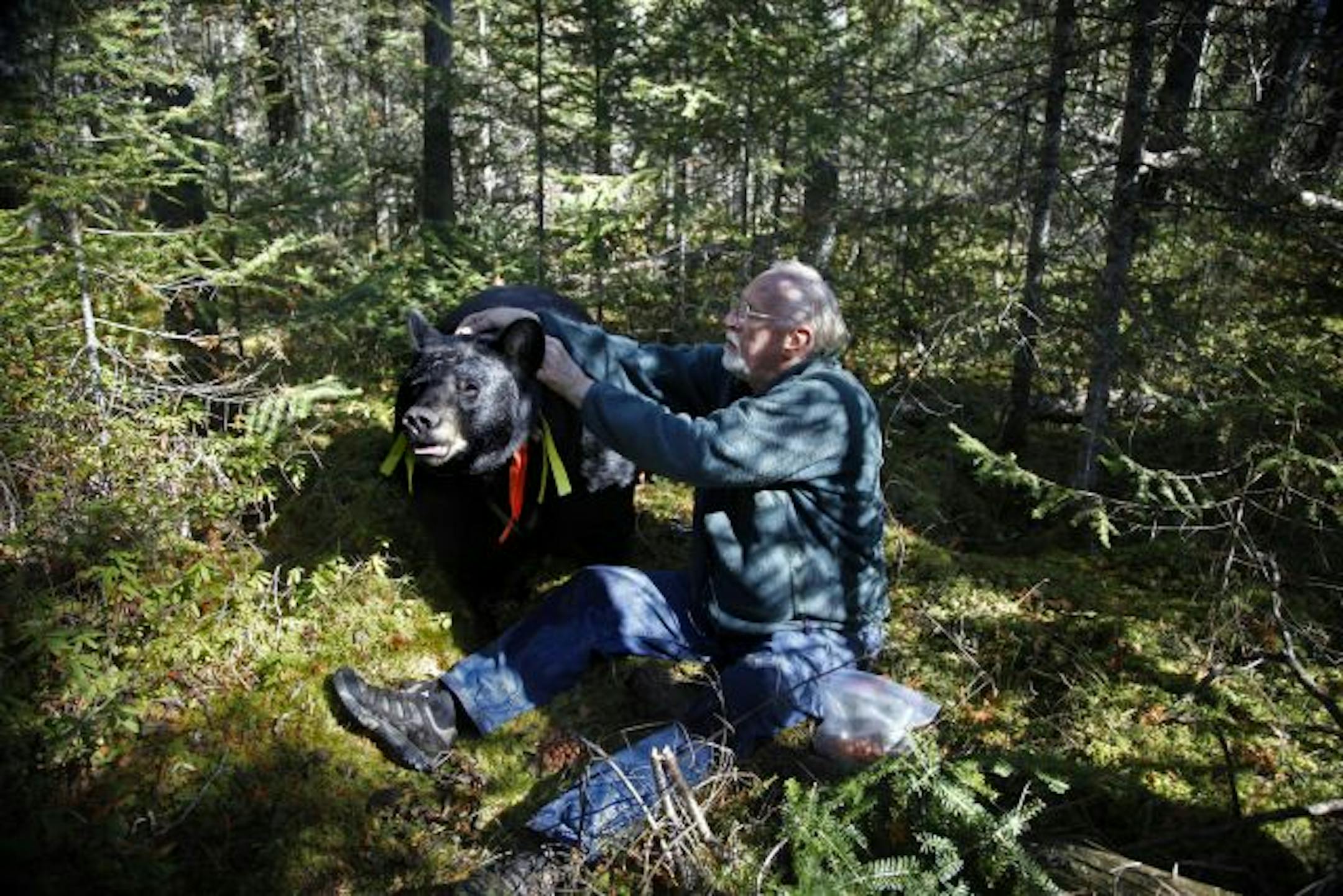
5:12He hand-fed wild black bears to get up close in his research, collaring his subjects for satellite tracking. He posted live Internet video feeds from their dens, attracting more than 140,000 Facebook followers who got to know bears such as Lily and Hope on a first-name basis.
But renowned bear researcher Lynn Rogers says that's all over now because the state Department of Natural Resources pulled his permit on Friday after 14 years.
"I'm devastated," said Rogers, 74, from his North American Bear Center near Ely, Minn. "It's the end of my 46 years of black bear research."
Tension between Rogers and the DNR has been rising for years, with heated written volleys. Commissioner Tom Landwehr, in a letter dated Friday, accused Rogers "of extremely unprofessional behavior with research bears."
DNR Wildlife Research Manager Lou Cornicelli said Rogers' methods of cozying up to the bears, including hand-feeding, has created a public safety threat with 50 so-called habituated bears increasingly dependent on human contact roaming the woods near Rogers' sprawling center outside Ely.
"Bears are breaking into cabins, sticking their heads in cars and behaving in ways wild bears would not otherwise do," Cornicelli said. "The public safety issues have become intolerable from our perspective."
Rogers called that "a crock" and said DNR officials are jealous of his fame and grew angry when his followers swamped the commissioner's office with letters pleading for protection for his collared bears.
The bear center, an expansion of which is currently under construction, will remain open. But the DNR has given him until the end of July to remove all bear collars and the commissioner told him "your activities may no longer involve radio-collaring wild bears or disturbing, handling or videotaping wild bears in dens."