0:57
0:57For years, low-flying pilots in stripped-down airplanes built up one of the strongest trout fisheries in the country by dumping hundreds of thousands of fish into Minnesota lakes at about 100 mph.
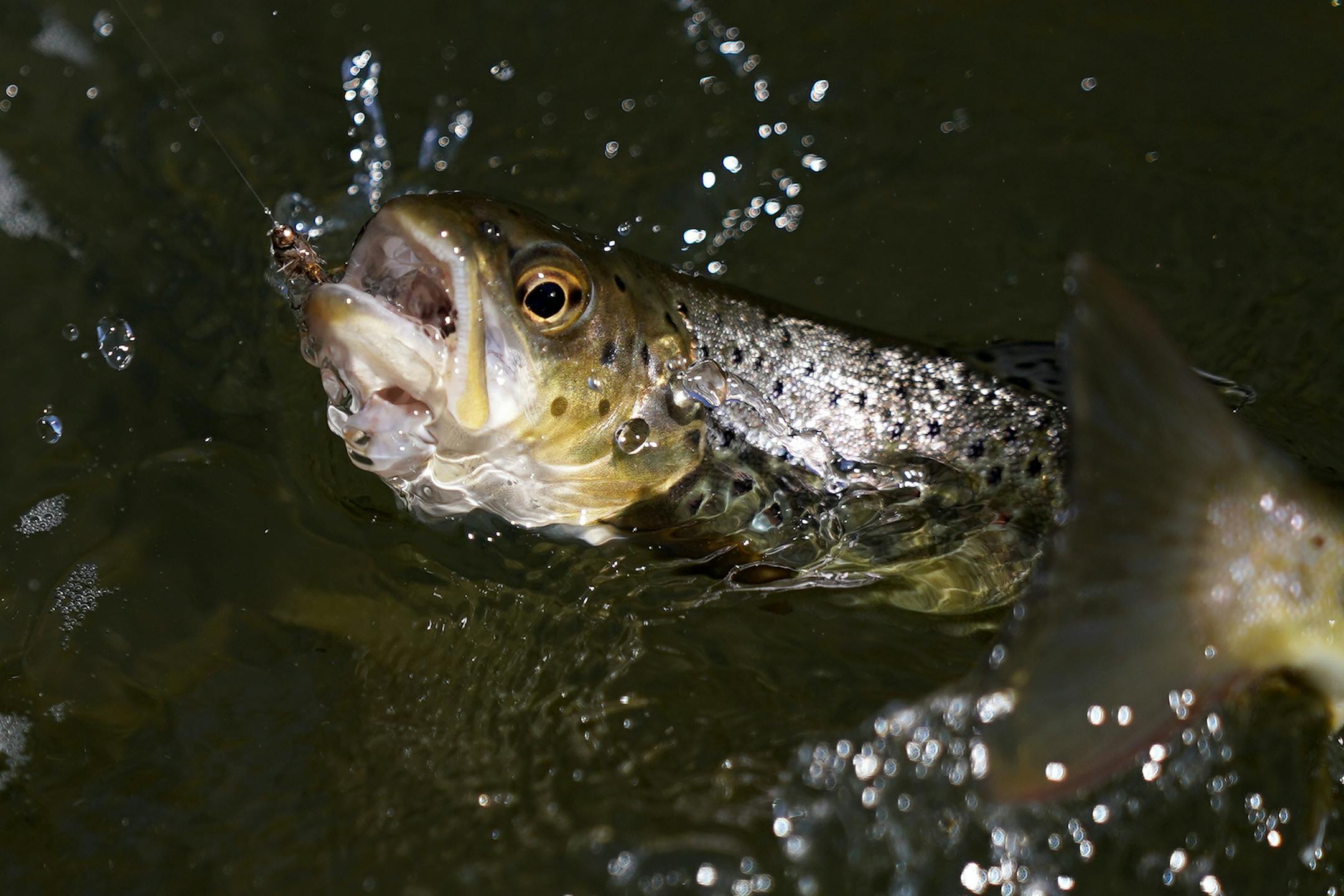
Remarkably, when dropped from 100 feet in the air — high enough to keep the fish from skipping across the water — about 80% of the brookies, rainbows and brown trout prized by anglers would survive the fall, swimming away to repopulate dozens of Minnesota's coldest, deepest and most remote lakes.
This fall, for the first time, nearly 100% of the trout stocked from the air survived.
That's because Brad Maas, one of the DNR's most experienced pilots, was able retrofit a helicopter with the water tanks holding the trout. By using the helicopter rather than the DNR's airplanes, pilots were able to safely and gently drop the fish while hovering a few feet above the water.
Because of the helicopter's success, the DNR may never use airplanes to stock fish again, said Capt. Christopher Lofstuen, chief pilot for the Minnesota Department of Natural Resources.
"I think we have a better mouse trap now," he said.
The DNR stocks about 500,000 trout a year that it raises in hatcheries across the state along with walleye, northern pike and a number of other species. It pays for the effort with money collected from trout stamps sold to anglers, which have been selling at record highs for each of the last five years.
While most of the fish are trucked in and released on shorelines, a few dozen trout lakes in northern Minnesota are too remote. It would cost too much for the DNR to truck in trout to lakes in Voyageurs National Park, for instance, and in many parts of the Superior National Forest, so instead, they bring the fish to small airfields in Ely and Grand Marais, and pilots take care of the rest.