

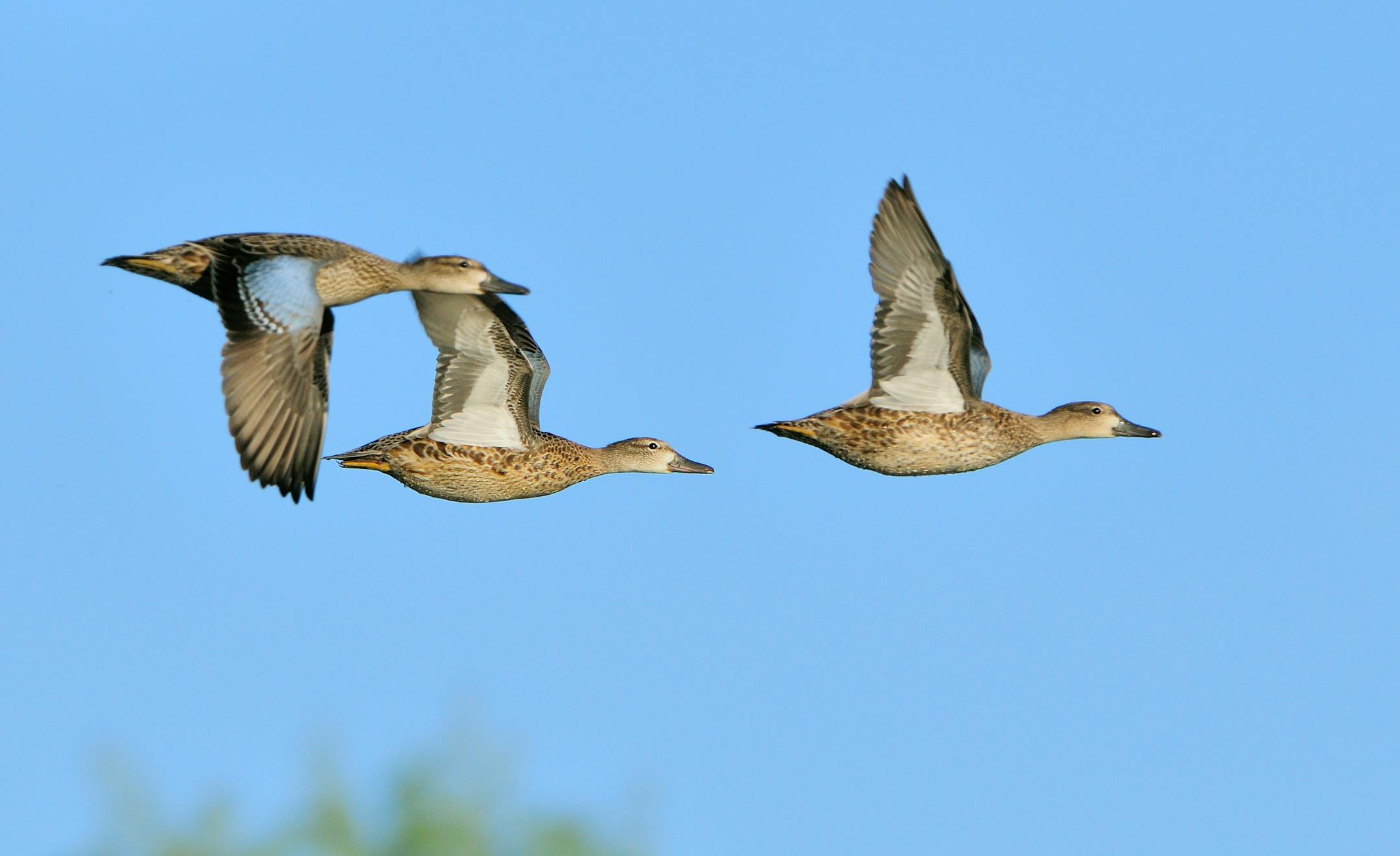
It's called an experiment, the new teal-hunting season that begins Saturday for five days.
Experiment because no one, not the U.S. Fish and Wildlife Service, which authorized the hunt, nor the Minnesota Department of Natural Resources, which is implementing it, knows how many hunters will go afield seeking these early migrating ducks, nor how many teal the waterfowlers might see, or shoot.
Experiment also because North America's most productive duck-breeding region — roughly from northern Iowa, through western Minnesota, the Dakotas and eastern Montana, to the Canadian prairies — is deeply mired in a drought that undoubtedly will reduce to negligible the number of young-of-the-year teal and other ducks that migrate south this fall.
And experiment because the DNR's waterfowl committee, whose recommendations on seasons and other duck-hunting restrictions are almost uniformly enacted by the agency, recommended against the novel teal season, in part because of the additional work force required to manage the season, in part because the hunt is poorly timed due to the drought, and in part because Minnesota waterfowlers are about evenly split on whether the teal hunt is a good idea.
Yet DNR Fish and Wildlife Division Director Dave Olfelt and Commissioner Sarah Strommen, with support and perhaps encouragement from Gov. Tim Walz, who is from southern Minnesota, where backing for the hunt is widespread, overrode the waterfowl committee, and the hunt is set to begin at sunrise Saturday.
That opening bell — sunrise — will be important for participating hunters to remember, because the state's early Canada goose season also opens Saturday, with shooting for those birds allowed to begin one-half hour before sunrise.
"The two violations among hunters we're most likely to see will be shooting at teal before sunrise and shooting at non-target ducks, meaning ducks other than teal,'' said DNR waterfowl specialist Steve Cordts.
Sale by Friday of state waterfowl stamps will give an indication how many duck hunters will participate. Whatever the number, some, as Cordts indicated, will be challenged to correctly identify teal while flying. This is important, because shooting at non-target ducks such as wood ducks or mallards, is problematic for the hunt's continuance in future years, and — if a non-teal duck is downed — a law violation.


