

Utah kayaker Michael Stone had visions of swaying pines and clear sailing as he drove to Lake Itasca late last month to embark on a bucket-list trip as a Mississippi River "thru-paddler."
The 2,350-mile trip to New Orleans has become increasingly popular for outdoor thrill seekers and Stone brought an unconventional twist. He would tow a trailing kayak that bulged with 600 pounds of food and gear — an enormous cache he carefully prepared for extended self-reliance.
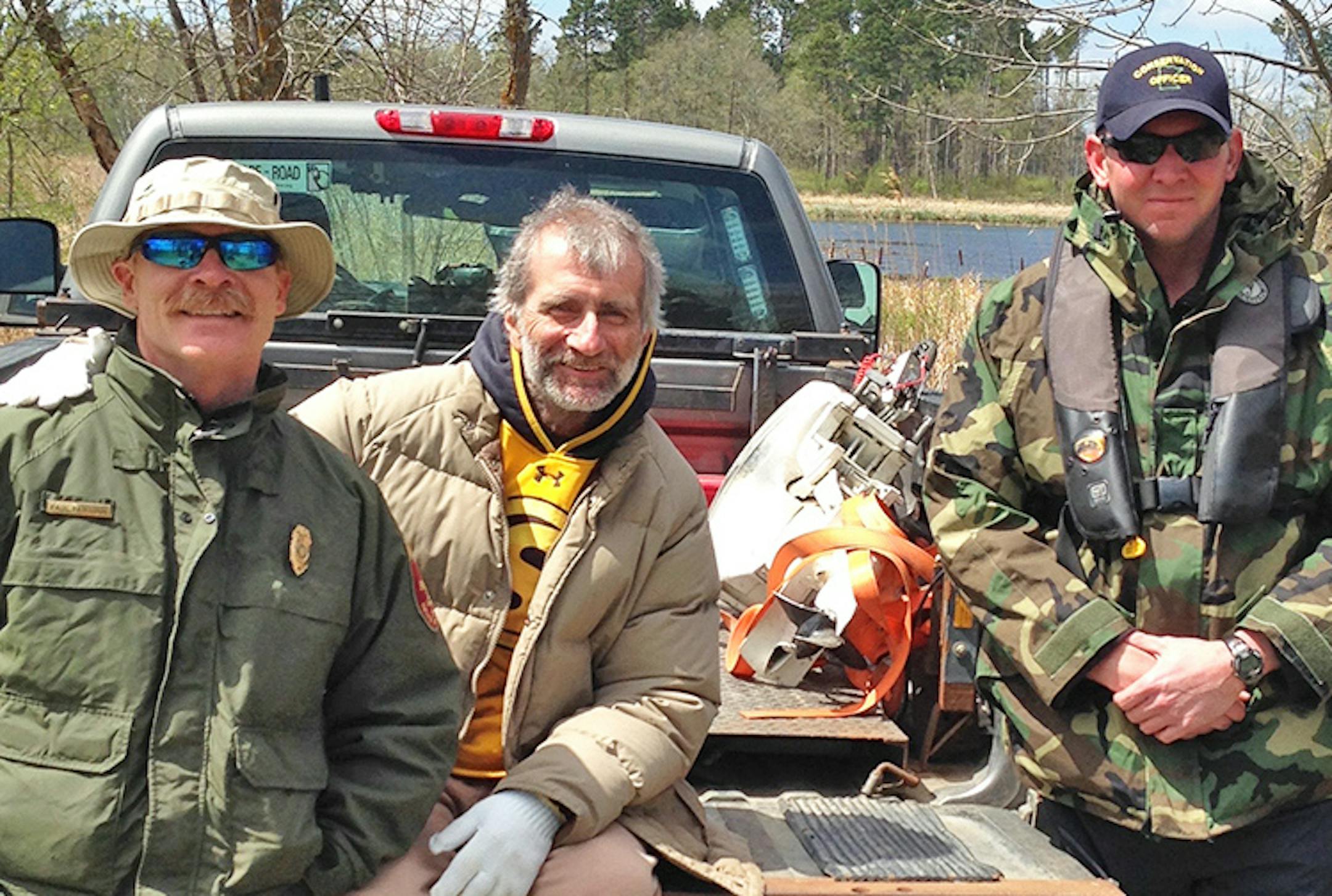
But within two weeks, the 59-year-old paddler became stranded in the wilderness. He was imperiled by hypothermia and frostbite when a pair of Department of Natural Resources (DNR) conservation officers rescued him with a canoe on the eve of the Minnesota fishing opener.
"I would have died," Stone said in a phone interview late last week. "It was life or death."
Stuck on a mud flat in a boggy stretch of the Mississippi headwaters as darkness was approaching, Stone was in the early throes of freezing to death when he reached for a solar-powered cell phone that was low on juice. He hated to ask anyone for help, but he texted a "Mayday" to his wife, Lori, in Salt Lake City.
"His message was 'Help, help. I'll be in trouble if nightfall comes,' " she said.
This was the third instance since starting his trip on May 1 that the semi-retired engineer was at serious odds with the river. His rig had proven burdensome in the shallow depths of the snakey, marshy river channel, capsizing twice and causing long camping delays to dry everything out. He also found himself walking for miles in the river when it was too low to paddle, and he cut his hands badly while clearing downed trees and brush from the stream.
The distance that most conventional paddlers cover in two days had taken Stone two weeks. He was in a river swamp miles north of Bemidji on a shallow flow choked by wild rice and cattails. Both kayaks were marooned and the surrounding muck would have swallowed him if he had stepped out.


