DNR regulations are driving geese away from Twin Cities-area waterfowlers

Twin Cities-area hunter takes steps to keep geese he targets from being driven away

October 2, 2016 at 1:16PM
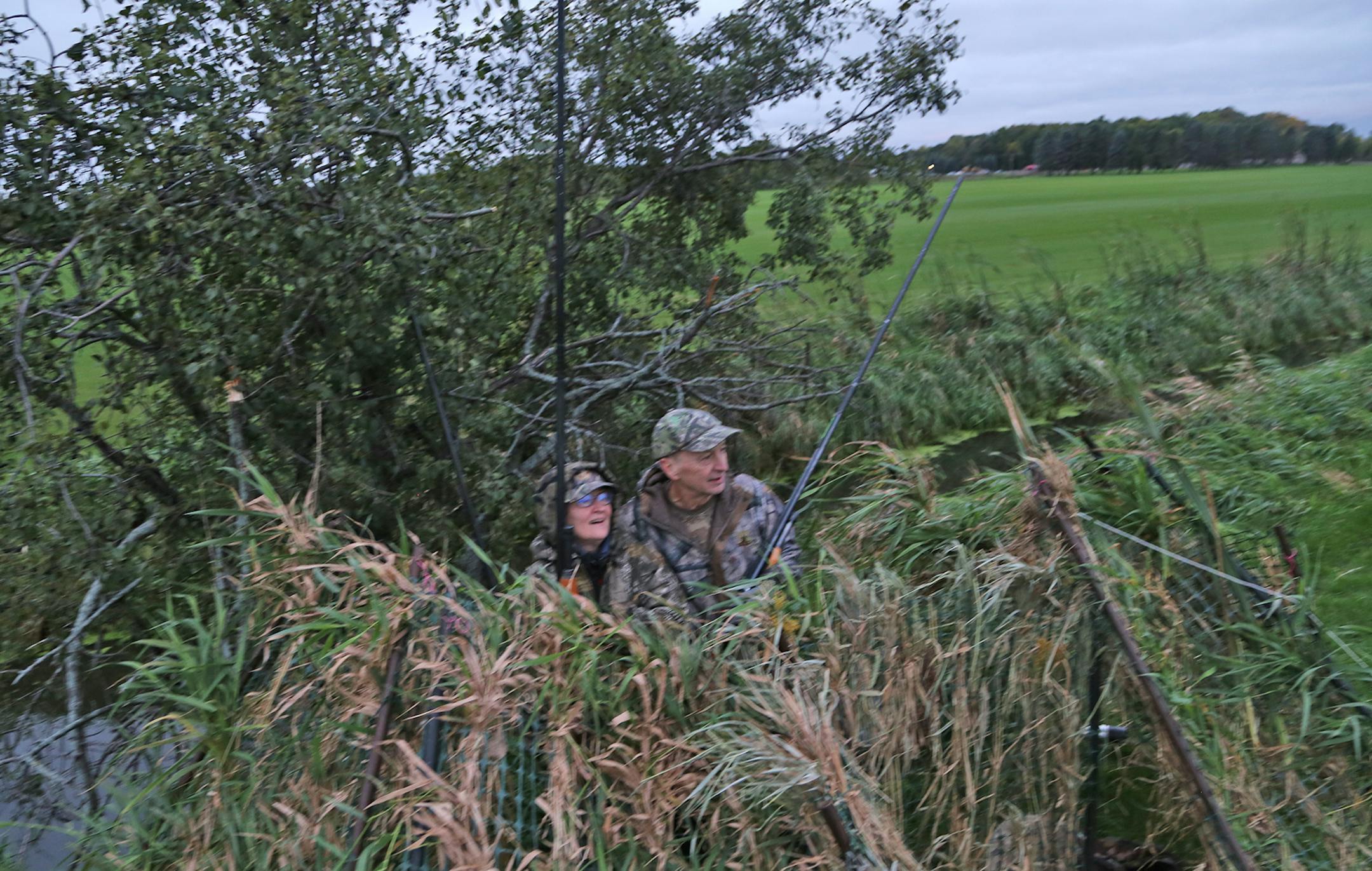
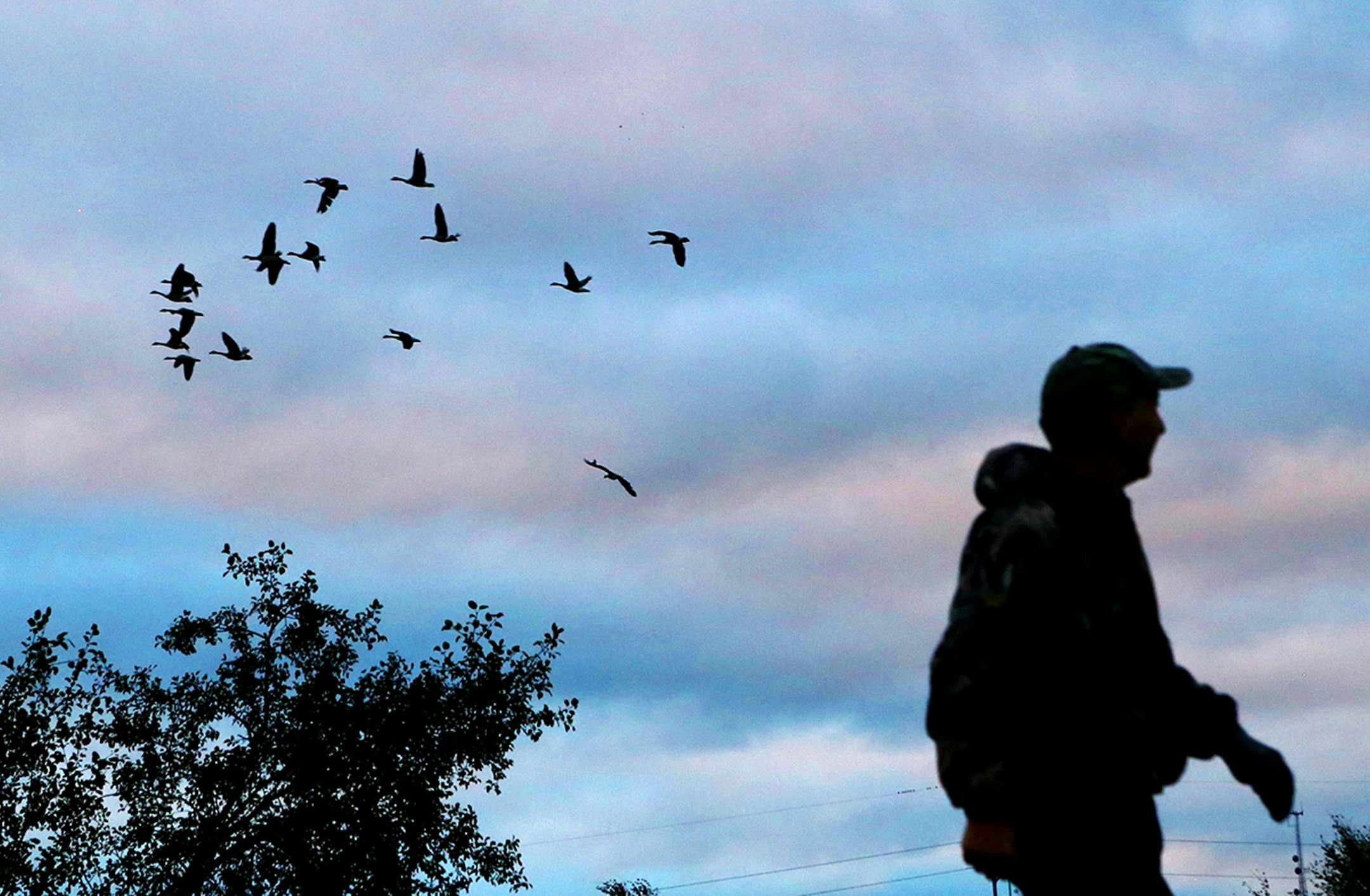
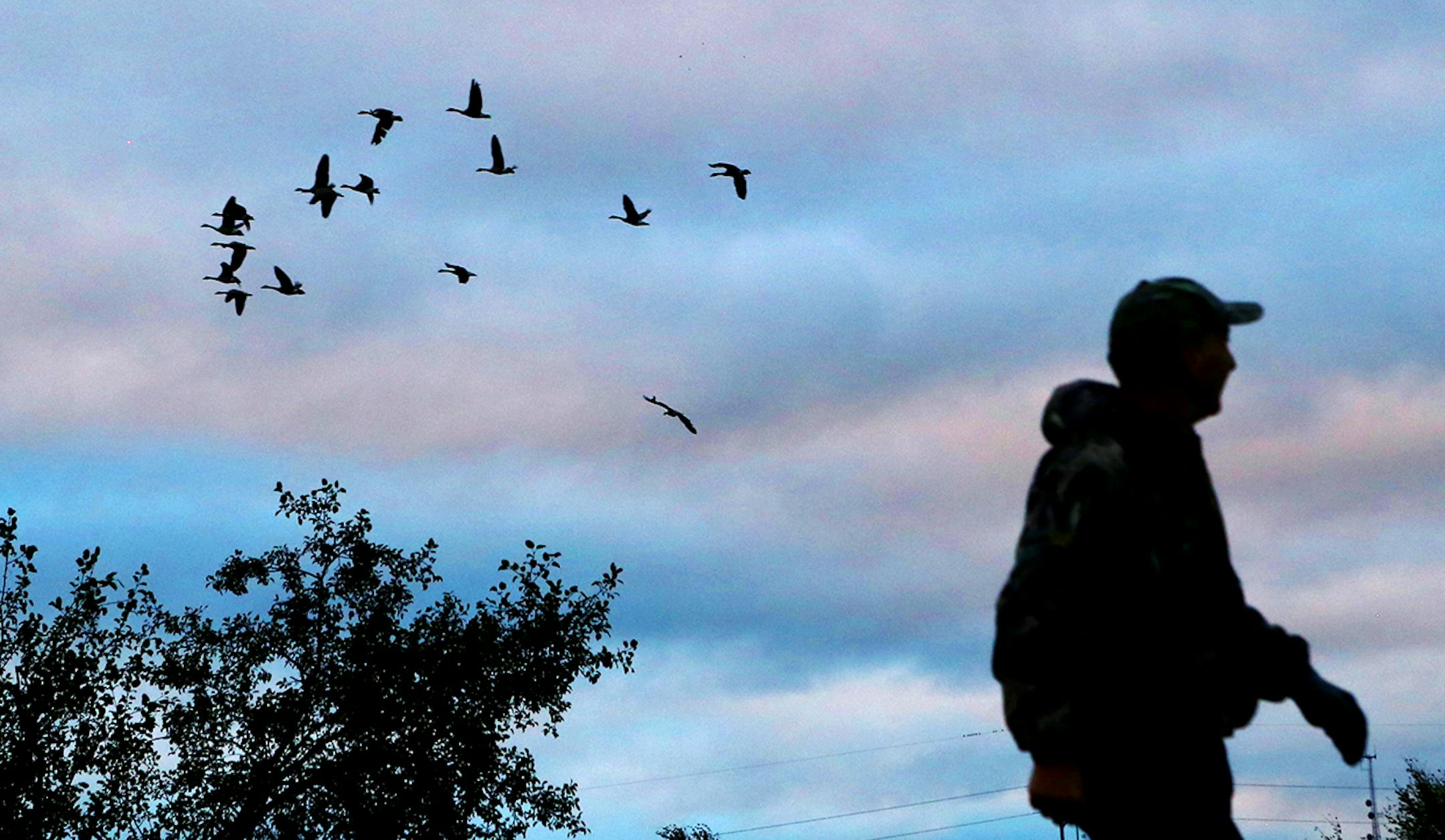
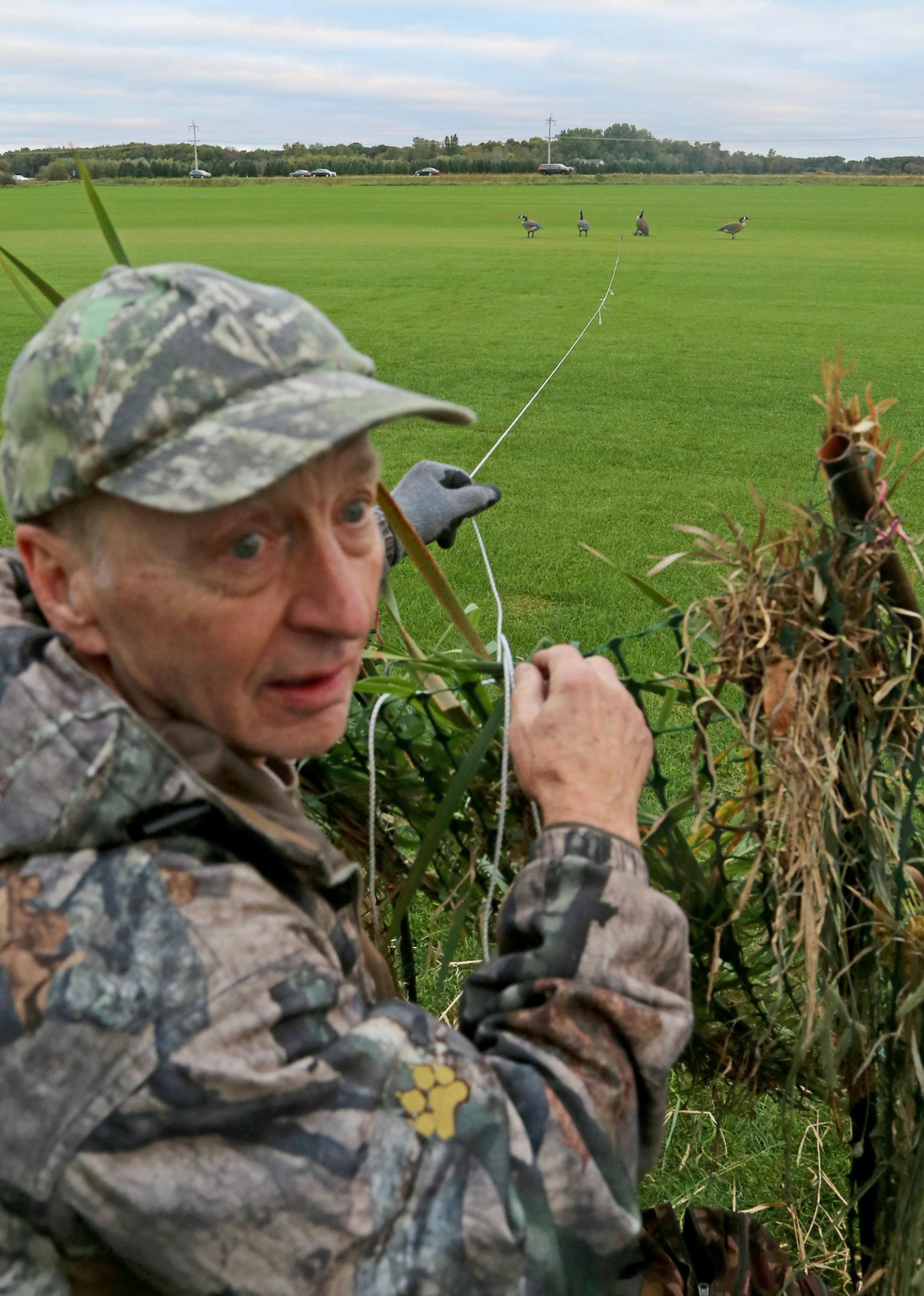
Goose hunter Wendell Diller intentionally reveals himself to a flock of honkers he considers too large to target. He shoots only birds that fly over his decoys as singles, pairs or triples. That way he doesn't "educate'' the area's larger population of geese that the area is a threat. This allows him to hunt repeatedly on the same grounds throughout the season.
Top: Goose hunter Wendell Diller intentionally revealed himself to a flock of honkers he considered too large to target. He shoots only birds that fly over his decoys as singles, pairs or triples. That way he doesn’t “educate’’ the area’s larger population of geese that the area is a threat. This allows him to hunt repeatedly on the same grounds throughout the season. Left: A rope is attached to each of Wendell Diller’s decoys, and the rope leads to his hunting blind. This allows him to pull on the rope and collapse the decoys into a pile when large flocks of geese approach. By doing so, Diller believes he is not “educating’’ the metro’s geese about decoys and the threat they represent. (The Minnesota Star Tribune)

I've made the case previously that metro goose hunters have fared poorly under regulations developed in recent years by the Department of Natural Resources.

Specifically, the allowance of over-water hunting in the early goose season has significantly reduced opportunities for Twin Cities-area waterfowlers, essentially — and ironically — by driving the birds into the central metro, where hunting is prohibited and where the birds feel safe, albeit unwelcome.

Complicating matters for hunters, far fewer geese exist in the metro than even 10 years ago, in part because goslings and adults still are being rounded up in summer and destroyed in an effort to address nuisance complaints from homeowners and others. Also, hunting land is being gobbled up by development in the ever-expanding Twin Cities.

Thus, early-season goose hunters have fewer opportunities at fewer birds and fewer places to hunt. Yet geese continue to plague the very parts of the Twin Cities that want them least.

In other words: the worst of all possibilities.

This problem, to the degree it is a problem, can't be solved completely. Regulations aside, geese will fly where they want to fly.

But if over-water hunting were again prohibited in the early metro season, more geese would be more comfortable outside the central metro than what is currently the case — and more available to hunters. Not incidentally, less disturbance of mallards, teal and other fowl also would occur before the duck opener.

But if you're waiting for change, don't. When the issue is waterfowl hunting, the DNR under Commissioner Tom Landwehr believes less regulation is more, whether the subject is opening-day duck shooting hours, wood duck limits, two hen mallards in the daily bag (six in possession), the scheduling of youth waterfowl day before some ducks fledge — or over-water early goose hunting.
So, don't bother complaining.

Instead, if you're a metro goose hunter, in the early season or now, during the regular waterfowl season, consider changing your hunting methods to improve your odds afield.

A hunting partner, Wendell Diller, has done just that. He has only one good place to hunt metro geese and believes birds in his area will stick around throughout October, and maybe longer, if they are only minimally pressured.

"Geese are smart, and if you shoot them on their [water] roosts, surviving birds will leave the area,'' Wendell says. "Secondly, if you shoot into large flocks approaching your decoys, surviving birds also will leave — or at least will be unlikely to approach your decoys again on the same field.''

Only geese hatched in the current year are dumb enough, Wendell believes, to be duped by decoy spreads more than a time or two. "They wise up quickly,'' he said. "Soon, like older geese, they can easily distinguish decoys from actual birds.''

Given these considerations, Wendell has developed a novel way to hunt geese in his limited area, with a goal of keeping most birds in that area as long as possible. Here's a breakdown of his approach:

• He doesn't hunt over water, and he uses only 12-gauge "quiet guns,'' which he invented some years ago, and subsonic shells. These guns have 7-foot-long barrels and issue only loud "puffs'' when discharged. With one of the guns, he can drop a bird without frightening others in a flock.

• He never shoots into a flock of more than three or four birds — and prefers to shoot at only singles or pairs. "Shoot into a large flock over decoys in the metro and you might get a few birds, but you'll educate the rest to leave the area,'' he said.

• He doesn't allow large flocks of geese even to see his decoys. Instead, he attaches a thin rope to each decoy in a spread and joins the ropes to a common rope, which he extends to his hunting blind. When a large goose flock appears in the distance, he pulls the rope from the blind, collapsing the decoys into a pile, giving them the appearance from above of a heap of junk — or whatever. "Then I walk into the field, just like a farmer might appear in the field, or a hiker — the types of people metro geese see all the time.''

Does it work?

Wednesday morning, Wendell, his wife, Galina, and I set up a decoy spread as described above, before arming ourselves with quiet guns. A couple of times, large goose flocks appeared in the distance, and each time we collapsed the decoys and stepped out of the blind.

Then, resetting the decoys, we watched as a pair of birds approached, flying right to left, and we dropped one.

So it went.

"Last year, using this method, I kept hunting essentially the same geese through October,'' Wendell said. "The alternative would have been to shoot up what we saw the first time we saw them. Then we would have had no birds over our decoys, or fewer, for the rest of the season.''

Dennis Anderson • danderson@startribune.com


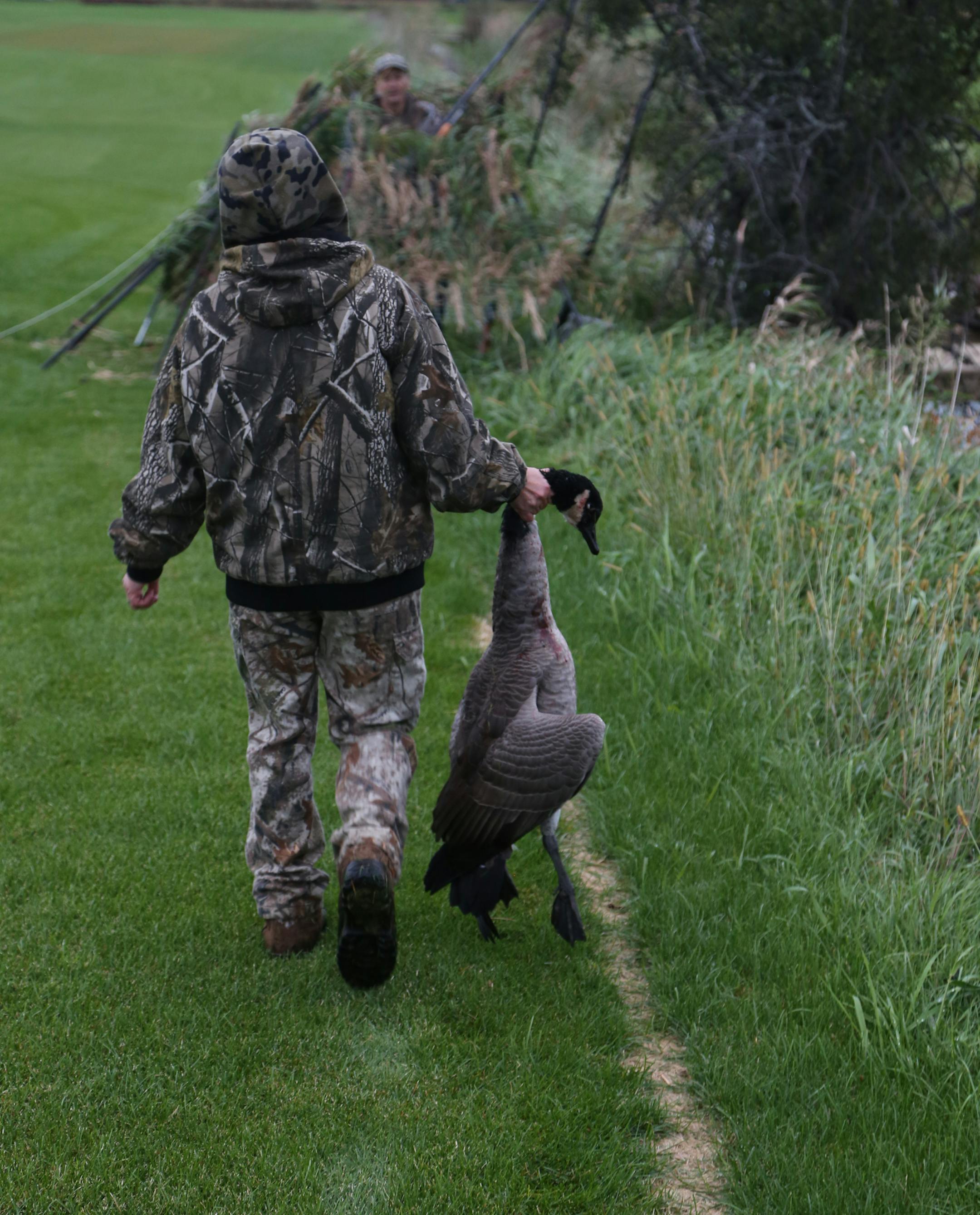
Galina Diller returns to a hunting blind with a goose that was felled when it and another bird flew within shotgun range.
Galina Diller returns to a hunting blind with a goose that was felled when it and another bird flew within shotgun range. (The Minnesota Star Tribune)
Seeing a large flock of geese approach, Wendell Diller pulls on a rope attached to his decoys. As he does, the decoys collapse into a pile. After disassembling his decoy spread, Diller will walk in the field, immitating a farmer, he said, or other non-threatening person, similar to the people geese see every day. "This keeps an area's limited number of geese in the area,'' he said. "They're smart. They quickly learn what decoys are, and instinctively shy away from them.''
Seeing a large flock of geese approach, Wendell Diller pulls on a rope attached to his decoys. As he does, the decoys collapse into a pile. After disassembling his decoy spread, Diller will walk in the field, immitating a farmer, he said, or other non-threatening person, similar to the people geese see every day. "This keeps an area's limited number of geese in the area,'' he said. "They're smart. They quickly learn what decoys are, and instinctively shy away from them.'' (The Minnesota Star Tribune)
A rope is attached to each of Wendell Diller's decoys, and the rope leads to his hunting blind. This allows him to pull on the rope and collapse the decoys into a pile when large flocks of geese approach. By doing so, Diller believes he is not "educating'' the metro's geese about decoys and the threat they represent.
Geese “quickly learn what decoys are,” so Wendell Diller attaches thin rope to each of his, and the rope leads to his hunting blind. This allows him to pull on the rope and collapse the decoys into a pile whenever he doesn’t want too many birds to grow wise. (The Minnesota Star Tribune)
Wendell and Galina Diller of Oakdale deply shotguns with 7-foot-lond barrels. Wendell Diller invented the sound-reducing barels, which when combined with subsonic shells discharge with the aplmitude of a man's cough.
Wendell and Galina Diller of Oakdale deply shotguns with 7-foot-lond barrels. Wendell Diller invented the sound-reducing barels, which when combined with subsonic shells discharge with the aplmitude of a man's cough. (The Minnesota Star Tribune)
Wendell Diller intentionally revealed himself to a group of honkers he considered too large to target. He shoots only birds that fly over his decoys as singles, pairs or triples, so as not to “educate’’ large flocks. (The Minnesota Star Tribune)
about the writer

about the writer

Dennis Anderson

Columnist

Outdoors columnist Dennis Anderson joined the Star Tribune in 1993 after serving in the same position at the St. Paul Pioneer Press for 13 years. His column topics vary widely, and include canoeing, fishing, hunting, adventure travel and conservation of the environment.

See Moreicon