

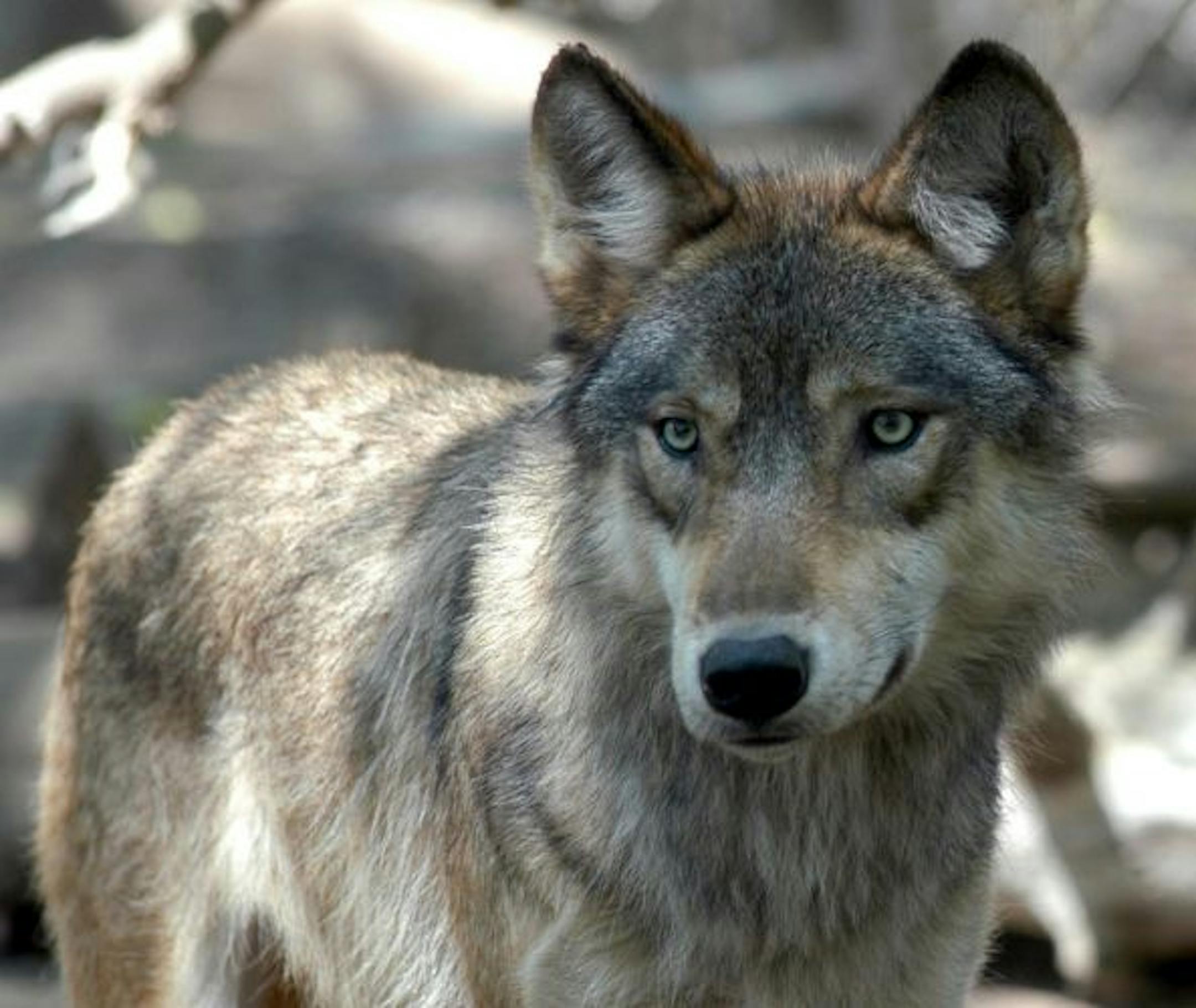
State wildlife officials are planning a wolf hunting season that would put the long-term survival of the animal above the zeal of hunters, an indication of the careful line they must walk between the competing passions that the predator has generated for decades.
Yet the rules of a hunting season, they said Friday, will be up to the Legislature -- meaning that the wolf will remain as politicized as ever.
"There are people who think we should wipe it off the face of the Earth, and people who say put it on an altar," said Tom Landwehr, state Natural Resources commissioner. "And at the end of the day we are not going to bring the two ends together."
Still, the state's first-ever wolf season will be a key test of Minnesota's ability to manage the Great Lakes wolf after it officially comes off the federal endangered species list Jan. 27. After more than 30 years of federal protection, an estimated 3,000 of the wolves now live in Minnesota, by far the largest population in any of the lower 48 states. There are about 1,500 in Wisconsin and Michigan, and about 1,600 in five Western states.
Wildlife officials said that at least initially, they want the wolf to have its own hunting season between November and January, when the pelts are at their finest and the deer hunting season is over. They would also prefer a lottery system to sell a small number of licenses rather than an unlimited number sold over-the-counter.
Ideally, such a design would help create a "hunting and conservation aesthetic" around the wolf that would elevate it to the status of a trophy animal, said Dan Stark, a wolf biologist for the Department of Natural Resources.
Legislators and top wildlife officials said their primary goal is to make certain the wolf doesn't go back on the endangered species list -- either because its numbers drop below 1,600, the minimum called for in the state's plan, or because of a lawsuit by conservation groups that challenge the state's management.
"We want to work toward keeping it under state control," said Rep. Denny McNamara, R-Hastings, chairman of the House Environment, Energy and Natural Resources Policy and Finance Committee.


