
DIY techies click print, enter third dimension

April 28, 2013 at 8:26PM
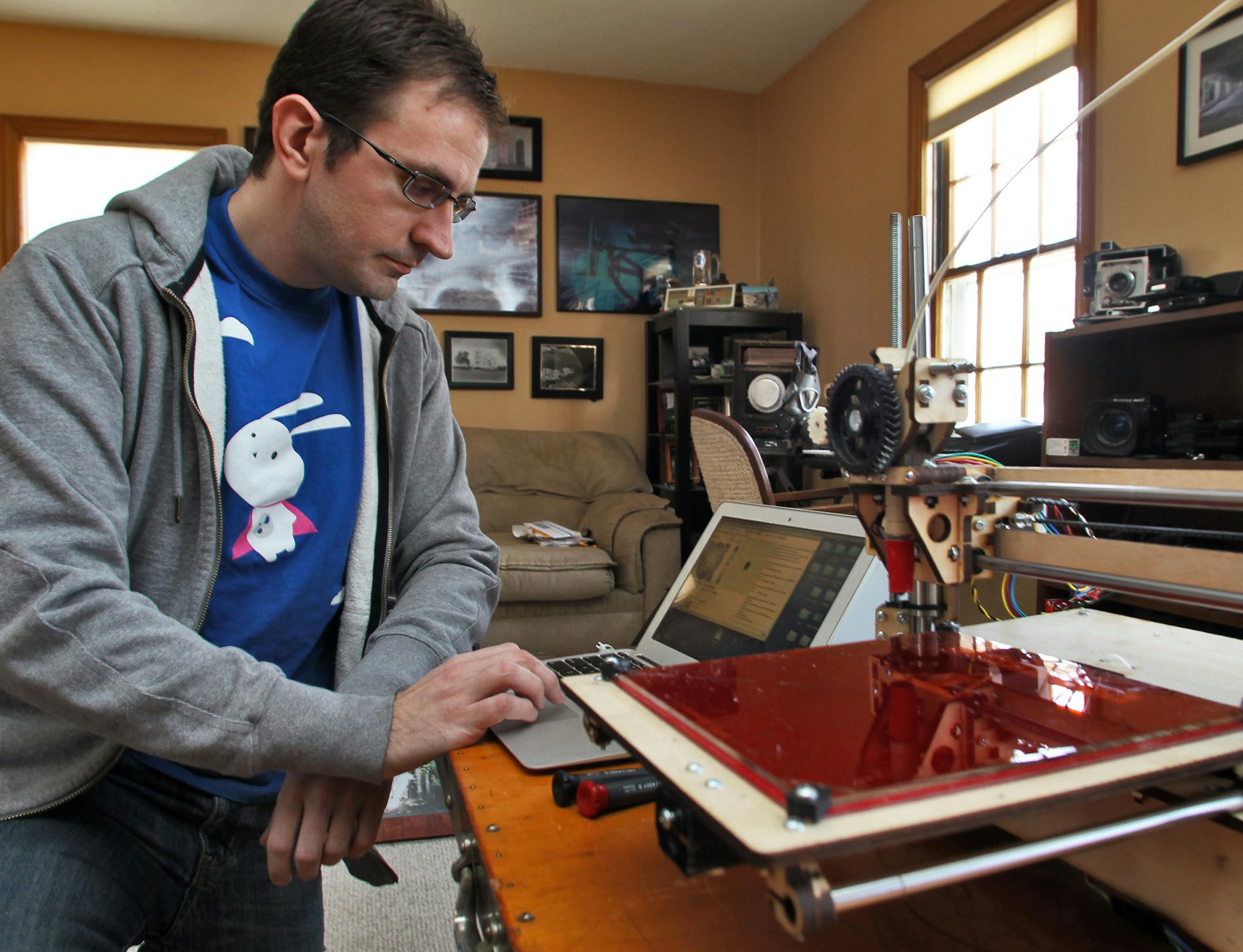
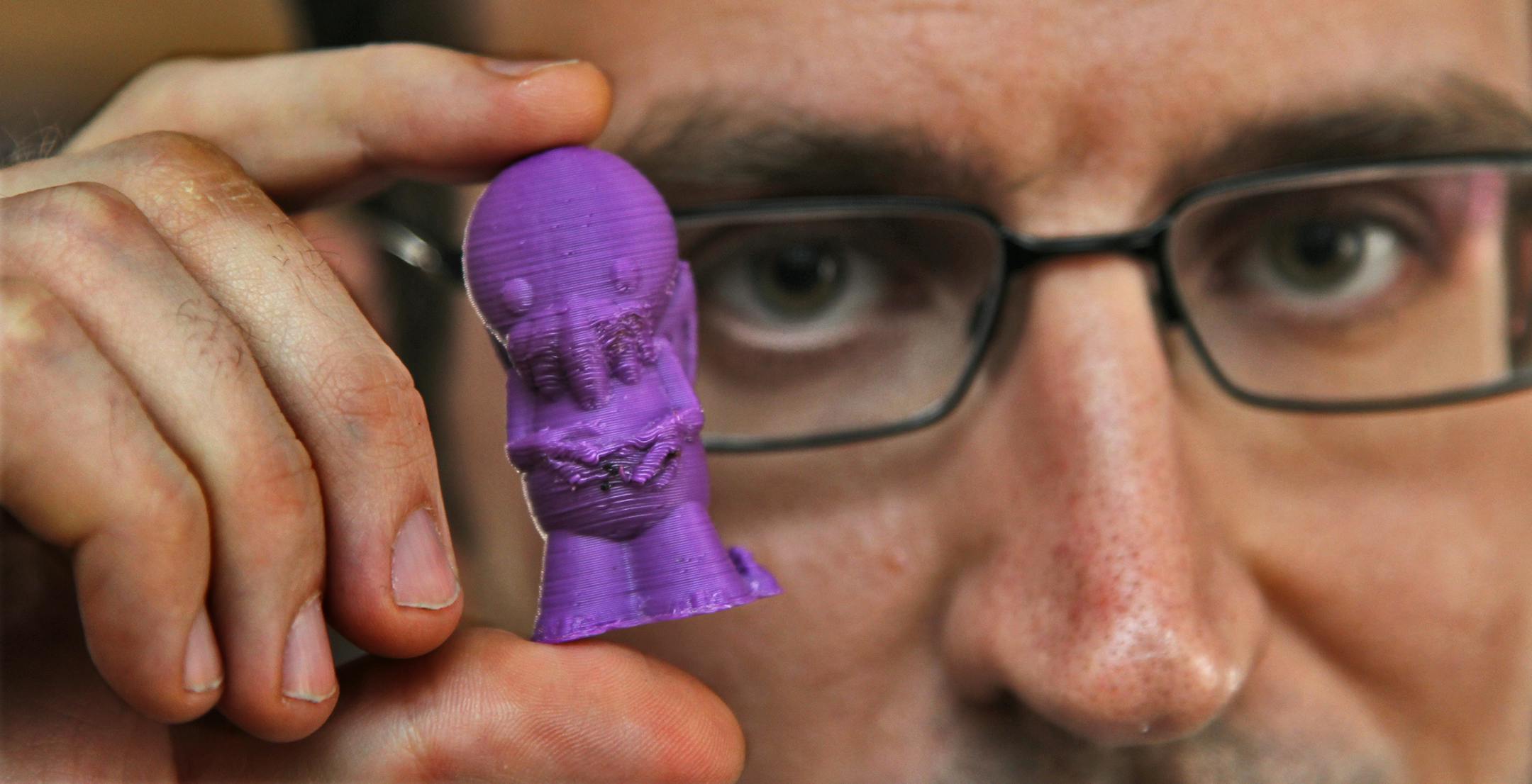
Dan Dockery of Minneapolis is a computer technology wizard who has built a 3-D printer designed to create plastic physical objects from a computer program. Here he created a small science fiction character called Cthulhu from a ribbon of ABS wound on a reel in a process that takes about an hour to complete. Dan Dockery started the process from his laptop. (MARLIN LEVISON/STARTRIBUNE(mlevison@startribune.com (cq Dan Dockery)
Dan Dockery of Minneapolis used his laptop and a 3-D printer to create a plastic figurine. (The Minnesota Star Tribune)

Star Trek had the replicator. The real world has 3-D printing.

The much-hyped technology is bringing science fiction to life by using computer designs to "print" objects out of layers of melted plastic.

It's produced parts for everything from luxury cars to toy puzzles. Researchers are even working to perfect printing human body parts.

The Twin Cities has emerged on the cutting edge of 3-D printing. An Eden Prairie company prints prosthetic arms. Local grade-school students are making toy cars and light sabers. And tech-savvy tinkerers are building their own versions of these complicated machines.

For many "makers" — as the DIYers call themselves — printing something as simple as a plastic chess piece offers a glimpse of the future.

"It's probably one of the neatest things ever," said Jon Atkinson of Golden Valley, who built his own 3-D printer, then used it to make a coffee scoop. "Instead of trying to find where I can buy one, I go to my computer. Boom, I've got a coffee scoop."

The technology holds incredible promise, but even the gung-ho makers admit we're a long way from having a replicator in every kitchen.

Building the future

Despite the name, 3-D printers don't use paper, and there are no red-and-blue glasses required to see the third dimension. Patience, however, is a must.
The printers work by building objects — from toy figurines to car bumpers — layer by layer, like a computer-controlled hot glue gun. But the process can take hours.

Even at the DIY level, 3-D printing can be difficult to master. Most enthusiasts have engineering backgrounds, a knowledge of computer-aided design or experience in robotics. While they enjoy making trinkets or useful household items, such as a replacement knob for a broken pot lid, they're most passionate about printing parts for their 3-D printers.

Some makers build their own printers, others start with prefab kits, which they often customize. Prefab prices range from about $400 to about $2,000.

Dan Dockery, a computer programmer from Minneapolis, recently bought a prefab Printrbot. But getting the machine up and running wasn't easy.

"There was a lot of trial and error, a lot of Google searches and YouTube videos," he said.

Now, he designs and prints lens adapters for his collection of antique cameras. He also uses designs from the website Thingiverse.com to print whimsical figurines for his friends. He already has the parts for his next big project — a homemade printer — stacked in his living room.

But putting together a printer is just the beginning. Even trickier is designing the computer models that drive 3-D printing.

"That's one of the things holding people back from using 3-D printing more," said Marcus Ritland, owner of Denali 3D Designs in Minneapolis. "It's kind of difficult to make a model that's 3-D printable."

Ritland helps clients design specific items — replacement clips for window screens from the 1970s, clothes hangers to fit in an Ikea cabinet, even custom jewelry. Then, he helps them order the items from Shapeways.com, which has commercial-grade printers.

"People get excited," Ritland said. "They say, 'You made that?' I say yes, I designed it, but I had help making it from a print service."

Hungry for 3-D doughnuts?

As with most things tech-related, children are catching on quickly.

Students at local middle- and high schools have been using 3-D printers in classrooms for more than a decade, as a way of learning computer and engineering skills.

"It lets you bring your imagination to the real world," said Charlie Rohlf, a ninth-grader at Edina's South View Middle School.

He recently found an online design for a model light saber and convinced his teacher to help him make it on the classroom printer — provided Rohlf paid for the plastic.

The buzz around 3-D printing is growing as people discover ways to print with different materials, from medical-grade plastic to even metal. That is pushing the technology beyond prototyping to production of useful objects, said Jonathan Cobb, executive vice president at Eden Prairie-based Stratasys. The international company sells commercial 3-D printers (starting at about $10,000) and does printing on demand for industry.

But home applications are still a stretch for most people, Cobb said, because people need to have computer-aided design skills to make an object from scratch.

"I don't know if everyone is going to have the time to do that," he said.

Fantasy aside, the increasing sophistication of 3-D printing could bring real-world changes.

"There will be a fascination within the maker community," Cobb said. For everyone else, "the benefit will be not in making the parts, but consuming the parts."

Need a new coat hook, doorknob or wrench? In the future, it's more likely that customers seeking these household parts will still buy them at a hardware store. But the store will have made them on a 3-D printer.

"We're just at the tip of the iceberg," Cobb said.

Katie Humphrey • 612-673-4758

Dan Dockery of Minneapolis is a computer technology wizard who has built a 3-D printer designed to create plastic physical objects from a computer program. Here he created a small science fiction character called Cthulhu from a ribbon of ABS wound on a reel in a process that takes about an hour to complete. Dan Dockery displayed the finished figure. (MARLIN LEVISON/STARTRIBUNE(mlevison@startribune.com (cq Dan Dockery)
Dan Dockery displayed the finished figure, made on his 3-D printer. (The Minnesota Star Tribune)
about the writer

about the writer

Katie Humphrey

Regional Team Leader

Katie Humphrey edits the Regional Team, which includes reporters who cover life, local government and education in the Twin Cities suburbs.

See Moreicon

More from No Section

See More
FILE -- A rent deposit slot at an apartment complex in Tucker, Ga., on July 21, 2020. As an eviction crisis has seemed increasingly likely this summer, everyone in the housing market has made the same plea to Washington: Send money — lots of it — that would keep renters in their homes and landlords afloat. (Melissa Golden/The New York Times) ORG XMIT: XNYT58
Melissa Golden/The New York Times

It’s too soon to tell how much the immigration crackdown is to blame.