
Advertisement

DIY home movies, records transfers

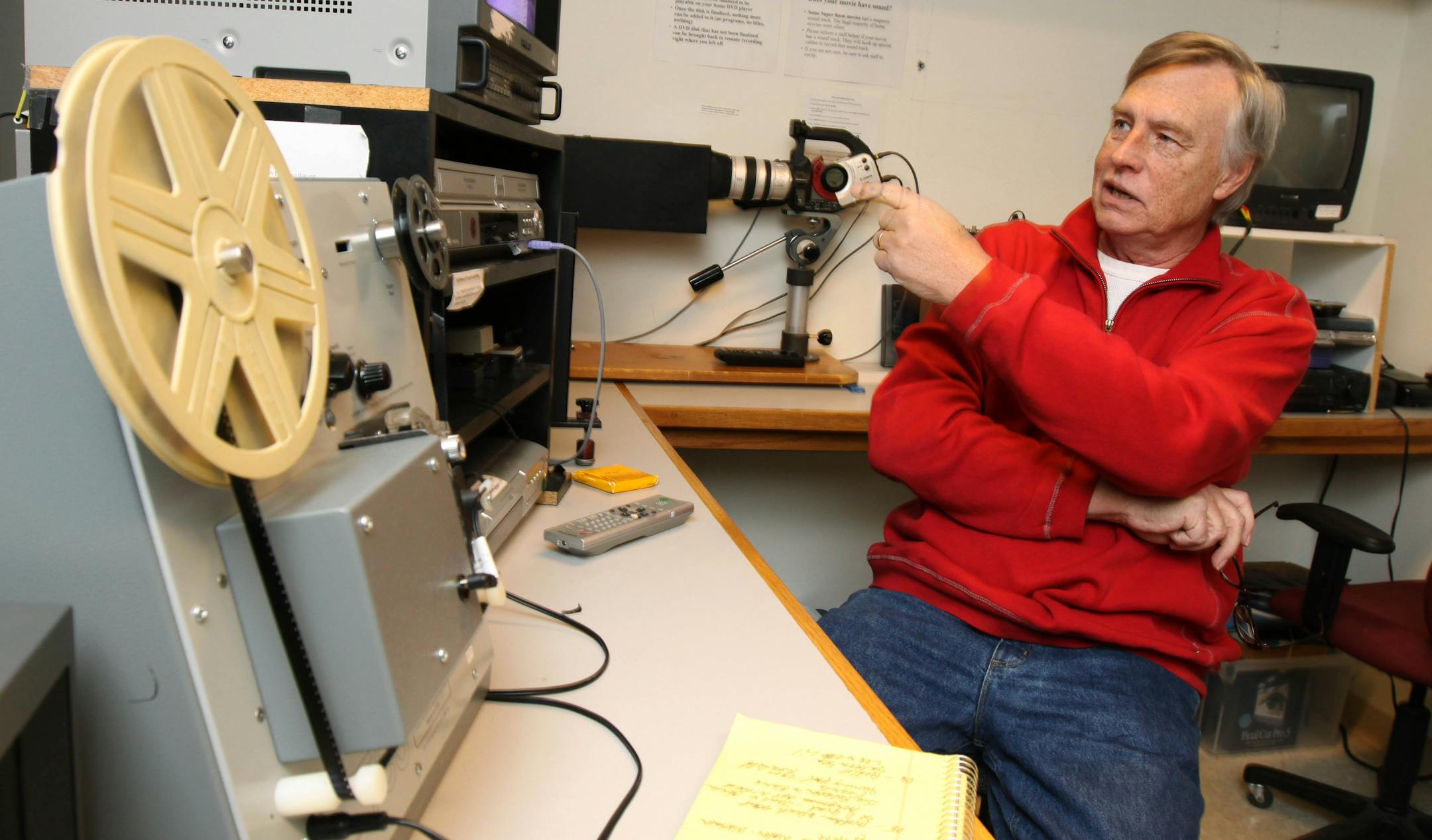
Edina Art Center has a do-it-yourself studio where people can transfer old home movies, slides or vinyl records to durable digital formats.

December 29, 2008 at 7:57PM
Michael Oiseth of Bloomington loaded his father's 8mm film onto a transfer machine at the Edina Art Center Media Studios. Oiseth was transferring the old family film to DVDs which he could then edit on his computer.
Michael Oiseth of Bloomington loaded his father's 8mm film onto a transfer machine at the Edina Art Center Media Studios. Oiseth was transferring the old family film to DVDs which he could then edit on his computer. (Star Tribune/The Minnesota Star Tribune)
Advertisement

The familiar cupolas of the Kentucky Derby grandstand rose above the track as the horses pounded around the turn. It was 1970, and somewhere in the sea of men's suits and gaudy hats, Michael Oiseth's father held a Super-8 movie camera, making memories.

"I remember him saying it was one of his favorite vacations," Oiseth said while slipping the 8-millimeter film back into its box, one of several that he brought with him to the Edina Art Center, where he's working to make sure those memories never fade.

There, in the Peggy Kelley Media Arts Studio, people can transfer old home movies to digital discs, scan slides to record them onto CDs, convert videotapes to DVD or record their old vinyl records onto CDs.

You can hire this work to be done by commercial studios, but for Oiseth, of Bloomington, as for others, this is a labor of love. "It's almost like a dream," he said, viewing old scenes such as a reel of the Space Needle at the 1962 Seattle World's Fair, or a storm that downed trees at Iowa's Lake Okoboji. "It's like you're having a dream about your family."

Phil Johnson manages the media studio, which recently was updated with Tobin TVT-8 video transfer equipment. If you don't know what that means, well, that's why Johnson is there as tech support within arm's reach. Essentially, the machines automatically correct exposure and focusing as the images go directly from film to the video sensor.

The trick is getting the originals transferred before they deteriorate. "We've seen some tears in here," Johnson said, as people view slides or movies that have faded to mere memory.

Johnson said the art center asks users to become members (one day is $15; annual, $30), then the studio use is about $20 an hour. For estimates of how much work can be accomplished in that time, go to www.edinaartcenter.com.

Sharon Sobocinski had scads of VHS tapes and 8-millimeter movies of family events, but they were tucked away in the proverbial boxes. Now each of her married children has a DVD of their lives from birth up through their the first wedding waltz. She's also done a DVD for some friends' 25th anniversary.

Advertisement

"I know you can go somewhere and pay someone to do it, but I wanted to do it," she said. This way, she said, she can use her personal knowledge to gauge the timing of certain images onscreen -- longer for a family reunion photo that may be studied, briefer for a child scoring a hockey goal. Plus, she loves matching music to particular moments.

She has also learned about pacing; her first efforts had people glancing at their wristwatches. "Something 12 to 15 minutes is a better presentation," she said.

Slides are especially likely candidates for conversion because few people have slide projectors anymore -- and Kodak stopped making projectors four years ago. "The kids had never seen our wedding photos."

"People don't take out their pictures enough," she added. "For me, it's like a window looking back on my life."

Oiseth said an unexpected part of the task has been sleuthing for information. "I've had to do some detective work," he said, describing how he was confounded by a picture of a vaguely familiar house. He zoomed in on the name on the mailbox, searched genealogical records and found that the photo was of the home where his father was born. The photo came from a visit his father has made as an adult.

The process can be poignant, such as running across handwriting from a family member who has died. But it's also interesting to ponder why certain scenes were recorded for posterity. "It gets to be very revealing of a person," he said.

Advertisement

Revealing, too, of an era, such as in what Johnson called "the car movies."

"I can't tell you how many scenes there are of people opening the trunk and loading their luggage and then saying goodbye over and over again," he said. "It must have been an occasion to commemorate."

Kim Ode • 612-673-7185

about the writer

about the writer

Kim Ode

Reporter

See Moreicon
Advertisement