
A judge will settle a longstanding gravel road dispute near Mora — just not anytime soon

For years, neighbor has battled neighbor in rural Kanabec County property fight.

The Minnesota Star Tribune
December 16, 2025 at 12:00PM
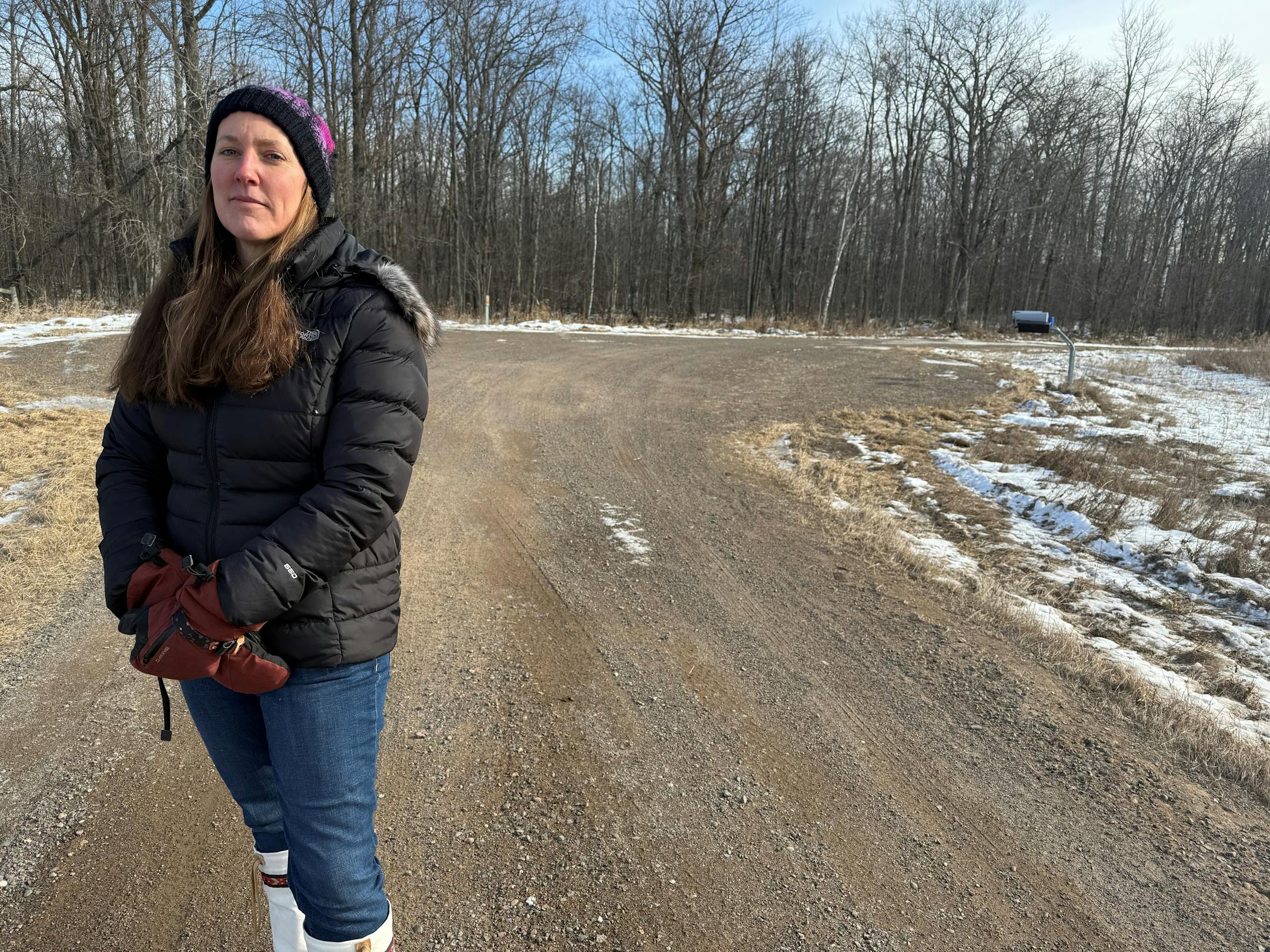
Renee Crisman stands in her driveway at her family's home in rural Hillman Township. Behind her is the gravel road that's led to a yearslong dispute. (Reid Forgrave/The Minnesota Star Tribune)

MORA, Minn. — Residents and a rural township board have been arguing for years over a quarter-mile stretch of gravel road not quite 100 miles north of the Twin Cities.

Now they can’t even agree on what, exactly, they are arguing about.

What was supposed to be a weeklong bench trial began Monday over a disputed stretch of a Hillman Township road. It aspired to solve the question of whether Hornet Street is a road or just a driveway.

Instead, during the first day of a trial tinged by bickering over procedure and evidence, visible frustration from Judge Jason R. Steffen of the 10th Judicial District, and an hourslong conference with attorneys, the judge issued a continuance for the trial to resume in February.

“There’s sharp disagreement between lawyers about what this trial is about,” said attorney Erik Hansen, who is representing the family that lives at the end of Hornet Street and wants the township to maintain the road. “The hope is in the intervening time we can at least agree on what we’re disagreeing about.”

The seed of this decade of disagreement was planted after Renee and Andy Crisman bought a rural parcel of land in Hillman Township in 2013. They bought some cattle, started Real Food Ranch where they sold grass-fed beef, got a building permit from the township and built a home to raise their three young daughters.

Not long after they moved in, however, came a serious problem. Even though Hillman Township’s zoning administrator said the township would maintain the full half-mile of gravel road that connects their home to the paved county highway, as Renee Crisman testified Monday at the Kanabec County Courthouse, the township board disagreed, saying the quarter-mile strip of Hornet Street nearest the Crisman home was not, in fact, a road.

Before the judge issued the continuance, the first day of the trial showed just how deep into the weeds this property dispute goes. The Crismans’ attorney brought out the 1904 order that laid out the road and a 1905 plat map of the township. The township’s attorney, Bob Alsop, delved into the Minnesota Marketable Title Act, a state law that can be used to declare a road no longer a road if it hasn’t been maintained by the township in more than 40 years.

“Hornet Street is a road,” Hansen said in his opening statement. “It has been a road for 120-plus years. For all that time, going back to early at the turn of the last century, people have lived up here that have had to carry groceries in, get to the doctor, go to school. Now the township is trying to change the status quo and doing so via a resolution that’s simply factually inaccurate.

“The Crismans bought this property in 2013,” Hansen continued. “It wasn’t until a couple years after they moved into Hillman Township that the township reversed itself and claimed Hornet Street wasn’t a road.”

Alsop argued on behalf of the township that the only thing that ought to be considered is whether the township maintained the road in the 40-year period before passing its 2021 resolution declaring Hornet Street abandoned.

“There was no maintenance, and the evidence will show that,” Alsop said. “What prompted this litigation is the passage of the 40-year resolution by the town board.”

The property dispute, which has been tied up in court for years and cost hundreds of thousands of dollars in attorney fees, has pitted neighbor against neighbor, long-timers against newcomers in this typically quiet rural area.

In 2021, township supervisors essentially declared that the north end of the road doesn’t exist, citing a law about townships not maintaining abandoned roads.

Since then, the saga has gone back and forth. A county judge called the action “unreasonable and absurd.Township electors voted to end an appeal of the decision, but township supervisors refused to drop the appeal, calling the vote improper. An appellate judge agreed with the township, saying it had no duty to maintain the road.

As a compromise, the township extended a different road to the Crismans’ property line. But the Crismans refused to build a second driveway to that road, calling it township cronyism.

“It is clear, and the court has observed, there are divergent views on this case — not just on the law but on what this case is about,” said Tyler Adams, an attorney representing the Crismans’ neighbor and opponent in the trial, Dan Schmoll. “The petitioners will say their ultimate objective is to restore access to their property and for everyone in Hillman Township to be treated fairly. In so doing, what they want to do is turn Hornet Street into something it’s never been: a public road.”

Attorneys expected that, due to the volume of witnesses (more than 20) and the complexity of testimony (nearly 200 exhibits), the trial would extend past the five days it was scheduled for.

No resolution will be imminent even after the trial picks up again in February. During the contentious first day of trial, attorneys did agree on one thing: They would submit closing arguments in writing within eight weeks of the end of trial.

Much of the first day of trial was consumed by testimony from Renee Crisman. She detailed the family’s history on the property: starting their cattle ranch, tearing down an old barn, gathering signatures to get their property dispute discussed at the township board’s annual meeting, and learning the post office had stopped mail service to their home.

Cast in one light, the trial is about a small property dispute and the rule of law.

Cast in another light, the trial is either about the township abusing its authority or the Crismans circumventing property law.

“When someone weaponized this to take away an existing road because there was a fight between the neighbors, that’s a real problem,” Hansen said. “That’s why we have courts, to make sure people aren’t using the power of government to run personal vendettas.”

After the judge pushed the trial to February, all sides were frustrated.

about the writer

about the writer

Reid Forgrave

State/Regional Reporter

Reid Forgrave covers Minnesota and the Upper Midwest for the Star Tribune, particularly focused on long-form storytelling, controversial social and cultural issues, and the shifting politics around the Upper Midwest. He started at the paper in 2019.

See Moreicon

More from News & Politics

See More

Classes at Apple Valley, Eagan, Eastview and Rosemount high schools, along with the School of Environmental Studies were called off classes as a precaution.