

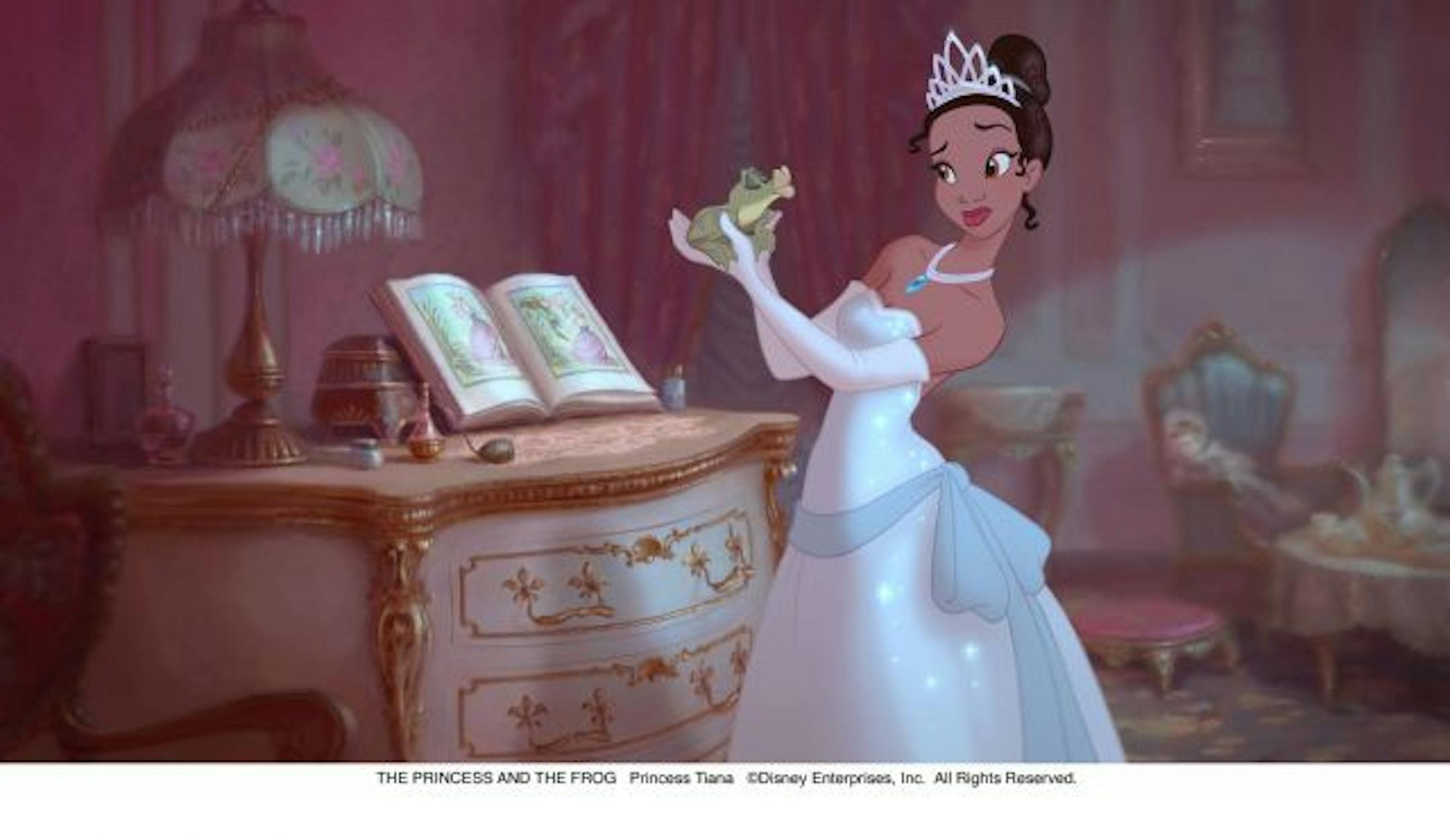
A new movie from Walt Disney Pictures is raising old questions about racism in Mouse House animation.
"The Princess and the Frog," opening nationwide Dec. 11, marks the first time that a female Disney hero is African-American. Princess Tiana (voiced by Anika Noni Rose) kisses a frog, transforming him into a prince, and they'll eventually live happily ever after.
After showcasing women of other colors (Pocahontas, Mulan, Princess Jasmine of "Aladdin"), adding a black woman to Disney's canon is a breakthrough. Yet the recent release of a preview trailer showing Tiana's suitor, Prince Naveen, as light-skinned with Caucasian features (albeit with a Latin accent) raises doubt about Disney's dedication to cultural advancement.
Search "Disney black princess" on the Web, and reactions to Tiana's interracial romance can be intense reads.
Some posters complain that Disney is protecting its box-office potential by not appearing "too black" for white moviegoers. Others insist they won't expose their children to an interracial relationship on screen. A few don't like Disney setting "The Princess and the Frog" in New Orleans, where African-Americans still suffer the effects of Hurricane Katrina. The trailer's glimpse of a black voodoo man and exaggerated Cajun accents draw mild protests.
And some posters dismiss all complaints, telling the offended to get a life.
The tempest again raises memories of times when Disney animated hits were lambasted for unflattering racial stereotypes, either in their time, such as "Aladdin," or through hindsight, as with "Song of the South" and "Dumbo."
Looking back at the studio's past explains why the present with "The Princess and the Frog" is a touchy situation. These seven commercial successes created controversies that Disney would rather forget:

