

Eliot Spitzer is hardly the first U.S. politician who didn't let infamy get in the way of a comeback.
With his announcement today that he'll run in the Democratic primary for New York City comptroller five years after a prostitution scandal drove him from the governor's office, Spitzer joins a long list of Democratic and Republican officials who have turned F. Scott Fitzgerald's maxim that "there are no second acts in American lives" on its head.
Instead, the main issue may be how long the public imposes a statute of limitations on misconduct.
President Bill Clinton was impeached for lying to investigators about his improper relationship with intern Monica Lewinsky, only to see his approval ratings improve. He finds himself today on the perch of being an honored world statesman.
More recently, former South Carolina Gov. Mark Sanford, a Republican who covered up an affair with a woman who later became his fiancée, won a House seat on May 7.
"The behavior recurs because comebacks work," said Bruce Buchanan, a professor of government at the University of Texas in Austin. "Clinton, Sanford and others have won forgiveness. Why shouldn't Spitzer? Disgraced politicians want to go back to doing what they do well, and many are immodest enough to give it a try."
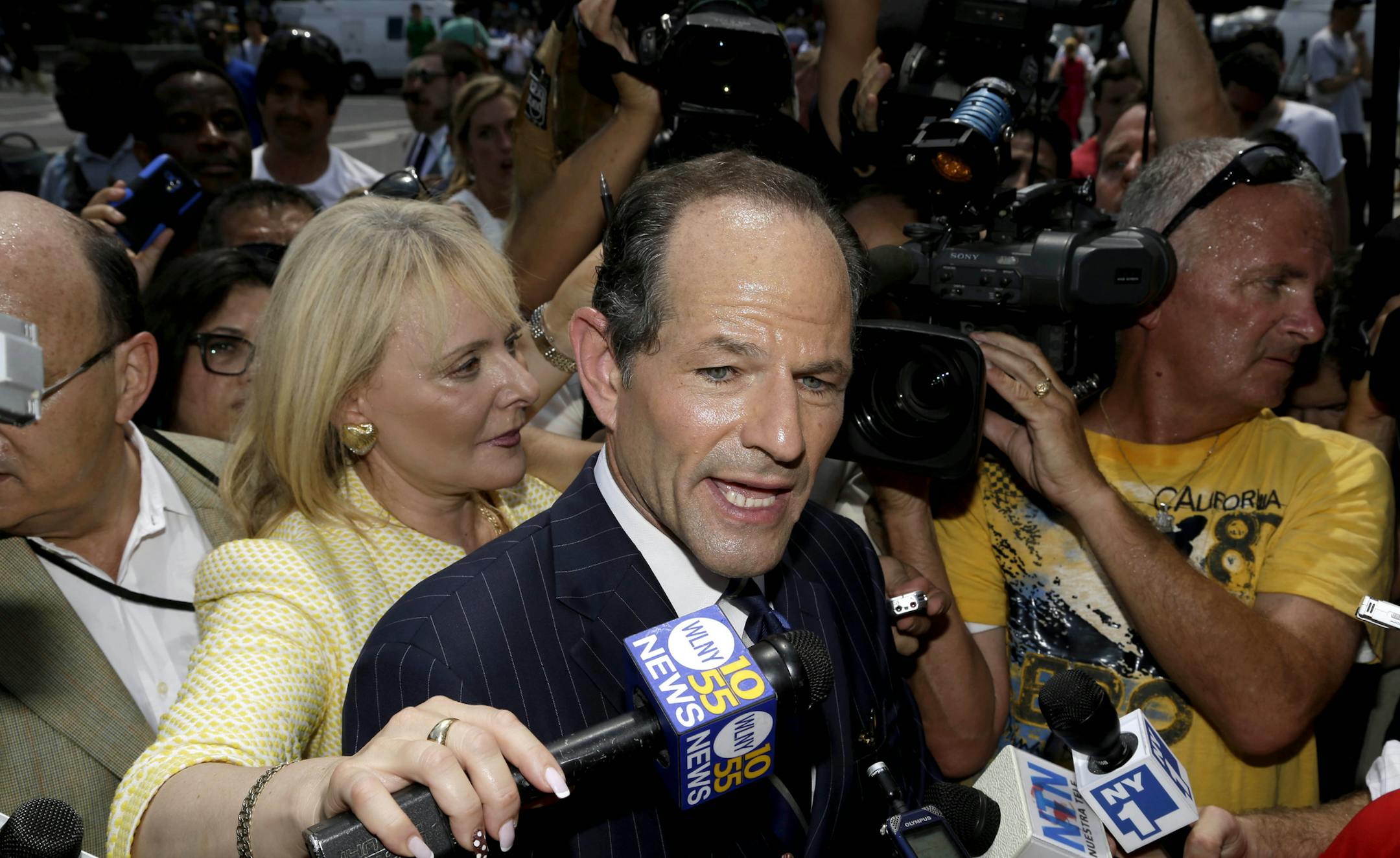
Spitzer's re-entry into political life immediately became a spectacle when he was surrounded Monday by reporters and hecklers as he sought petition signatures for his candidacy at Union Square.
Early reaction to Spitzer's decision from some New Yorkers was positive.


