

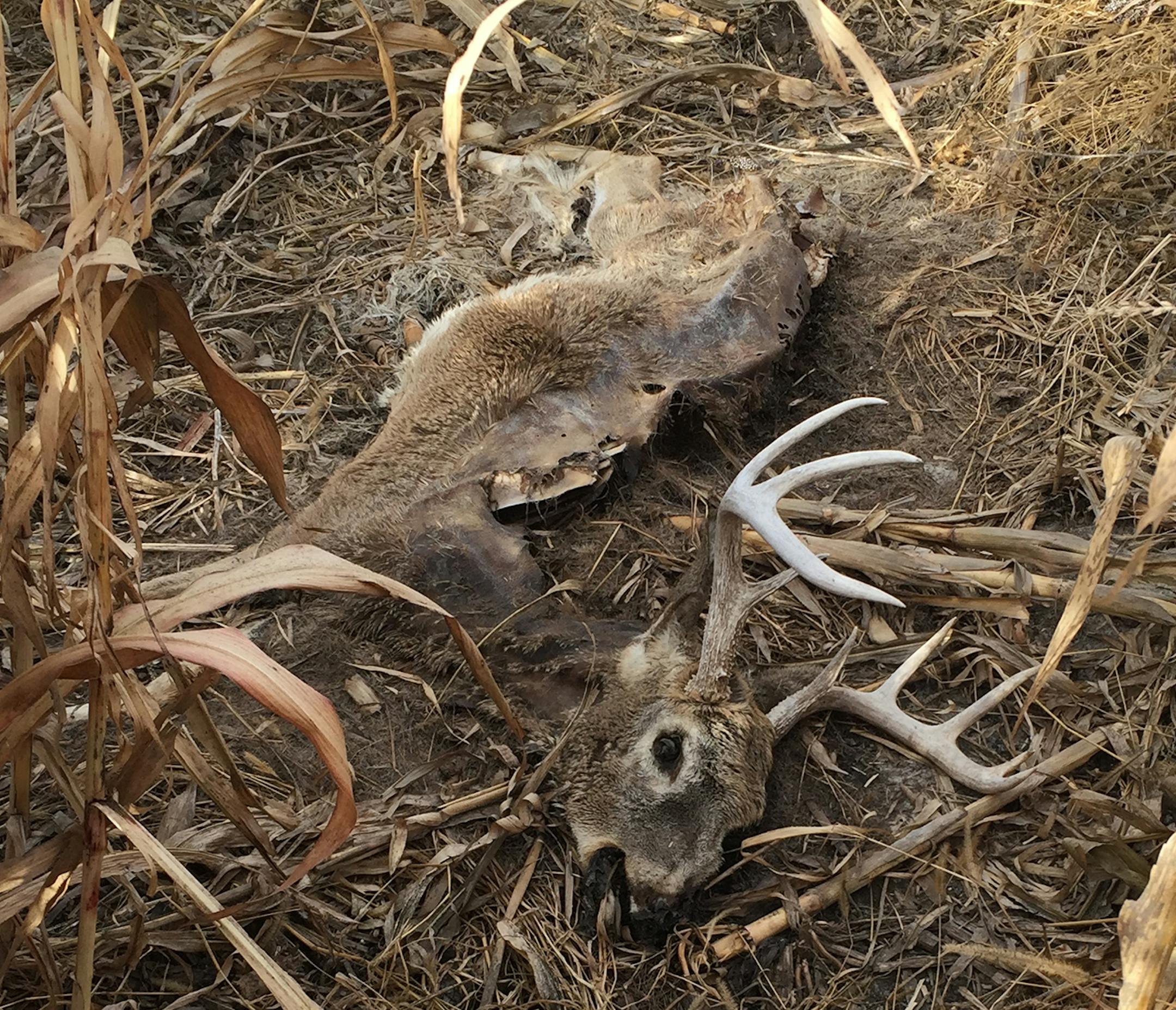
The discovery last week of two Minnesota deer infected with chronic wasting disease opened another chapter in the ongoing struggle to keep the state's whitetail herd free of a malady that has had broad adverse implications for deer and deer hunters in other states, Wisconsin especially.
Minnesota in fact is bracketed this year by states — Wisconsin as well as South Dakota — that have serious problems with their deer herds.
Wisconsin's is a familiar acronym, CWD, whereas South Dakota's — EPD, or epizootic hemorrhagic disease — is less well known.
In Minnesota, because two bucks killed this month by hunters in Fillmore County, in southeast Minnesota, were found to carry CWD, the state Department of Natural Resources (DNR) will begin special hunts on or about Jan. 1 to dramatically reduce deer numbers in a yet-to-be-determined disease management zone.
The intent is to minimize the chances CWD can spread in the southeast by minimizing the size of the region's herd — the assumption being that remaining deer will be healthy, and from those animals a disease-free herd can be rebuilt.
This approach will be criticized by some who argue that CWD infection of deer is inevitable, and that fighting it by wiping out animals in the trophy-rich southeast is a bad idea and a waste of money.
Fair enough. But consider what happened in Wisconsin, where CWD was discovered in 2002 — and where the state's 9.5 percent infection rate of tested animals last year was the state's 10th straight annual increase.
Additionally, as Wisconsin outdoors writer Patrick Durkin has reported, even though 2,182 fewer deer were tested by the Wisconsin DNR in 2015 than in 2011, 56 more CWD infections were found last year, 295 vs. 239.


