America will soon rekindle its complex affair with the state of Iowa. As the presidential race heats up, political pundits will in one breath expound on the importance of Iowa's caucuses and in the next dismiss the small Midwestern state as not representative of the nation (as if any state is).
Iowa always has occupied a curious spot at the intersection of reality and myth in American iconography. Its open spaces and fields of grain beckon a fascination with the nation's rural past and its small towns represent safety and simple life.
Grant Wood's "American Gothic" satirized the pinched visages of Iowa farmers while commemorating their flinty determination and hard work. Standing alongside Wood's totem of Americana is another piece of art that fuses Iowa pride and the trappings of American mythology.
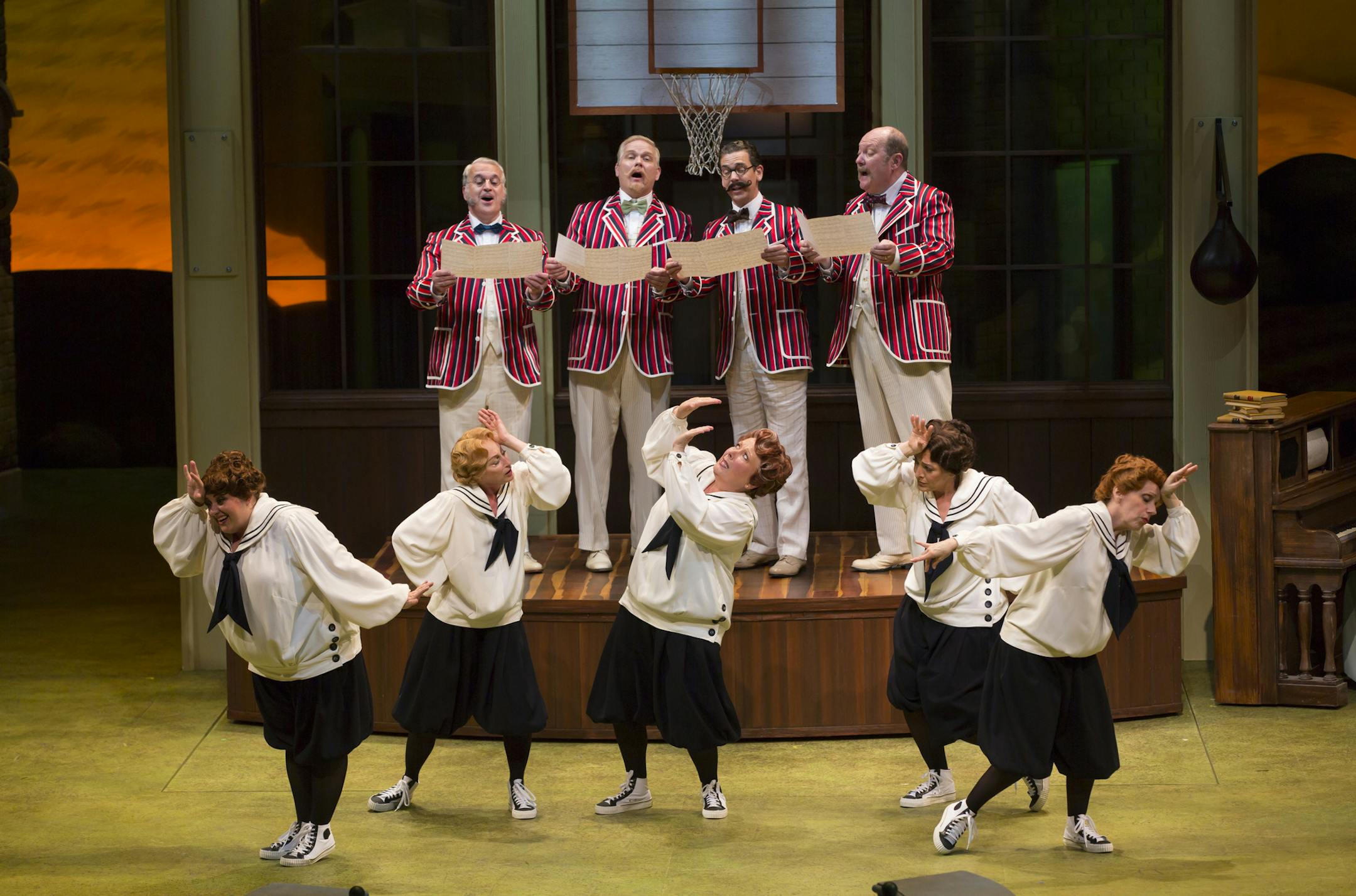
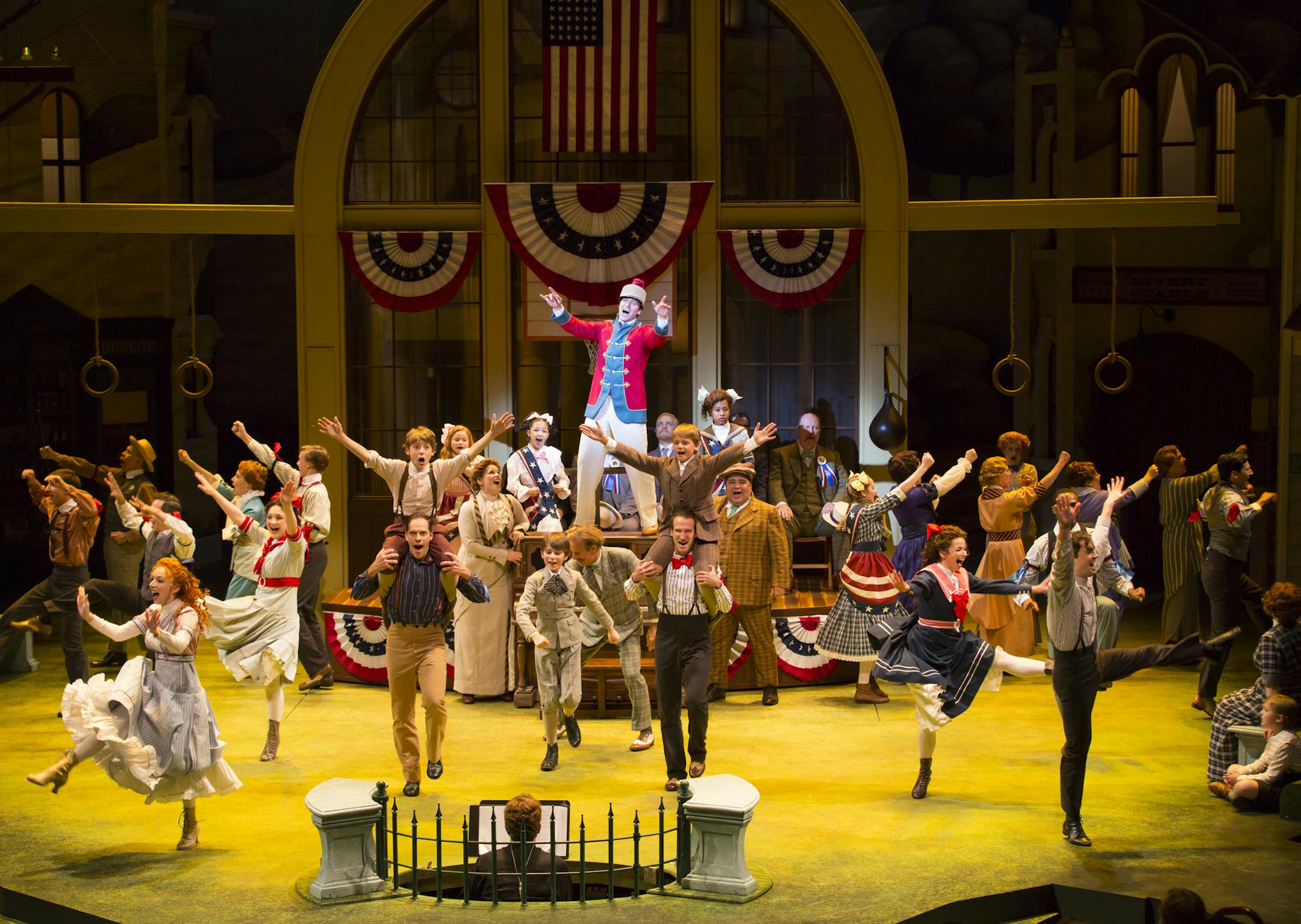
"The Music Man," opening Friday night in its first-ever staging at the Guthrie Theater, employs marching bands, small-town simplicity (naiveté?), nostalgia from the Age of Innocence and parades from July 4th to tell its story of reinvention. Harold Hill comes in a city slicker and walks away a changed man.
"This guy transforms them — the whole town is transformed — and he at the same time is transformed," said Andrew Cooke, music director of Meredith Willson's masterwork.
Chanhassen Dinner Theatre director Michael Brindisi believes "Music Man" is one of the best musicals ever written, but cautions: "Everyone starts with Grant Wood and that feeling of Americana, and that's a trap. That painted feeling gives it a dimensionless approach, and you need more texture if you want audiences, young people, in 2015, to get it on their terms."
Just what there is to get begins with a man who loved his native state and wanted people to share his affection for Iowa.
Late bloomer on stage
Willson was in his mid 50s and long removed from his boyhood home in Mason City when he wrote the book, lyrics and score for "The Music Man."